
Few treats can match the simple pleasure of a freshly made donut. With their soft interior, golden exterior, and sweet sugar coating, homemade donuts bring bakery-quality flavor straight to your kitchen. Whether enjoyed for breakfast, dessert, or a special snack, these classic yeast donuts offer a light, airy texture and a rich buttery taste that make them irresistible.
Making donuts from scratch may seem challenging, but with the right ingredients and technique, the process becomes surprisingly straightforward. This recipe uses wheat flour, yeast, eggs, butter, and vanilla to create a dough that fries into perfectly fluffy donuts coated in sparkling sugar.
Why Homemade Donuts Are Worth Making
Store-bought donuts can be convenient, but homemade donuts provide several advantages:
- Freshly made flavor
- Soft and fluffy texture
- Customizable sweetness
- No preservatives
- Perfect for family gatherings
- Delicious served warm
The aroma of freshly fried donuts alone makes the effort worthwhile.
Ingredients
For the Donut Dough
- 1000 g wheat flour
- 180 g sugar
- 15 g salt
- 20 g dry yeast
- 2 eggs
- 120 g butter, softened
- 500 g cold water or milk
- 10 g vanilla essence
For Decoration
- 300 g sugar
For Frying
- Vegetable oil or frying oil of your choice
Understanding the Key Ingredients
Wheat Flour
Flour forms the structure of the donuts. It creates the soft crumb while supporting the dough during fermentation and frying.
Dry Yeast
Yeast gives donuts their characteristic airy texture by creating bubbles that expand as the dough rises.
Butter
Butter enriches the dough and adds a tender texture and rich flavor.
Eggs
Eggs contribute structure, moisture, and color while helping produce a soft interior.
Vanilla Essence
Vanilla enhances the sweetness and adds a warm, inviting aroma.
Sugar
Sugar sweetens the dough and creates the classic coating that makes donuts so appealing.
Step-by-Step Preparation
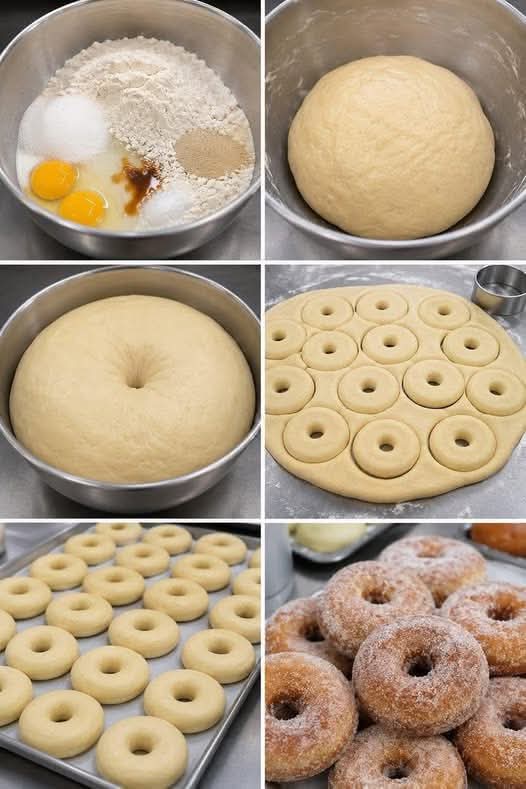
Step 1: Mix the Dry Ingredients
In a large mixing bowl, combine:
- Wheat flour
- Sugar
- Salt
- Dry yeast
Mix thoroughly to distribute all ingredients evenly.
Keeping the salt and yeast evenly dispersed helps ensure consistent fermentation throughout the dough.
Step 2: Add the Wet Ingredients
Add the eggs, vanilla essence, and cold water or milk to the dry ingredients.
Begin mixing until a rough dough starts to form.
Once combined, add the softened butter.
Continue mixing until the butter becomes fully incorporated into the dough.
Step 3: Knead the Dough
Transfer the dough to a lightly floured work surface or continue kneading with a stand mixer.
Knead for approximately 10 to 15 minutes until the dough becomes smooth, elastic, and slightly tacky.
Proper kneading develops gluten, which creates the soft and airy structure of the finished donuts.
A well-kneaded dough should stretch without tearing easily.
Step 4: First Rise
Place the dough into a lightly greased bowl.
Cover with plastic wrap or a clean kitchen towel.
Allow the dough to rise in a warm place for approximately 1 to 1½ hours or until doubled in size.
During this time, the yeast develops flavor and creates the light texture that makes donuts fluffy.
Step 5: Shape the Donuts
Once the dough has doubled, gently press it down to release excess air.
Transfer it to a lightly floured surface.
Roll the dough to approximately 1 cm (½ inch) thickness.
Use a donut cutter or two round cutters to create the classic donut shape.
Place the cut donuts on parchment paper-lined trays.
Gather any scraps, re-roll, and cut additional donuts.
Step 6: Second Rise
Cover the shaped donuts lightly with a clean towel.
Allow them to rise for 30 to 45 minutes.
This second rise creates extra lightness and helps achieve the characteristic fluffy interior.
The donuts should appear slightly puffy before frying.
Step 7: Heat the Oil
Fill a deep pot or fryer with oil.
Heat the oil to approximately 170–180°C (340–355°F).
Maintaining the correct temperature is crucial.
Oil that is too hot may burn the outside before the inside cooks, while oil that is too cool can result in greasy donuts.
Step 8: Fry the Donuts
Carefully place a few donuts into the hot oil.
Avoid overcrowding the pot.
Fry each side for approximately 1 to 2 minutes until golden brown.
Turn them gently using a slotted spoon or frying skimmer.
Once golden, remove the donuts and place them on paper towels to drain excess oil.
Step 9: Coat with Sugar
While still slightly warm, roll the donuts in the prepared sugar.
The warmth helps the sugar adhere evenly to the surface.
Coat generously for the classic sweet finish.
Tips for Perfect Donuts
Use Fresh Yeast
Fresh, active yeast ensures proper rising and a light texture.
Avoid Adding Too Much Flour
A slightly soft dough produces fluffier donuts than a stiff dough.
Monitor Oil Temperature
Consistent frying temperature creates evenly cooked donuts.
Allow Both Rises
Skipping either rise can lead to dense donuts.
Coat While Warm
Sugar sticks best when the donuts remain slightly warm.
Flavor Variations
Cinnamon Sugar Donuts
Mix cinnamon with the sugar coating for extra flavor.
Vanilla Glazed Donuts
Top cooled donuts with a simple vanilla glaze.
Chocolate Donuts
Dip one side in melted chocolate for a bakery-style finish.
Filled Donuts
Fill with jam, pastry cream, chocolate cream, or custard.
Coconut Sugar Donuts
Combine shredded coconut with the sugar coating.
Serving Suggestions
Homemade donuts pair wonderfully with:
- Coffee
- Tea
- Hot chocolate
- Milk
- Fresh fruit
They taste best fresh but remain delicious throughout the day.
Storage Instructions
Store cooled donuts in an airtight container at room temperature.
They remain fresh for up to two days.
For longer storage, freeze uncoated donuts and reheat before serving.
Add fresh sugar coating after warming for the best texture.
Why Homemade Donuts Taste Better
Freshly fried donuts offer a texture and flavor that packaged varieties rarely achieve. The combination of buttery dough, yeast fermentation, and warm sugar coating creates an unforgettable eating experience.
Making donuts at home also allows complete control over ingredients and sweetness levels while providing the satisfaction of creating a beloved treat from scratch.
Conclusion
Homemade Donuts are a timeless favorite that never go out of style. With their soft, fluffy interior, golden crust, and sweet sugar coating, they deliver bakery-quality results right from your own kitchen.
Whether enjoyed as a weekend breakfast, an afternoon snack, or a special dessert, these classic donuts bring comfort, flavor, and joy to every bite. Once you experience the taste of freshly made homemade donuts, you’ll understand why they remain one of the world’s most cherished sweet treats.

Delicious Homemade Yeast Donuts
Description
Indulge in the classic flavor of homemade yeast donuts, featuring a soft, fluffy interior and a sweet sugar coating. Perfect for breakfast or dessert!
Ingredients
Instructions
- In a large mixing bowl, combine wheat flour, sugar, salt, and dry yeast. Mix thoroughly.
- Add the eggs, vanilla essence, and cold water or milk. Mix until a rough dough forms, then incorporate the softened butter.
- Transfer the dough to a lightly floured surface and knead for 10 to 15 minutes until smooth and elastic.
- Place the dough in a greased bowl, cover with plastic wrap or a kitchen towel, and let rise in a warm place for 1 to 1½ hours.
- Roll the dough to 1 cm thickness and cut into donut shapes. Place on parchment-lined trays.
- Cover the shaped donuts with a towel and allow to rise for 30 to 45 minutes until slightly puffy.
- Fill a deep pot or fryer with oil and heat it to 170–180°C. Monitor the temperature carefully.
- Carefully fry donuts in batches for 1 to 2 minutes each side until golden brown. Remove to drain.
- While warm, roll the donuts in sugar to coat evenly.
Notes
- Ensure to monitor the oil temperature for perfect frying.