
Salt seems like one of the simplest ingredients in the kitchen, but walk into a grocery store today and you can find an entire wall of options: table salt, kosher salt, Himalayan pink salt, Celtic sea salt, fleur de sel, smoked salt, and more.
Two of the most popular specialty salts are Himalayan pink salt and Celtic sea salt. Both are often promoted as more natural alternatives to ordinary table salt, and both have enthusiastic followers who claim they offer unique minerals, better flavor, or even health benefits.
But how different are they really?
I decided to take a closer look at Himalayan and Celtic sea salt because, at first glance, the two seem almost interchangeable. One is famous for its beautiful pink color, while the other is known for its moist, grayish appearance and association with traditional sea-salt harvesting.
The interesting part is that their differences are real—but some of the health claims surrounding them are much bigger than the science supports.
Here is what you should know before choosing between Himalayan pink salt and Celtic sea salt.
What Is Himalayan Pink Salt?
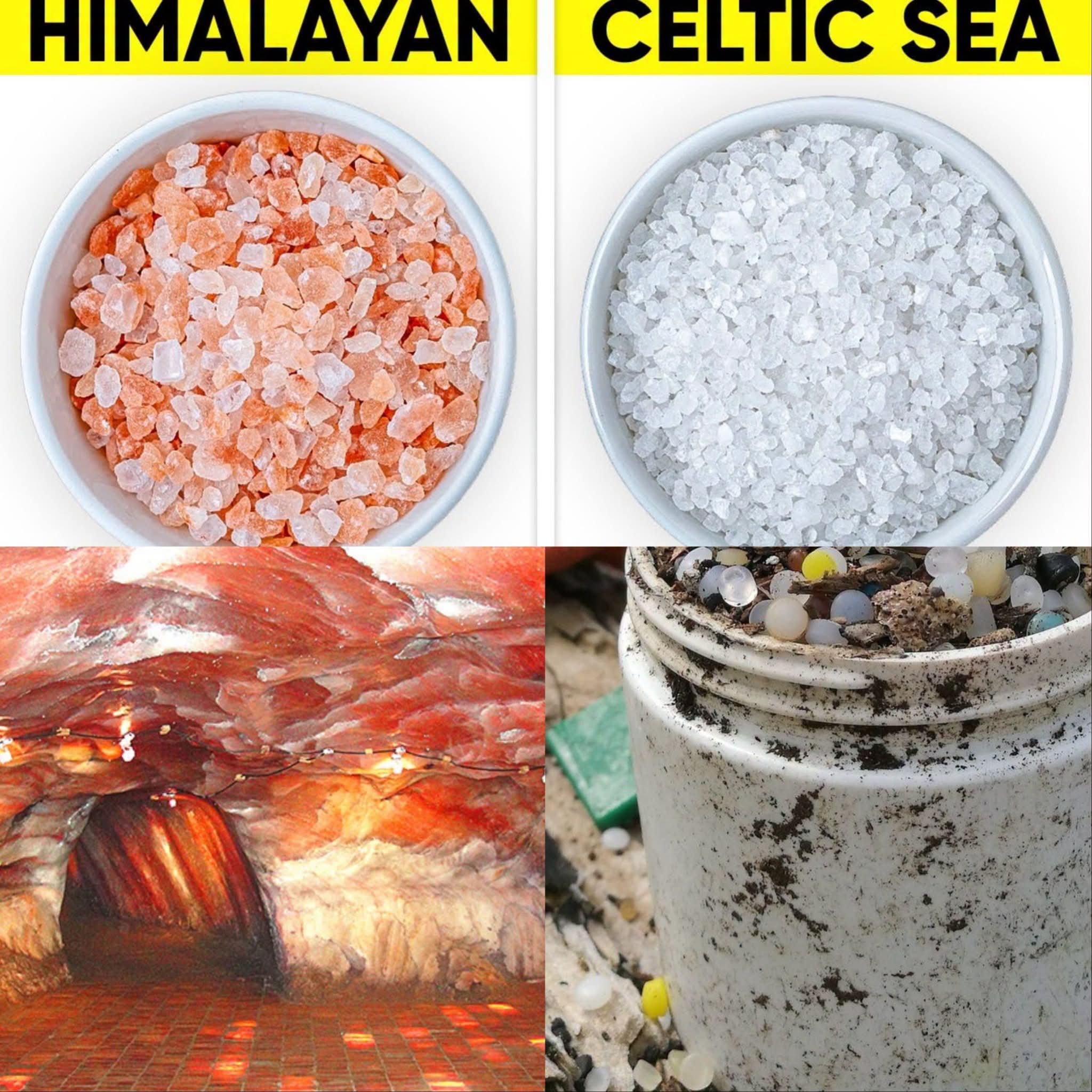
Himalayan pink salt is a type of rock salt mined primarily from deposits in Pakistan, particularly the famous Khewra Salt Mine.
Despite its name, Himalayan pink salt isn’t generally harvested from the Himalayan mountains themselves. It comes from ancient underground salt deposits that formed millions of years ago when prehistoric seas evaporated and left behind mineral-rich salt beds.
Its characteristic pink, orange, or reddish color comes from trace amounts of minerals, particularly iron compounds.
Himalayan salt is typically sold in several forms:
- Fine-grain salt
- Coarse-grain salt
- Salt crystals
- Salt blocks
- Salt grinders
- Cooking slabs
Its attractive color has made it especially popular as a finishing salt and decorative ingredient.
The flavor is still fundamentally salty, although some people describe Himalayan salt as having a slightly more complex or less harsh taste than ordinary table salt.
What Is Celtic Sea Salt?
Celtic sea salt is a sea salt traditionally associated with coastal France, particularly the Brittany region.
Unlike Himalayan salt, which is mined from ancient underground deposits, Celtic sea salt is produced by evaporating seawater.
Traditional Celtic sea salt is often harvested using methods designed to preserve moisture in the crystals. As a result, it can have a noticeably damp or slightly moist texture compared with conventional table salt.
Its color is usually gray, beige, or light tan rather than pink.
The gray color comes from minerals and the environment in which the salt is harvested, including the clay-lined salt ponds traditionally used in production.
Celtic sea salt can be sold as coarse crystals or ground into smaller particles for everyday cooking.
Himalayan vs. Celtic Sea Salt: Where They Come From
The biggest fundamental difference is their origin.
Himalayan pink salt:
Mined from ancient underground rock-salt deposits.
Celtic sea salt:
Harvested from seawater through evaporation.
That difference affects their texture, moisture content, color, and mineral composition.
Himalayan salt is generally dry and crystalline.
Celtic sea salt traditionally retains more moisture, which can give it a softer, slightly damp texture.
Neither origin automatically makes one salt healthier than the other.
The Mineral Difference
This is where the discussion becomes particularly interesting.
Both Himalayan salt and Celtic sea salt contain sodium chloride—the same basic compound that makes salt salty.
They can also contain small amounts of other minerals.
Himalayan salt’s pink color comes from trace minerals, including iron.
Celtic sea salt may contain trace amounts of minerals such as magnesium, calcium, and potassium.
However, these minerals occur in relatively small quantities.
That means using one salt instead of another isn’t a practical way to obtain significant amounts of essential minerals.
For example, you shouldn’t rely on a few pinches of specialty salt to meet your daily magnesium, potassium, calcium, or iron requirements.
Foods such as vegetables, legumes, nuts, seeds, dairy products, fish, and other nutrient-rich foods are much more meaningful sources of these minerals.
Does Himalayan Salt Have More Minerals?
Himalayan salt is frequently marketed as containing dozens of trace minerals.
Technically, mineral traces can be detected in the salt, but that doesn’t necessarily mean the salt provides meaningful nutritional amounts.
This distinction is important.
A food can contain a mineral without being a significant source of that mineral.
Because salt is normally consumed in relatively small quantities, the nutritional contribution of those trace minerals is generally modest.
The same principle applies to Celtic sea salt.
Its mineral content may be somewhat different from Himalayan salt, but that doesn’t automatically make it nutritionally superior.
Is Celtic Sea Salt Healthier?
Celtic sea salt is sometimes described as being healthier because it contains more natural minerals and retains moisture.
However, “natural” doesn’t necessarily mean “healthier.”
Celtic sea salt is still primarily sodium chloride.
Eating large quantities can contribute substantial sodium to your diet regardless of whether the salt comes from a sea, an underground mine, or a salt shaker.
The same applies to Himalayan salt.
The important factor for most people is how much salt they consume overall, not simply which specialty salt they choose.
Which One Has Less Sodium?
This is another area where marketing can be confusing.
Because Celtic sea salt contains moisture and Himalayan salt can have slightly different crystal densities, the sodium amount can vary somewhat depending on how you measure the salt.
A teaspoon of one type of salt may not contain exactly the same amount of sodium as a teaspoon of another type because the crystals can have different sizes and packing densities.
But by weight, specialty salts are still largely sodium chloride.
So switching from ordinary salt to Himalayan or Celtic salt doesn’t magically eliminate sodium from your diet.
If you’re trying to reduce sodium, the most useful strategy is to reduce the total amount of salt you use and pay attention to sodium already present in packaged and processed foods.
Himalayan Salt vs. Celtic Sea Salt for Cooking
Both salts can work very well in everyday cooking.
Himalayan salt is particularly convenient when you want a dry salt that works well in:
- Soups
- Stews
- Roasted vegetables
- Meat and poultry
- Eggs
- Pasta water
- Homemade spice blends
- Salt grinders
- Finishing dishes
Celtic sea salt is excellent when you enjoy a more rustic texture.
It can be particularly appealing as a finishing salt sprinkled over vegetables, salads, roasted potatoes, or freshly cooked dishes.
Because Celtic salt can contain more moisture, it may behave differently in recipes that depend on precise measurements.
For baking, this matters.
Which Salt Is Better for Baking?
If you’re baking bread, cakes, cookies, or pastries, the type and measurement of salt can affect the final result.
Fine salt is generally easier to distribute evenly throughout a dough or batter.
If a recipe specifies table salt or fine salt, replacing it with large, coarse crystals without adjusting the measurement can result in uneven seasoning.
This doesn’t mean you can’t bake with Himalayan or Celtic salt.
Just consider the grain size.
For precise baking, weighing salt in grams is more reliable than measuring it by volume.
That’s because a teaspoon of fine salt and a teaspoon of large crystals can contain different amounts of salt.
What About Iodine?
This is one of the most important differences to understand.
Some ordinary table salts are iodized, meaning iodine has been added to help prevent iodine deficiency.
Himalayan and Celtic sea salts are generally not automatically iodized.
Unless the package specifically states that iodine has been added, you should not assume that a specialty salt is a source of iodine.
This matters because iodine is an essential nutrient required for normal thyroid hormone production.
If you replace all of your iodized salt with a non-iodized specialty salt, you may want to make sure you’re getting sufficient iodine from other foods or an appropriate source.
The key point is simple:
Pink or gray salt isn’t necessarily iodized salt. Check the label.
Does Himalayan Salt Improve Hydration?
You may have seen claims that Himalayan salt can be added to water to create a special electrolyte drink.
The idea sounds convincing because sodium is an electrolyte.
However, adding salt to water doesn’t turn it into a magical hydration solution.
For normal hydration, drinking water and eating a balanced diet are generally sufficient for most people.
Electrolytes become especially relevant during situations involving substantial fluid and electrolyte losses, such as prolonged intense exercise, heavy sweating, or certain illnesses. In those situations, appropriately formulated electrolyte drinks or oral rehydration solutions are more reliable than simply adding specialty salt to water.
Which One Tastes Better?
This is where personal preference matters more than nutrition.
Some people prefer the slightly mineral character of Celtic sea salt.
Others prefer Himalayan salt because of its clean salty taste and attractive color.
There can also be noticeable differences based on grain size.
A large crystal can create a sudden burst of saltiness when you bite into it, while fine salt disperses more evenly.
If you’re using salt as a finishing ingredient, texture can be just as important as flavor.
Which One Looks Better?
If presentation matters, Himalayan salt has an obvious advantage for colorful dishes.
Its pink crystals can look beautiful sprinkled over:
- Avocado toast
- Salads
- Roasted vegetables
- Grilled foods
- Baked potatoes
- Eggs
- Fresh tomatoes
Celtic sea salt has a more rustic appearance.
Its grayish crystals can make a dish look less polished but more natural and traditional.
For a simple dinner at home, either works.
For food photography, Himalayan salt can provide an especially noticeable visual contrast.
Are They Better Than Regular Table Salt?
Not necessarily.
That’s probably the biggest takeaway from the Himalayan-versus-Celtic debate.
Specialty salts can offer differences in:
- Texture
- Appearance
- Flavor
- Grain size
- Processing
- Mineral composition
- Moisture content
But those differences don’t mean they are automatically healthier.
Regular iodized table salt has one major nutritional advantage: iodine.
For people who need to ensure adequate iodine intake, that can be an important consideration.
Specialty salts can still be useful because food isn’t only about nutrition. Texture, flavor, cooking technique, and personal preference matter too.
Himalayan vs. Celtic Sea Salt: Quick Comparison
| Feature | Himalayan Pink Salt | Celtic Sea Salt |
|---|---|---|
| Source | Ancient underground salt deposits | Seawater |
| Typical color | Pink, orange, reddish | Gray, beige, light tan |
| Texture | Usually dry and crystalline | Often moist |
| Main component | Sodium chloride | Sodium chloride |
| Trace minerals | Present | Present |
| Iodized? | Usually no | Usually no |
| Flavor | Clean, salty, mildly mineral | Salty, mineral, rustic |
| Best use | Everyday cooking and finishing | Finishing and rustic dishes |
| Major health advantage | Not clearly established | Not clearly established |
| Main nutritional concern | Sodium | Sodium |
Which Salt Should You Choose?
If you’re choosing purely for health, there isn’t a compelling reason for most people to believe that Himalayan salt is dramatically healthier than Celtic sea salt—or vice versa.
Instead, choose based on how you cook.
Choose Himalayan salt if:
- You like pink salt crystals.
- You want a dry salt for your grinder.
- You enjoy using it as a finishing salt.
- You prefer a clean, straightforward salty flavor.
- You want something visually attractive.
Choose Celtic sea salt if:
- You enjoy moist, rustic salt.
- You like traditional sea-salt products.
- You prefer its texture.
- You want a finishing salt for vegetables and salads.
- You enjoy experimenting with different culinary ingredients.
And there’s nothing wrong with keeping both in your kitchen.
The Most Important Salt Lesson
The biggest mistake is focusing so heavily on the type of salt that we forget about the total amount consumed.
Himalayan pink salt and Celtic sea salt may look and feel different, but both contribute sodium.
If you’re trying to eat less sodium, replacing table salt with an expensive specialty salt while continuing to use large quantities doesn’t solve the underlying problem.
Instead, try gradually reducing the amount of salt added during cooking and learn to build flavor with ingredients such as garlic, onion, herbs, spices, citrus juice, vinegar, and fresh vegetables.
You may eventually discover that you need less salt than you thought.
Frequently Asked Questions
Can I substitute Himalayan salt for Celtic sea salt?
Yes. They can generally be substituted in everyday cooking, although differences in crystal size and moisture mean that volume measurements aren’t always equivalent. For precise recipes, especially baking, measuring by weight is preferable.
Is Himalayan salt healthier than Celtic sea salt?
There is no strong evidence that Himalayan salt provides a major health advantage over Celtic sea salt. Both are primarily sodium chloride and should be consumed in moderation.
Does Celtic sea salt contain iodine?
Traditional Celtic sea salt is generally not iodized. Check the product label rather than assuming it contains iodine.
Can I use Himalayan salt every day?
Yes, Himalayan salt can be part of an everyday diet. The important consideration is your total sodium intake.
Does pink salt have fewer calories?
Salt itself contains essentially no meaningful calories. The more important nutritional consideration is sodium.
Which is better for steak?
Either can work beautifully. Coarse Himalayan salt can provide a striking finish, while coarse Celtic sea salt can provide a rustic texture. Your preferred grain size and taste matter more than the salt’s color.
Which is better for salads?
Celtic sea salt can be especially appealing on salads because of its moist, irregular crystals, but Himalayan salt also works well. Use whichever texture and flavor you prefer.
Final Thoughts
Himalayan pink salt and Celtic sea salt are two interesting ingredients with very different origins.
Himalayan salt comes from ancient underground deposits and gets its famous pink color from trace minerals. Celtic sea salt is traditionally harvested from seawater and is known for its gray color and moist texture.
Both can add flavor and personality to your cooking.
But neither should be viewed as a miracle food.
The minerals found in these salts occur in relatively small quantities, while the sodium content remains important. And unlike iodized table salt, specialty salts generally aren’t reliable sources of iodine unless the label specifically says they are iodized.
For me, the best way to think about the Himalayan-versus-Celtic question is simple: choose the salt you enjoy using, but don’t let attractive packaging or health claims convince you that you can ignore sodium.
If you love the color and dry crystals of Himalayan salt, keep it on the table. If you prefer the moist, rustic texture of Celtic sea salt, use that instead. And if iodized salt is an important source of iodine in your diet, don’t overlook that benefit simply because specialty salts look more exotic.
At the end of the day, the best salt is the one that helps you make delicious food while keeping your overall salt intake appropriate.