
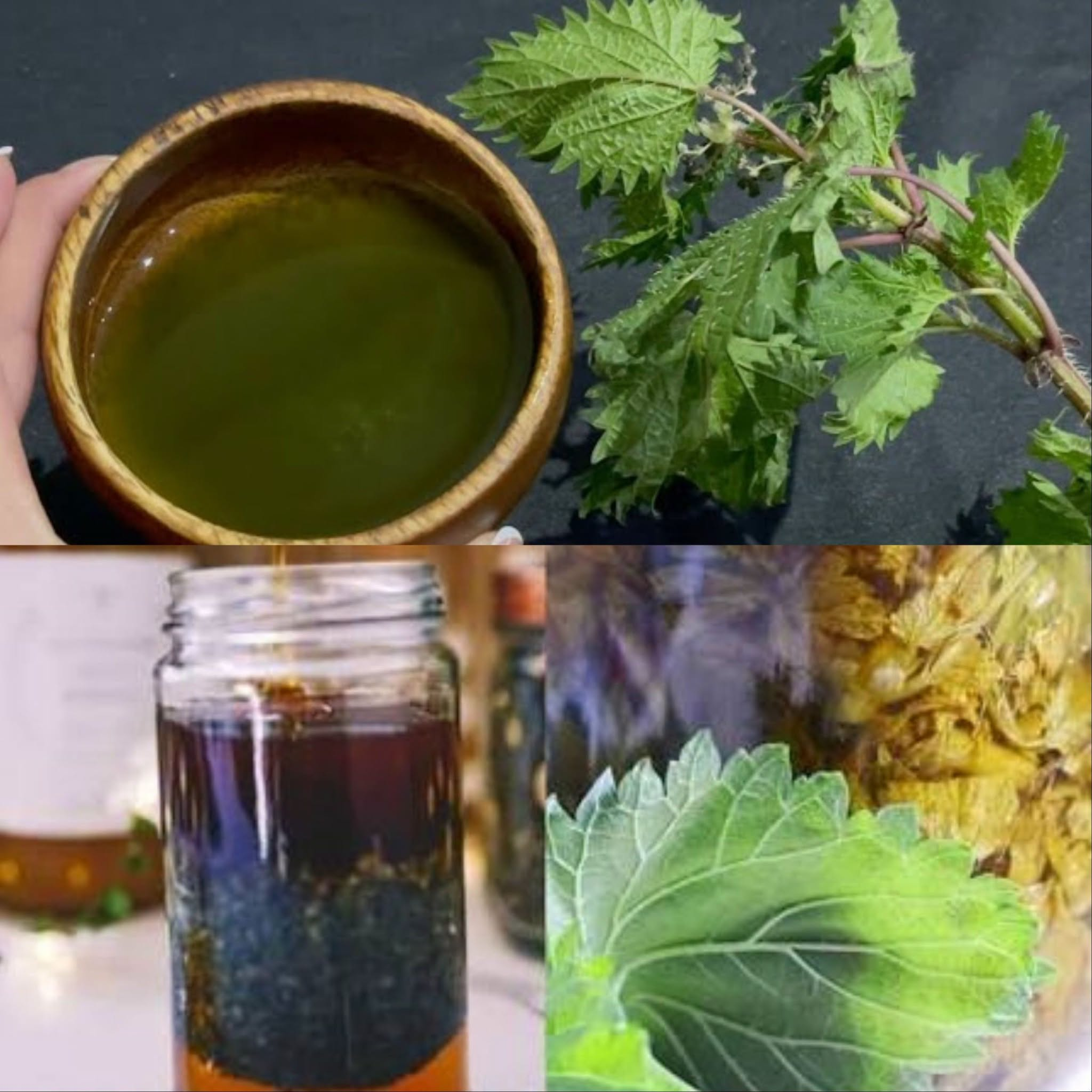
Some of the most interesting ingredients in traditional home remedies are plants that people often overlook.
Nettle is a perfect example. Known for its tiny stinging hairs, this common plant has been used for generations in cooking, traditional herbal practices, and personal care. Once properly dried or heated, nettle can be handled much more easily and used in a variety of preparations.
One traditional idea is to combine nettle with olive oil to create a simple infused oil.
The result is an earthy, plant-based oil that can be used as a massage oil or as a moisturizer for dry skin. Olive oil provides a rich, emollient base, while nettle contributes plant compounds that have attracted interest in traditional herbal use.
You may see claims online that nettle-infused oil can eliminate arthritis, repair joints, cure skin conditions, or dramatically reduce inflammation. Those claims go beyond what can be established from a homemade preparation.
A more realistic way to look at this recipe is as a traditional topical oil for massage and skin softness.
The massage itself may feel relaxing, while olive oil can help reduce the dry, tight feeling associated with dehydrated skin.
What Is Nettle?
Nettle usually refers to plants in the Urtica genus, particularly stinging nettle (Urtica dioica).
The plant is easily recognized by the fine hairs covering its leaves and stems. These hairs can release irritating substances when they come into contact with skin, producing the familiar burning or stinging sensation.
Despite this unpleasant characteristic, nettle has a long history of culinary and traditional use.
Young nettle leaves can be cooked and prepared similarly to other leafy greens when handled and prepared properly.
The plant also contains various nutrients and naturally occurring plant compounds.
However, the fact that a plant contains vitamins, minerals, or antioxidants does not automatically mean that applying it to the skin will treat a medical condition.
That distinction is especially important with homemade herbal preparations.
Why Combine Nettle With Olive Oil?
Olive oil is a natural fat that has been used for centuries in cooking, cosmetics, and traditional skin care.
Applied to the skin, olive oil can help soften the outer layer and reduce the feeling of dryness.
Nettle brings the herbal component to the preparation.
Together, they create an oil that can be used for gentle massage or as an occasional moisturizing treatment.
The most noticeable benefit may come from the olive oil itself, combined with the soothing effect of massage.
If you have aching muscles after a long day, gently massaging an area with a pleasant oil can feel relaxing even when the oil itself has no specific medicinal effect.
How to Make Nettle-Infused Olive Oil
There is an important safety issue to address before making this recipe.
Fresh plant material contains water. Storing fresh herbs submerged in oil at room temperature can create conditions that allow harmful microorganisms, including Clostridium botulinum, to grow.
For that reason, a safer home approach is to use completely dried nettle for a room-temperature oil infusion rather than fresh leaves.
If you want to use fresh nettle, a tested food-preservation method and appropriate storage instructions are important.
For a simple topical preparation, properly dried nettle is the better choice.
Ingredients
- ½ to 1 cup completely dried nettle leaves
- 1 cup extra-virgin olive oil
- A clean, completely dry glass jar
- Fine mesh strainer or cheesecloth
- Clean dark glass bottle or jar for storage
Only use nettle that has been correctly identified and thoroughly dried.
Step 1: Handle the Nettle Carefully
If you are collecting your own nettle, wear gloves and long sleeves.
Do not pick plants from roadsides, areas treated with pesticides, contaminated ground, or places where animals frequently pass.
Correct plant identification is essential.
If you are not experienced with wild plants, commercially dried nettle from a reputable source is a safer option.
Step 2: Make Sure the Leaves Are Completely Dry
This step is extremely important.
The nettle should be dry and brittle rather than soft or moist.
Any remaining moisture increases the risk of spoilage when plant material is stored in oil.
Do not use leaves that feel damp.
Step 3: Place the Nettle in a Dry Jar
Put the dried nettle into a clean, dry glass jar.
Do not pack it down tightly.
Make sure the jar contains no water droplets or moisture.
Step 4: Add the Olive Oil
Pour the olive oil over the dried leaves.
The plant material should be completely covered by oil.
Leave some space at the top of the jar rather than filling it completely.
Step 5: Infuse the Oil
Close the jar securely.
For a traditional slow infusion, keep it in a cool, dark place rather than a hot sunny windowsill.
Gently shake the jar occasionally.
The infusion can be left for several weeks, allowing the oil to take on some of the plant’s color and aroma.
Because homemade herbal oils do not have standardized preparation methods, there is no single scientifically established number of days that guarantees a particular concentration of active compounds.
Step 6: Strain the Oil
After the infusion period, strain the oil through a clean fine mesh strainer or several layers of cheesecloth.
Press gently to recover the oil, then discard the plant material.
Transfer the finished oil to a clean, dry container.
A dark-colored bottle can help protect oil from light.
How to Use Nettle-Infused Olive Oil
This preparation is best viewed as a topical massage and moisturizing oil.
For a Gentle Massage
Pour a small amount into your palm.
Rub your hands together and gently massage the oil into the skin.
Use slow circular movements over areas that feel tense or tired.
You do not need to massage aggressively.
The purpose is comfort and relaxation rather than forcing the oil deep into the body.
For Dry Skin
Apply a small amount to clean, dry skin.
Massage gently until the oil is spread evenly.
Because olive oil is rich and occlusive, a little can go a long way.
If your skin feels greasy afterward, reduce the amount next time.
For Hands and Feet
Dry hands, elbows, knees, and feet can sometimes benefit from a simple oil-based moisturizer.
Apply a thin layer before bed and allow it to absorb.
For very dry feet, socks can be worn afterward to reduce transfer to bedding.
Can Nettle Oil Relieve Joint Pain?
This is where realistic expectations matter.
There is not enough evidence to say that homemade nettle-infused olive oil treats arthritis or reliably relieves chronic joint pain.
If someone feels better after using it, several factors may be involved.
The warmth of the hands, gentle massage, relaxation, and moisturizing effect of the oil can all contribute to a temporary feeling of comfort.
That is different from treating the underlying cause of joint pain.
Conditions such as osteoarthritis, rheumatoid arthritis, injuries, gout, and tendon problems require different approaches.
If joint pain is persistent, severe, swollen, or interfering with normal movement, it is better to find out what is causing it.
What About Nettle’s Traditional Anti-Inflammatory Reputation?
Nettle has a long history in traditional herbal practices, and researchers have investigated various compounds found in the plant.
However, evidence from laboratory studies or traditional use does not automatically establish that rubbing nettle-infused olive oil onto a painful knee will reduce inflammation inside the joint.
The skin forms a barrier, and the amount of any particular plant compound that reaches deeper tissues from a homemade oil is difficult to determine.
That is why this preparation should be described as a traditional topical oil rather than a proven anti-inflammatory treatment.
Safety Tips for Using Nettle Oil
Always Patch Test
Before applying the oil over a large area, place a small amount on a limited patch of skin.
Wait and see how your skin responds.
If you develop redness, burning, itching, swelling, or a rash, wash the area and discontinue use.
Never Apply It to Broken Skin
Do not use homemade herbal oils on open wounds, fresh cuts, burns, infected skin, or severely irritated areas.
Keep It Away From Your Eyes
Avoid the eye area and mucous membranes.
If oil accidentally gets into your eyes, rinse thoroughly with clean water.
Do Not Use Fresh Nettle in a Room-Temperature Oil
This deserves repeating.
Fresh plant material introduces water into the oil, which can increase the risk of microbial growth.
For a simple homemade infusion intended for storage, use thoroughly dried nettle.
Watch for Allergic Reactions
A plant-based product can still cause an allergic or irritating reaction.
Natural does not automatically mean hypoallergenic.
Store the Finished Oil Properly
Keep the finished oil in a clean, dry, tightly closed container away from heat and direct sunlight.
Discard it if you notice an unusual odor, visible mold, unexpected cloudiness, or other signs of spoilage.
How Often Can You Use It?
There is no medically established schedule for nettle-infused olive oil.
For general skin moisturizing or massage, a small amount can be used occasionally if your skin tolerates it.
There is no reason to apply large quantities several times a day.
Start with a small amount and see how your skin responds.
Other Ways to Use Nettle
Nettle does not have to be limited to oil infusions.
When properly identified and prepared, nettle can be used in traditional culinary preparations.
Cooked nettle leaves can be incorporated into soups, sauces, and cooked greens.
Nettle is also available dried as a tea ingredient or culinary herb.
However, different preparations have different safety considerations, and consuming nettle is not the same as applying nettle-infused oil to the skin.
Tips for Making a Better Herbal Oil
Use High-Quality Olive Oil
Extra-virgin olive oil is a convenient choice for homemade topical preparations.
Choose an oil with a fresh smell and store it away from excessive heat and light.
Keep Everything Dry
Moisture is one of the biggest concerns with homemade oil infusions.
The jar, utensils, plant material, and storage bottle should all be completely dry.
Don’t Overfill the Jar
Leave a little room at the top so the contents can be mixed without spilling.
Label the Bottle
Write the date and ingredients on the container.
This makes it easier to keep track of how long you have had the preparation.
Make Small Batches
A small batch is easier to use while fresh and reduces the chance of keeping a homemade preparation for too long.
Frequently Asked Questions
Can nettle-infused olive oil cure arthritis?
No. There is not enough evidence to say that homemade nettle-infused olive oil cures arthritis or repairs damaged joints.
Can it reduce knee pain?
It may provide a soothing massage experience, but it has not been established as a reliable treatment for chronic knee pain.
Persistent pain should be evaluated to determine the underlying cause.
Can I use fresh nettle leaves?
Fresh nettle must be handled carefully because the plant can sting the skin. For a stored homemade oil infusion, thoroughly dried nettle is a safer choice because fresh plant material introduces moisture into the oil.
How long should I infuse the nettle?
Traditional herbal oil infusions are often left for several weeks, but there is no universally established infusion period that guarantees a particular medicinal effect.
Can I use nettle oil on my face?
It is better to be cautious. Homemade herbal oils can cause irritation, especially on sensitive facial skin. Patch test first and keep the oil away from the eyes.
Is nettle oil good for dry skin?
The olive oil can help soften and moisturize dry skin. Whether nettle itself provides additional benefits for dry skin has not been firmly established.
Can I use nettle oil every day?
There is no established requirement for daily use. If your skin tolerates it, occasional use as a massage or moisturizing oil is reasonable.
Does nettle oil repair cartilage?
No. A topical nettle infusion cannot be presented as a proven method for rebuilding cartilage.
Can I use it on swollen joints?
If a joint is significantly swollen, hot, red, or very painful, don’t rely on a homemade oil. Those symptoms can sometimes indicate a condition that requires medical evaluation.
How should I store homemade nettle oil?
Keep it in a clean, dry, tightly sealed container away from heat and direct sunlight. Discard it if you notice mold, an unusual smell, or other signs of spoilage.
Final Thoughts
Nettle is much more interesting than its reputation as a troublesome weed might suggest.
When properly identified and handled, it has a long history of culinary and traditional use. Combined with olive oil, thoroughly dried nettle can also be used to create a simple homemade oil for massage and moisturizing dry skin.
But the preparation should be kept in perspective.
There is no reliable evidence that nettle-infused olive oil can cure arthritis, repair cartilage, or eliminate chronic joint pain. The comfort people experience may come from the moisturizing properties of the olive oil, the warmth and relaxation of massage, or simply enjoying a soothing self-care ritual.
If you decide to make it, focus on safe preparation: use completely dried nettle, keep moisture out of the oil, patch test before use, and never apply the preparation to broken or irritated skin.
Sometimes the most useful traditional remedies don’t need extraordinary promises. A simple plant, a good-quality oil, and a relaxing massage can be enough to make a small self-care ritual feel worthwhile.