
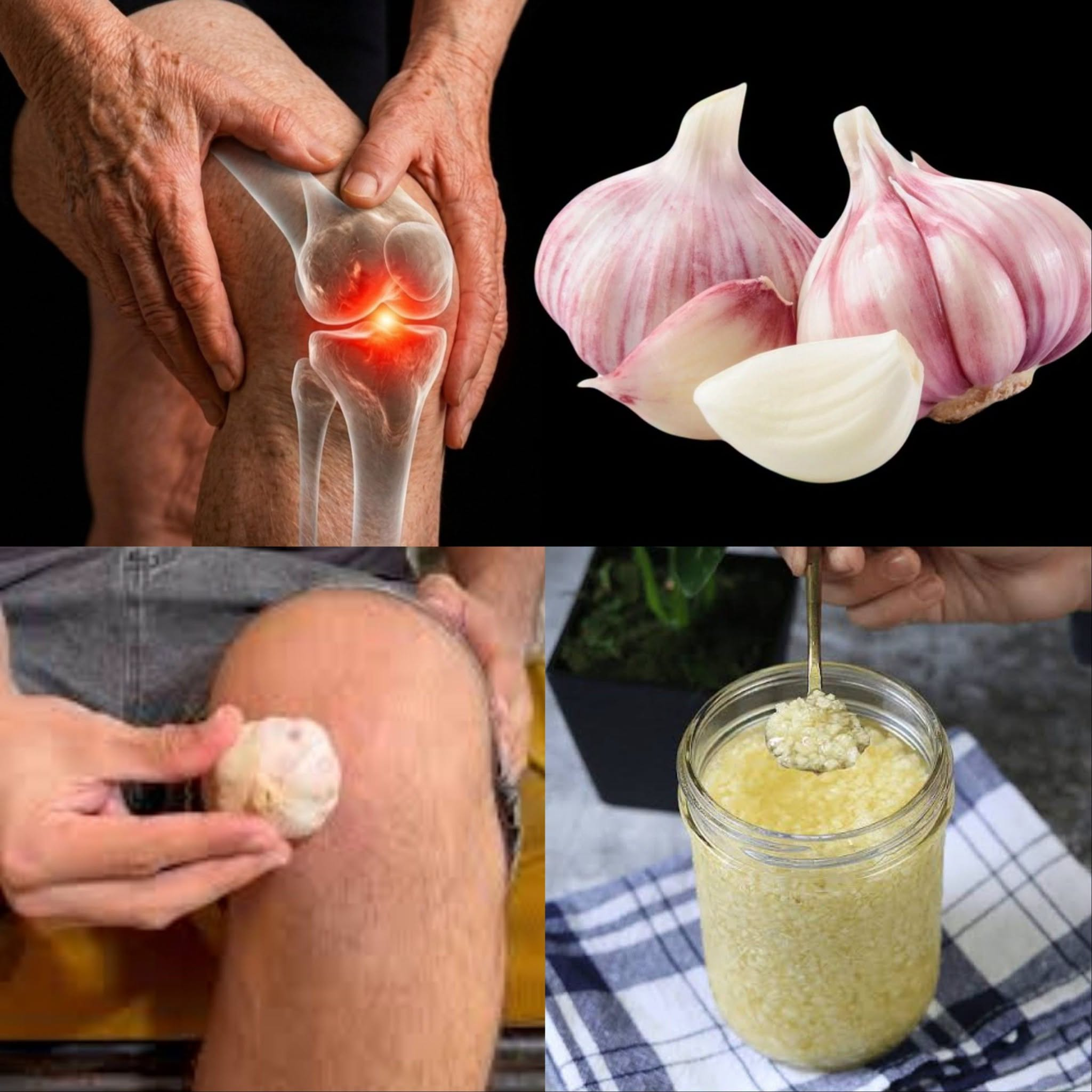
Knee pain can make ordinary activities feel much harder than they should. Walking to the mailbox, climbing stairs, getting up from a chair, or taking a short morning walk can become uncomfortable when the joints are stiff or painful.
Because of this, it is easy to understand why simple home remedies attract so much attention online.
Garlic is one ingredient that frequently appears in these recipes. Some viral posts claim that eating one clove of garlic every day can make severe knee pain disappear, restore damaged joints, or even help an older person run like a teenager again.
Those claims are much stronger than the available evidence supports.
Garlic is certainly a nutritious food. It contains sulfur-containing compounds, including allicin, which forms when fresh garlic is chopped or crushed. Garlic has also been studied for its antioxidant and anti-inflammatory properties.
But there is no reliable evidence that eating one tablespoon or one clove of garlic every day can cure arthritis, repair damaged cartilage, or guarantee relief from chronic knee pain.
That does not mean garlic has no place in a healthy diet.
It simply means we should separate the real nutritional value of garlic from exaggerated internet promises.
Why Garlic Gets Attention for Joint Health
Garlic belongs to the same plant family as onions, leeks, and shallots.
When a fresh garlic clove is crushed or chopped, an enzyme reaction produces allicin and other sulfur-containing compounds. These compounds are responsible for much of garlic’s characteristic smell and flavor.
Scientists have studied garlic and its components for a variety of potential effects, including antioxidant and inflammatory pathways.
Inflammation is involved in many health conditions, including some forms of arthritis. However, laboratory findings do not automatically mean that eating raw garlic will produce a noticeable improvement in a person’s knee pain.
The human body is much more complicated than a single ingredient.
A healthy diet can support overall health, but persistent joint pain usually requires a broader approach.
Can Garlic Make Knee Pain Disappear?
There is no good evidence that garlic can make chronic knee pain disappear.
Knee pain can have many different causes.
Osteoarthritis is one common cause, especially as people get older. Other possibilities include injuries, tendon problems, bursitis, inflammatory arthritis, gout, infections, or problems involving the muscles and surrounding tissues.
The appropriate treatment depends on the cause.
For example, someone with osteoarthritis may benefit from exercise, strengthening, weight management when appropriate, physical therapy, pain-management strategies, or medication recommended by a healthcare professional.
Someone with a serious injury may need an entirely different approach.
That is why a garlic remedy should never be used to delay an evaluation when knee pain is severe, persistent, or getting worse.
The Simple Garlic Recipe
If you enjoy garlic and want to include it in your diet, there is a simple way to prepare it.
Ingredients
- 1 fresh garlic clove
- 1 teaspoon extra-virgin olive oil, optional
- A small amount of food or water, if needed
The olive oil is optional. It is not required to make garlic effective, and there is no need to swallow a whole clove.
How to Prepare It
Step 1: Peel the Garlic
Remove the outer skin from one fresh garlic clove.
Rinse it if necessary and pat it dry.
Step 2: Crush or Chop It
Finely chop or crush the garlic.
Crushing garlic triggers the enzyme reaction that produces allicin.
Allowing chopped garlic to sit briefly before cooking can help preserve the formation of these compounds.
Step 3: Add It to Food
Rather than swallowing raw garlic on an empty stomach, consider adding it to a meal.
Mix chopped garlic into vegetables, beans, soups, salad dressing, roasted vegetables, or other dishes.
This is generally a much more enjoyable way to consume garlic.
Step 4: Add Olive Oil if Desired
A teaspoon of olive oil can be mixed with the garlic for a simple dressing.
You can also combine the mixture with vegetables or whole grains.
There is no special requirement to take garlic first thing in the morning.
Should You Eat Raw Garlic on an Empty Stomach?
You may see recommendations online telling people to swallow raw garlic every morning before breakfast.
There is no strong evidence that taking garlic on an empty stomach provides special joint benefits.
For some people, raw garlic can cause stomach discomfort, heartburn, nausea, bloating, or an unpleasant burning sensation.
If you enjoy garlic, eating it as part of a meal may be easier on your digestive system.
There is also no need to force yourself to eat raw garlic if you dislike it.
Garlic can still contribute flavor and nutrients when incorporated into ordinary meals.
What About the Allicin?
Allicin is one of the most interesting compounds associated with fresh garlic.
It forms when garlic cells are damaged through chopping, crushing, or chewing.
However, allicin is relatively unstable. Heat and processing can affect the amount of allicin and other sulfur compounds available.
This does not mean raw garlic is automatically better for your health.
Cooking garlic can still make it an enjoyable and nutritious part of a balanced diet.
The goal should be to eat garlic in a way that you enjoy and tolerate rather than chasing a particular compound as though it were medication.
A Better Approach to Knee Health
If your goal is to keep your knees comfortable and maintain mobility, garlic should be only a small part of the picture.
Regular movement is often much more important.
For many people with joint problems, appropriately chosen exercises can help maintain muscle strength and mobility.
Walking, swimming, cycling, water exercise, and strength training may be useful depending on the person’s condition and physical abilities.
If exercise causes significant pain, it is worth discussing the situation with a healthcare professional or physical therapist.
Strengthen the Muscles Around the Knee
The muscles surrounding the knee help support movement and stability.
A suitable strengthening program can help some people manage symptoms and maintain function.
Exercises should be adjusted to the individual’s fitness level, joint condition, and pain.
Maintain a Healthy Weight
For people who are overweight, gradual weight loss can reduce the load placed on weight-bearing joints.
This does not mean that everyone with knee pain needs to lose weight.
It simply means that body weight can be one factor worth discussing with a healthcare professional when osteoarthritis or other weight-bearing joint problems are involved.
Stay Active Within Your Limits
Complete inactivity can sometimes make stiffness worse.
Gentle, regular movement is often preferable to spending long periods sitting still.
The right amount of activity varies from person to person.
Garlic and Olive Oil: A Simple Everyday Combination
Garlic and olive oil are an easy combination to include in everyday meals.
Instead of treating them as a medicinal shot, use them to make nutritious foods more flavorful.
For example, you can combine minced garlic and olive oil with:
- Roasted vegetables
- Beans
- Lentils
- Whole-grain bread
- Salads
- Cooked greens
- Fish
- Chicken
- Soups
- Pasta dishes
This approach has one major advantage: you are adding garlic to an overall healthy meal rather than expecting one ingredient to solve a complicated health problem.
Important Safety Considerations
Garlic is generally safe as a food for most people.
However, concentrated garlic supplements and large amounts of raw garlic can have stronger effects and may cause problems for some individuals.
Garlic may also affect blood clotting.
People taking anticoagulant or antiplatelet medications should discuss regular high-dose garlic use or garlic supplements with a healthcare professional.
This is especially important before surgery or certain medical procedures.
Garlic can also cause digestive symptoms, including heartburn, stomach upset, gas, and nausea.
If raw garlic causes discomfort, reduce the amount or use cooked garlic instead.
When Knee Pain Needs Medical Attention
A home food remedy should never replace medical care when symptoms are concerning.
Seek prompt medical attention if knee pain follows a serious injury or if you cannot put weight on the leg.
Medical evaluation is also important when the knee becomes very swollen, red, hot, or extremely painful, particularly if you also have a fever.
Persistent pain that interferes with walking, sleeping, work, or everyday activities also deserves proper evaluation.
A doctor can determine whether the problem involves osteoarthritis, an injury, inflammation, infection, or another condition.
Finding the cause is much more useful than repeatedly trying different viral remedies.
Tips for Using Garlic in a Healthy Diet
Start With a Small Amount
You do not need a large quantity of garlic to add flavor to food.
One clove can add plenty of taste to an entire meal.
Don’t Force Yourself to Eat It Raw
Raw garlic is strong and can irritate the stomach.
If you tolerate cooked garlic better, use it that way.
Combine It With Nutritious Foods
Garlic works particularly well with vegetables, legumes, whole grains, fish, and lean proteins.
This creates a more balanced meal than taking garlic alone.
Store Garlic Properly
Keep whole garlic bulbs in a cool, dry, well-ventilated place.
Avoid storing whole bulbs in a sealed container where moisture can build up.
Don’t Expect Overnight Results
Even when dietary changes are beneficial for overall health, they rarely produce dramatic overnight changes in chronic joint symptoms.
Be skeptical of any recipe claiming otherwise.
Frequently Asked Questions
Can one clove of garlic cure knee pain?
No. There is no reliable evidence that one clove of garlic can cure chronic knee pain or arthritis.
Does garlic repair cartilage?
There is no good evidence that eating garlic repairs damaged cartilage in the knee.
Cartilage damage can have several causes and may require professional evaluation and treatment.
Can garlic reduce inflammation?
Garlic contains compounds that have been studied for antioxidant and inflammatory effects, but that does not mean eating garlic will reliably reduce inflammation or pain in a particular joint.
Should I eat garlic every morning?
You can include garlic in your diet if you enjoy it and tolerate it, but there is no established requirement to eat it every morning or on an empty stomach.
Is raw garlic better than cooked garlic?
Raw garlic produces allicin when crushed, but cooking changes some of its compounds. Both raw and cooked garlic can be part of a healthy diet.
Can I mix garlic with olive oil?
Yes. Garlic and olive oil make a simple combination for salad dressings, vegetables, and other foods. Olive oil does not turn garlic into a treatment for arthritis.
Can garlic replace arthritis medication?
No. Garlic should not replace medication or other treatment prescribed for arthritis or another medical condition.
How long does knee pain usually last?
It depends entirely on the cause. Temporary soreness from activity may resolve relatively quickly, while arthritis, injuries, and other conditions can cause persistent symptoms.
What is the best natural treatment for knee pain?
There is no single natural treatment that works for every cause of knee pain. Appropriate exercise, physical therapy, weight management when relevant, rest during acute injury, and other measures may help depending on the diagnosis.
Can older adults eat garlic?
Most older adults can enjoy garlic as part of a normal diet. However, people taking multiple medications or using high-dose garlic supplements should discuss them with a healthcare professional.
Final Thoughts
Garlic is a useful kitchen ingredient, but it is not a miracle cure for knee pain.
The dramatic story of someone going from barely walking to running like a teenager after eating one clove of garlic may make an attention-grabbing headline, but individual stories are not proof that the same result will happen to everyone.
What we can say with confidence is that garlic is a flavorful food containing interesting plant compounds, and it can easily be included in a nutritious eating pattern.
If you enjoy it, add it to vegetables, soups, beans, salads, fish, chicken, or other meals.
And if knee pain is persistent or affecting your ability to walk, focus on finding the underlying cause rather than relying on a single home remedy.
A healthy diet can support your overall well-being, but your knees deserve more than a viral promise. They deserve the right care for the problem actually causing the pain.