

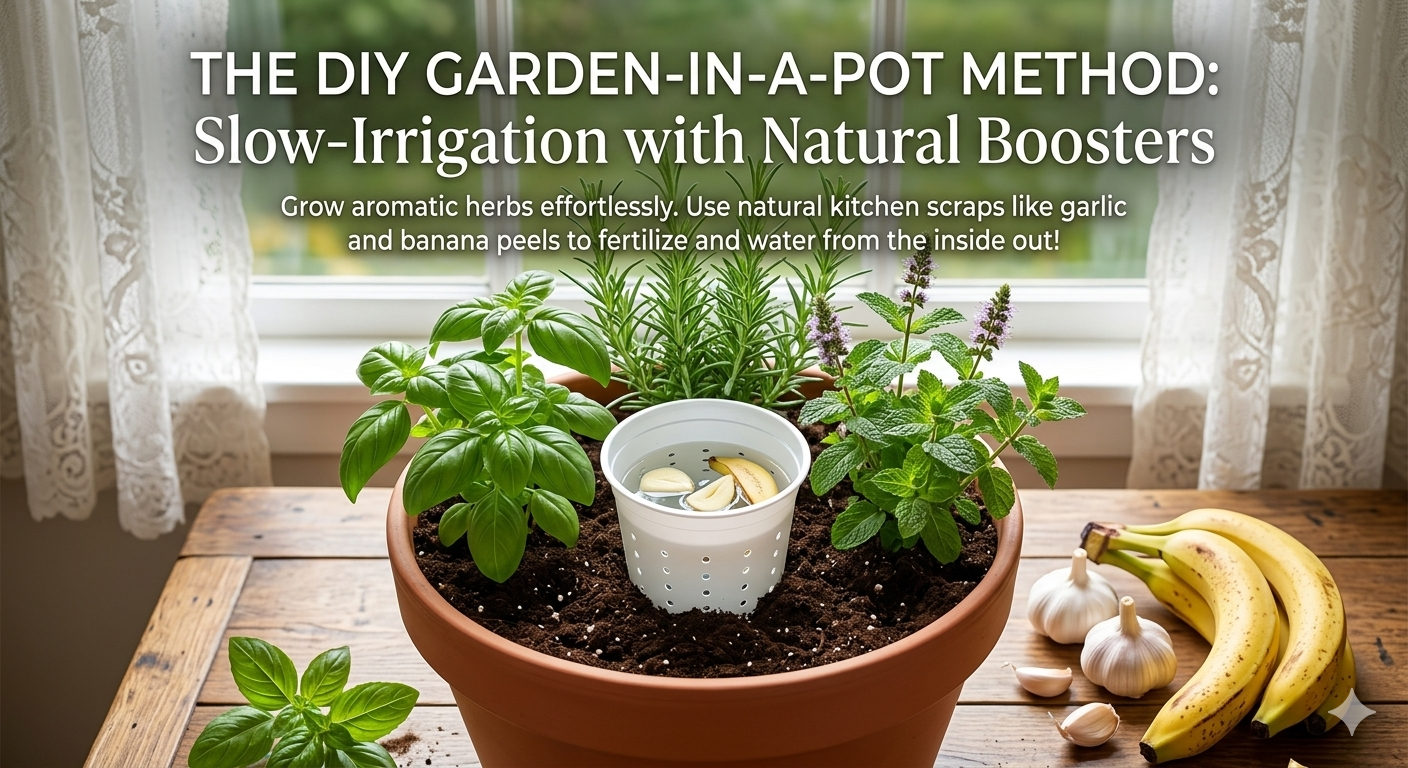
If you love fresh herbs but struggle to keep them consistently watered, this simple gardening trick can make a huge difference. By placing a perforated plastic cup in the center of a larger pot, you create a slow-release irrigation system that keeps the soil evenly moist for days.
This low-cost method is ideal for growing herbs such as basil, parsley, cilantro, and mint. It also works well for lettuce and other shallow-rooted vegetables. Even better, you can add natural ingredients like garlic and banana peel to the cup to provide nutrients and help deter pests.
In this guide, you’ll learn how the self-watering pot method works, why it is so effective, and how to build one at home.
What Is the Plastic Cup Self-Watering Gardening Method?
The plastic cup self-watering method uses a small cup with holes punched in the sides and bottom. The cup is placed in the center of a larger pot and filled with water. Moisture gradually seeps into the surrounding soil, giving plant roots access to water as needed.
Because the soil stays consistently moist without becoming soggy, plants experience less stress and grow more vigorously.
Benefits of Using a Self-Watering Pot
Consistent Soil Moisture
Plants thrive when moisture levels remain stable. This method helps prevent the cycles of bone-dry soil followed by overwatering.
Less Frequent Watering
Depending on the weather and plant size, the reservoir may provide enough water for several days.
Healthier Root Systems
Roots naturally grow toward the water source, creating stronger and more extensive root development.
Reduced Water Waste
Water is delivered directly to the root zone, minimizing evaporation.
Great for Beginners
This setup is simple, affordable, and forgiving for new gardeners.
Best Herbs to Grow with This Method
The self-watering pot technique is perfect for aromatic herbs, including:
- Basil
- Parsley
- Mint
- Cilantro
- Chives
- Oregano
- Thyme
It also works well for leafy greens such as lettuce and spinach.
Materials You’ll Need
- One large pot with drainage holes
- One small plastic cup
- Nail, screwdriver, or drill
- Potting soil
- Seeds or seedlings
- Water
Optional natural fertilizers:
- Garlic cloves
- Banana peel pieces
How to Make a Plastic Cup Self-Watering Pot
Step 1: Prepare the Cup
Use a nail or drill to make several holes in the bottom and sides of the plastic cup.
Step 2: Position the Cup
Place the cup upright in the center of the larger pot.
Step 3: Add Potting Soil
Fill the pot with high-quality potting mix around the cup.
Step 4: Plant Seeds or Seedlings
Plant herbs evenly around the cup, leaving enough room for growth.
Step 5: Fill the Reservoir
Pour water into the cup until full.
Step 6: Refill as Needed
Check the reservoir every few days and refill when empty.
Using Garlic and Banana Peels as Natural Fertilizer
Garlic
Crushed garlic may help deter some insects and fungal issues. Use small pieces sparingly.
Banana Peels
Banana peels break down over time and add potassium and phosphorus, nutrients that support root growth and flowering.
Important Tip
Use only small amounts to avoid unpleasant odors or mold.
Why Plants Grow Better with This Method
Traditional top watering often leads to uneven moisture. The upper layer may dry out quickly while lower soil remains saturated. With a central reservoir, water moves gradually into the root zone, creating ideal conditions for healthy growth.
This steady moisture supply encourages:
- Faster germination
- Stronger roots
- Lush foliage
- Improved flavor in herbs
Tips for Best Results
Use Lightweight Potting Mix
Choose a well-draining potting soil rather than dense garden soil.
Provide Adequate Sunlight
Most herbs need 6 to 8 hours of sunlight daily.
Add Mulch
A thin layer of mulch reduces surface evaporation.
Monitor Water Levels
Refill the cup before it stays dry for too long.
Avoid Overcrowding
Give each plant enough space for air circulation.
Common Mistakes to Avoid
- Using a cup without enough holes
- Filling the pot with heavy clay soil
- Adding too much organic material to the reservoir
- Forgetting to include drainage holes in the main pot
- Planting too many herbs in one container
Frequently Asked Questions
How often should I refill the cup?
Typically every 2 to 5 days, depending on temperature, pot size, and plant needs.
Can I use this method indoors?
Yes. It works very well for sunny windowsills and indoor herb gardens.
What size cup should I use?
A cup holding 250 to 500 ml is ideal for most medium-sized pots.
Will banana peels attract insects?
Not if used in small amounts and replaced regularly.
Can I use this system for vegetables?
Yes. Lettuce, spinach, and small peppers respond well to this method.
Final Thoughts
The plastic cup self-watering gardening method is one of the easiest and most effective ways to grow healthy herbs in containers. It provides steady moisture, encourages strong roots, and reduces daily maintenance.
By adding natural boosters like garlic and banana peels, you can create a simple eco-friendly system that supports vigorous plant growth.
Whether you are gardening on a balcony, patio, or kitchen windowsill, this clever technique can help you enjoy a constant supply of fresh, fragrant herbs with very little effort.