
Coffee and Walnut Cake stands among the most beloved traditional cakes in British baking. Rich coffee flavor, soft sponge layers, crunchy walnuts, and silky buttercream come together to create a dessert that feels elegant yet comforting. Whether served with afternoon tea, enjoyed during celebrations, or baked simply for weekend indulgence, this timeless cake never loses its charm.
The beauty of Coffee and Walnut Cake lies in its balance. The coffee provides warmth and slight bitterness, while the walnuts add earthy crunch and texture. Meanwhile, the buttercream softens every bite with sweetness and creaminess. Together, these flavors create a sophisticated cake that appeals to both casual bakers and serious dessert lovers.
This detailed guide walks you through every stage of making the perfect Coffee and Walnut Cake. You’ll learn ingredient functions, preparation methods, expert baking tips, decorating ideas, storage techniques, and common mistakes to avoid. By the end, you’ll feel confident enough to bake a bakery-style cake right in your own kitchen.
Why Coffee and Walnut Cake Remains So Popular
Many cakes rely heavily on sweetness alone, but Coffee and Walnut Cake offers depth and character. The coffee flavor creates richness without overpowering the sponge, while walnuts introduce natural texture and nuttiness.
Unlike overly elaborate desserts, this cake feels approachable and nostalgic. It carries the warmth of homemade baking and pairs beautifully with tea or coffee. Additionally, the recipe adapts easily for different occasions, from simple family gatherings to elegant dinner parties.
The sponge itself stays moist and tender thanks to butter, eggs, and milk. Meanwhile, the buttercream filling adds luxurious texture without becoming too heavy.
Ingredients for Coffee and Walnut Cake
Coffee and Walnut Sponge
- 225 g butter (salted or unsalted), softened
- 225 g caster sugar or granulated sugar
- 4 medium or large eggs
- 225 g self-raising flour
- Small pinch of salt (omit if using salted butter)
- 4 teaspoons instant espresso powder
- 2 tablespoons milk
- 50 g walnuts, chopped into small pieces
Coffee Buttercream
- 175 g butter, softened
- 350 g icing sugar, sifted
- 2½ teaspoons instant espresso powder dissolved in 2 tablespoons boiling water
Decoration
- 10–12 walnut halves
- Chopped walnut pieces
Understanding the Key Ingredients
Butter
Butter creates richness, flavor, and tenderness. Softened butter creams more easily with sugar, helping trap air that gives the sponge its light texture.
You can use either salted or unsalted butter. Salted butter slightly enhances the coffee flavor and balances sweetness.
Sugar
Caster sugar works best because it dissolves quickly into the butter. However, brown sugar can create a deeper caramel-like flavor if preferred.
The sugar also helps maintain moisture in the sponge.
Eggs
Eggs provide structure, stability, and richness. They help bind the batter while contributing to the soft texture.
Room-temperature eggs mix more evenly into the batter and create a smoother consistency.
Self-Raising Flour
Self-raising flour already contains baking powder, making the sponge rise evenly and consistently.
Avoid overmixing once the flour enters the batter because too much mixing develops gluten and creates a dense cake.
Espresso Powder
Instant espresso powder delivers concentrated coffee flavor without adding too much liquid. It blends easily into the batter and buttercream.
If you prefer a milder coffee taste, reduce the amount slightly.
Walnuts
Walnuts add crunch, nuttiness, and texture contrast. Their earthy flavor complements coffee exceptionally well.
Lightly toasting walnuts before adding them can deepen their flavor even more.
Step-by-Step Instructions
Preparing the Cake Batter
Step 1: Prepare the Baking Tins
Preheat your oven to 180°C (350°F) or 160°C fan.
Grease and line two round cake tins with parchment paper.
Proper preparation prevents sticking and ensures easy removal after baking.
Step 2: Dissolve the Coffee
In a small bowl, mix the instant espresso powder with the milk until dissolved.
Set aside to cool slightly.
This step distributes the coffee flavor evenly throughout the cake.
Step 3: Cream Butter and Sugar
Place the softened butter and sugar into a large mixing bowl.
Beat together until pale, light, and fluffy. This usually takes several minutes.
Creaming introduces air into the batter, which helps create a soft sponge.
Step 4: Add the Eggs
Add the eggs one at a time, mixing well after each addition.
If the mixture starts to curdle, add a spoonful of flour to stabilize it.
The batter should look smooth and creamy.
Step 5: Fold in the Dry Ingredients
Sift the self-raising flour and salt into the bowl.
Gently fold the flour into the batter using a spatula or spoon.
Avoid aggressive mixing because it can make the cake dense.
Step 6: Add Coffee and Walnuts
Pour in the coffee mixture and add the chopped walnuts.
Fold gently until evenly combined.
The batter should remain smooth and thick.
Baking the Cake
Divide the batter evenly between the prepared cake tins.
Smooth the tops gently.
Bake for approximately 25–30 minutes or until:
- The cakes rise evenly
- The tops turn golden
- A skewer inserted into the center comes out clean
Avoid opening the oven too early because sudden temperature changes may cause sinking.
Cooling the Cakes
Allow the cakes to cool in the tins for about 10 minutes.
Then transfer them to a wire rack to cool completely.
Never frost warm cakes because the buttercream will melt.
Making the Coffee Buttercream
Step 1: Prepare the Coffee Mixture
Dissolve the espresso powder in boiling water and allow it to cool.
Step 2: Beat the Butter
Place softened butter into a mixing bowl and beat until smooth and creamy.
Step 3: Add Icing Sugar
Gradually add sifted icing sugar while mixing slowly.
Once incorporated, increase speed and beat until fluffy.
Step 4: Add Coffee
Pour in the cooled coffee mixture.
Beat again until smooth, creamy, and evenly flavored.
The buttercream should feel light and spreadable.
Assembling the Coffee and Walnut Cake
Place one sponge layer onto a serving plate.
Spread a generous amount of coffee buttercream over the top.
Place the second sponge layer on top.
Cover the top with more buttercream.
You can leave the sides exposed for a rustic look or frost the entire cake for a polished finish.
Decorating the Cake
Arrange walnut halves around the top edge of the cake.
Sprinkle chopped walnuts over the buttercream.
For extra elegance, dust lightly with cocoa powder or drizzle with coffee icing.
The walnut decoration immediately signals the cake’s classic flavor combination.
Tips for the Perfect Coffee and Walnut Cake
Use Room-Temperature Ingredients
Cold ingredients don’t combine as smoothly and may affect texture.
Measure Carefully
Accurate measurements create balanced sponge texture and proper rise.
Don’t Overbake
Overbaking dries out the sponge. Remove the cakes once a skewer comes out clean.
Toast the Walnuts
Toasting walnuts briefly intensifies their flavor and aroma.
Delicious Variations
Add Chocolate
Coffee and chocolate pair beautifully. Add chocolate chips or drizzle melted chocolate on top.
Make Cupcakes
This batter works wonderfully for cupcakes. Reduce baking time to about 18–20 minutes.
Add Caramel
A thin layer of caramel sauce between the sponge layers creates extra richness.
Serving Suggestions
Coffee and Walnut Cake pairs beautifully with:
- Fresh coffee
- Black tea
- Cappuccino
- Espresso
- Vanilla ice cream
The flavors become even richer after several hours, making this cake ideal for preparing ahead.
Storage Instructions
Store the cake in an airtight container at room temperature for up to three days.
For longer storage, refrigerate for up to five days.
Before serving refrigerated cake, allow it to sit at room temperature briefly for the softest texture.
You can also freeze unfrosted sponge layers for up to two months.
Common Mistakes to Avoid
Overmixing the Batter
Too much mixing develops gluten and creates a heavy sponge.
Using Cold Butter
Cold butter won’t cream properly and may create uneven texture.
Adding Warm Coffee to Buttercream
Warm liquid can melt the butter and ruin consistency.
Why This Recipe Works So Well
This Coffee and Walnut Cake succeeds because every component complements the others perfectly.
- Butter creates tenderness
- Coffee adds warmth and complexity
- Walnuts bring crunch and earthiness
- Buttercream balances bitterness with sweetness
The sponge remains moist yet light, while the filling provides creamy richness.
Final Thoughts
Coffee and Walnut Cake remains a timeless classic for good reason. It combines simple ingredients into a dessert that feels refined, comforting, and deeply satisfying. Every slice delivers soft sponge, aromatic coffee flavor, crunchy walnuts, and silky buttercream in perfect harmony.
Whether you bake it for a birthday, afternoon tea, holiday gathering, or quiet weekend treat, this cake always impresses. It looks elegant, tastes luxurious, and rewards both beginner and experienced bakers alike.
Once you master this recipe, you’ll understand why Coffee and Walnut Cake continues to hold a special place in traditional baking.
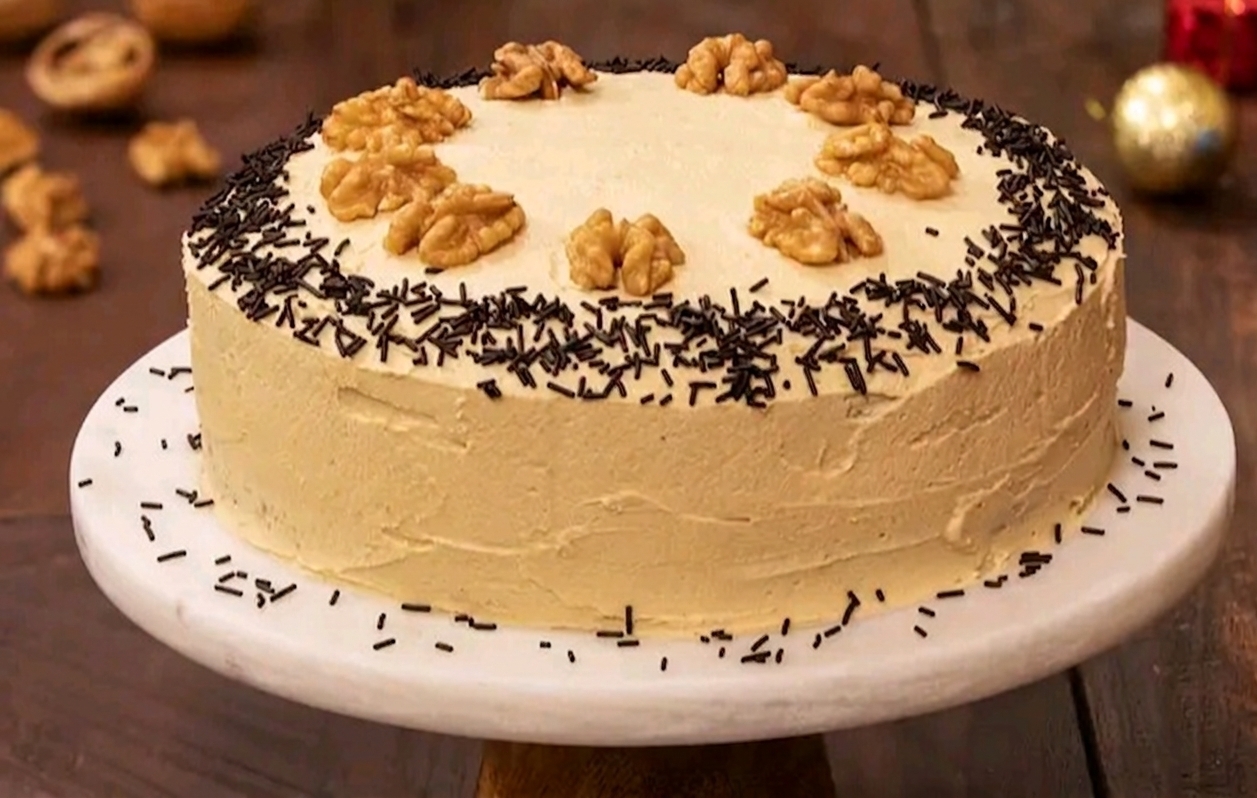

A classic British dessert
Description
Enjoy the rich flavor of coffee paired with crunchy walnuts and soft sponge in this elegant Coffee and Walnut Cake.
Ingredients
Instructions
- Preheat your oven to 180°C (350°F) or 160°C fan. Grease and line two round cake tins with parchment paper.
- In a small bowl, mix instant espresso powder with the milk until dissolved. Set aside to cool slightly.
- Place the softened butter and sugar into a large mixing bowl. Beat together until pale, light, and fluffy.
- Add the eggs one at a time, mixing well after each addition. If the mixture starts to curdle, add a spoonful of flour.
- Sift the self-raising flour and salt into the bowl. Gently fold the flour into the batter using a spatula or spoon.
- Pour in the coffee mixture and add the chopped walnuts. Fold gently until evenly combined.
- Divide the batter evenly between the prepared cake tins. Smooth the tops gently.
- Bake for approximately 25–30 minutes or until the cakes rise evenly and a skewer inserted into the center comes out clean.
- Allow the cakes to cool in the tins for about 10 minutes, then transfer them to a wire rack to cool completely.
- Dissolve espresso powder in boiling water and allow it to cool.
- Place softened butter into a mixing bowl and beat until smooth and creamy.
- Gradually add sifted icing sugar while mixing slowly. Once incorporated, increase speed and beat until fluffy.
- Pour in the cooled coffee mixture and beat again until smooth, creamy, and evenly flavored.
- Place one sponge layer onto a serving plate. Spread a generous amount of coffee buttercream over the top.
- Arrange walnut halves around the top edge of the cake and sprinkle chopped walnuts over the buttercream.
Notes
- Ensure that all ingredients are at room temperature for best results.