
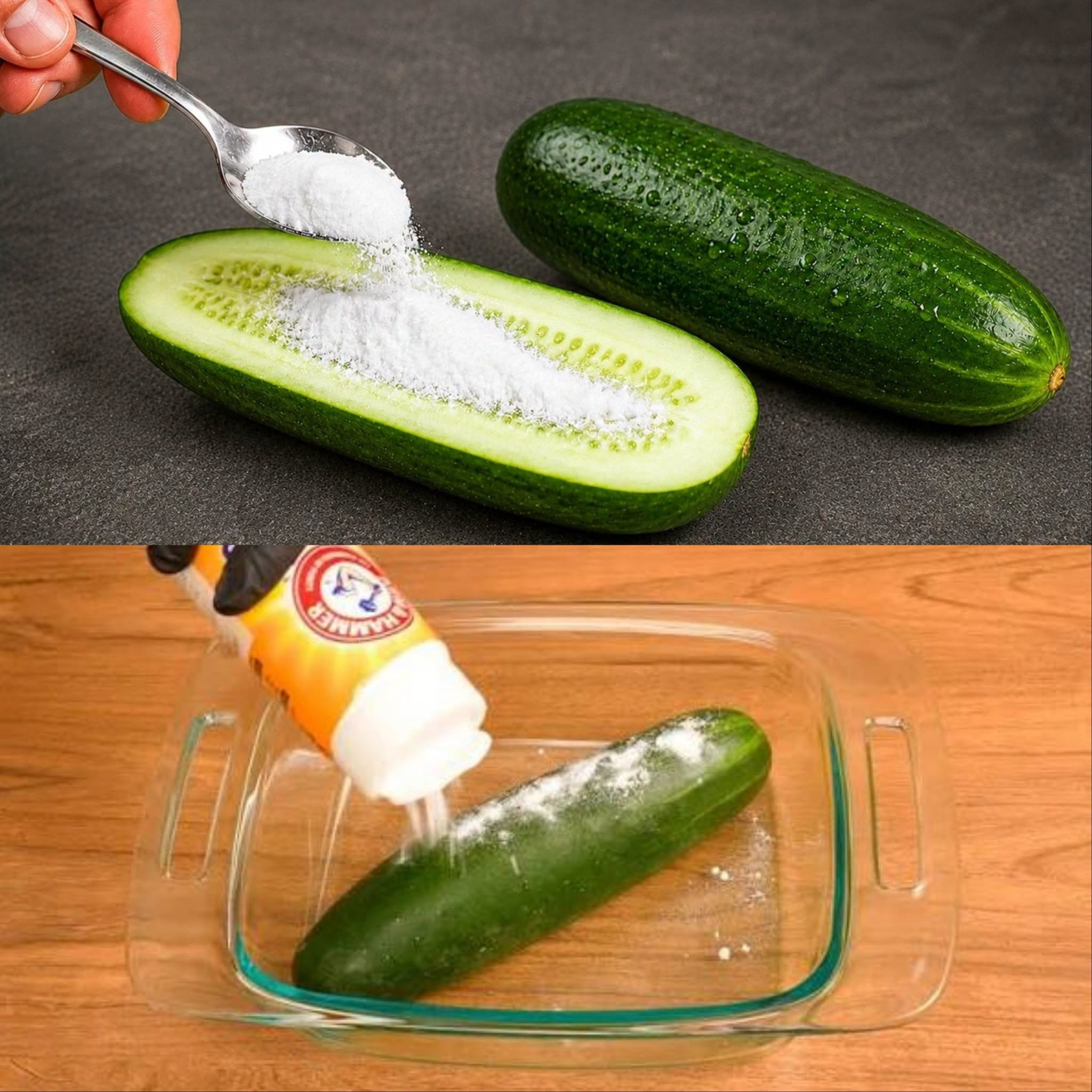
Cucumber and baking soda are two inexpensive ingredients that many people already have in the kitchen. Cucumber is naturally refreshing and contains a high amount of water, while baking soda is a mild alkaline powder commonly used for cleaning, cooking, and other household purposes.
When combined, these ingredients create a simple paste that some people use as a homemade skin treatment. The cool texture of cucumber can feel pleasant on warm or tired skin, while baking soda provides a mild physical exfoliating effect.
However, natural does not automatically mean suitable for every skin type. Baking soda can be irritating because its alkaline nature differs from the skin’s naturally acidic surface. For that reason, this mixture should be used carefully and occasionally rather than as a daily skincare treatment.
If you want to try cucumber and baking soda on your skin, a small patch test is a sensible first step. Avoid the mixture around the eyes, broken skin, and areas that are already irritated.
What Makes Cucumber Useful for Skin?
Cucumber is mostly water, which gives it a naturally cooling and refreshing quality. It is also a source of several plant compounds and small amounts of vitamins and minerals.
Cucumber Provides a Cooling Sensation
Fresh cucumber feels cool when applied to the skin, especially when it has been refrigerated beforehand.
That cooling sensation can temporarily make the skin feel refreshed. It can also be pleasant after spending time outdoors or during warm weather.
The cooling effect is mainly a sensory benefit. It should not be confused with treatment for an underlying skin condition.
Cucumber Contains Antioxidant Compounds
Cucumbers contain various plant compounds with antioxidant activity. Antioxidants are substances that help protect cells from oxidative stress.
Using cucumber as part of a balanced diet is one way to obtain these compounds. Applying cucumber directly to the skin is a different matter, and evidence for specific cosmetic benefits from homemade cucumber preparations is limited.
Cucumber Contains Plenty of Water
The high water content of cucumber makes it feel fresh and hydrating when used in a simple homemade preparation.
That temporary feeling of moisture can be especially welcome when the skin feels warm or dry.
Still, cucumber should not be considered a replacement for a properly formulated moisturizer. A moisturizer is generally more reliable for supporting the skin barrier.
What Does Baking Soda Do?
Baking soda, also called sodium bicarbonate, is an alkaline powder. It has a fine texture that can provide physical exfoliation when rubbed against the skin.
Mild Physical Exfoliation
The small particles in baking soda can remove some surface debris when used as a scrub.
However, more is not better. Scrubbing too aggressively or using baking soda too often can cause dryness and irritation.
For facial skin, gentle skincare products formulated specifically for the face are generally a safer choice than frequent homemade abrasive treatments.
Why Baking Soda Can Be Irritating
Healthy skin has a naturally acidic surface known as the acid mantle. Baking soda is alkaline, so applying it can temporarily disturb the skin’s normal environment.
Some people may experience redness, dryness, burning, itching, or irritation after using baking soda.
This is particularly important for people with sensitive or already irritated skin.
How to Make a Cucumber and Baking Soda Paste
If you decide to try this combination, keep the recipe simple.
Ingredients
- ½ fresh cucumber
- ½ to 1 teaspoon baking soda
Using less baking soda makes the mixture milder. There is no need to add a large quantity.
Preparation
Wash the cucumber thoroughly.
Peel it if you prefer, although the peel can be left on if it is clean and fresh.
Grate the cucumber into a small bowl or blend it into a smooth puree.
Because cucumber contains a lot of water, you may have a fairly thin mixture. If necessary, drain a little of the excess liquid.
Add a small amount of baking soda and stir until you have a smooth, spreadable mixture.
Prepare only enough for immediate use. Homemade mixtures containing fresh produce do not have the preservatives found in commercial skincare products.
How to Use the Mixture Safely
Start With a Patch Test
Before applying the mixture to your face, test a small amount on an inconspicuous area of skin.
Wait and observe how your skin reacts. If you experience burning, significant redness, swelling, or itching, wash the area and do not use the mixture again.
A patch test cannot guarantee that a product will never cause irritation, but it can help you identify an obvious reaction before applying it more widely.
Apply a Thin Layer
If your skin tolerates the mixture, apply a thin layer to clean skin.
Avoid the eye area, lips, nostrils, and any cuts or irritated patches.
There is no need to scrub the mixture into your skin. Simply spread it gently across the desired area.
Keep the Application Short
Leave the mixture on for approximately 5 to 10 minutes rather than keeping it on for a long period.
Rinse thoroughly with cool or lukewarm water.
Pat your skin dry instead of rubbing it with a towel.
Afterward, apply a gentle moisturizer to help maintain the skin barrier.
A Refreshing Cucumber Face Mask
A cucumber-based mask can be used when you want a simple cooling skincare experience.
How to Apply It
Apply a thin layer of the cucumber mixture to clean skin while avoiding the eye area.
Leave it on for several minutes.
Rinse thoroughly with lukewarm or cool water and gently pat your face dry.
Follow with a fragrance-free moisturizer if your skin feels dry.
The main benefit you may notice is a temporary feeling of freshness and softness rather than a permanent change in your skin.
What About Using It Under the Eyes?
Extra caution is needed around the eyes.
The original method suggests applying the baking soda mixture underneath the eyes. I would not recommend doing that because the skin in this area is delicate and baking soda can cause irritation if it gets into the eyes.
A Safer Cucumber Option
If your eyes feel tired or puffy, chilled cucumber slices are a simpler option.
Place clean, cool cucumber slices over closed eyelids for several minutes.
Do not place baking soda near your eyes.
The cool temperature can provide a temporary soothing sensation, but cucumber slices should not be expected to treat an eye disease or persistent swelling.
If you have ongoing eye swelling, redness, pain, discharge, or vision changes, seek appropriate medical advice.
Can You Use Cucumber and Baking Soda on Your Feet?
Feet generally have thicker skin than the face, but they can still become irritated.
If you want to use baking soda as part of a foot soak, it is better to dilute the baking soda thoroughly in water rather than applying a concentrated paste directly to rough skin.
Simple Foot Soak
Fill a basin with comfortably warm water.
Add a small amount of baking soda and stir until dissolved.
You can add a few slices of fresh cucumber for a cooling, refreshing touch.
Soak your feet for approximately 10 to 15 minutes.
Afterward, dry your feet carefully, especially between the toes, and apply a foot moisturizer if needed.
Avoid soaking areas with open wounds or significant skin irritation.
Tips for Using Cucumber and Baking Soda
Use Fresh Cucumber
Fresh cucumber gives the mixture its cooling texture and water content. Choose a firm cucumber without obvious signs of spoilage.
Use Less Baking Soda
A larger amount of baking soda does not necessarily make the mixture more effective.
For facial use, a small amount is enough. More concentrated mixtures may increase the chance of dryness or irritation.
Don’t Scrub Your Face
If you use the mixture as an exfoliating preparation, avoid vigorous rubbing.
Facial skin can be damaged by excessive mechanical exfoliation, particularly if you already use exfoliating acids, retinoids, or other active skincare ingredients.
Don’t Use It Every Day
There is no need to apply baking soda to your face daily.
Frequent use may contribute to dryness or irritation. If your skin reacts negatively, stop using the mixture.
Avoid Broken Skin
Do not apply baking soda mixtures to cuts, scrapes, sunburn, eczema flares, or other damaged areas.
Moisturize Afterwards
After rinsing, use a gentle moisturizer. This can help reduce the dry feeling that may occur after cleansing or exfoliating.
Who Should Be Especially Careful?
People with sensitive skin should be particularly cautious with baking soda.
If you already experience frequent redness, dryness, itching, or irritation, a homemade baking soda treatment may not be appropriate.
People with diagnosed skin conditions should also be careful about experimenting with household ingredients.
A dermatologist can recommend products that are better suited to your specific skin condition and skin barrier.
Cucumber and Baking Soda vs. Cucumber Alone
If your main goal is simply a cooling and refreshing homemade treatment, cucumber alone is the gentler option.
You can chill cucumber slices and place them on clean skin for several minutes.
Alternatively, blend cucumber into a puree and apply it briefly before rinsing.
Adding baking soda introduces an exfoliating component, but it also introduces a greater possibility of irritation.
Therefore, there is no need to add baking soda simply because a skincare recipe calls for it.
Can This Mixture Remove Dark Spots?
There is no reliable evidence that a homemade cucumber and baking soda mixture can remove dark spots.
Dark spots can have many causes, including sun exposure, acne-related pigmentation, hormonal changes, and inflammation.
Trying to scrub pigmentation away with baking soda can irritate the skin and potentially make discoloration more noticeable.
Daily sunscreen and appropriately formulated skincare products are generally more useful approaches for managing uneven pigmentation.
Can It Treat Acne?
This mixture should not be considered an acne treatment.
Baking soda does not have the same evidence behind it as established acne ingredients such as salicylic acid or benzoyl peroxide.
In fact, irritating acne-prone skin can sometimes make the situation worse.
If you regularly experience breakouts, a gentle cleanser and proven acne products are a better starting point.
Can It Make Skin Look Younger?
There is no good reason to expect cucumber and baking soda to reverse wrinkles or permanently make skin younger.
The temporary cooling and smoothing sensation may make the skin feel refreshed, but that is different from changing the underlying structure of the skin.
For long-term skin care, sun protection, adequate moisturization, and evidence-based skincare ingredients are much more important.
Frequently Asked Questions
Is cucumber and baking soda safe for the face?
It may be tolerated by some people, but baking soda can irritate facial skin. If you decide to try it, use a small amount, avoid sensitive areas, and perform a patch test first.
How long should I leave cucumber and baking soda on my face?
Keep the application short, around 5 to 10 minutes. Rinse immediately if you experience burning, stinging, itching, or significant redness.
Can I use it every day?
Daily use is not recommended. Baking soda can be drying and irritating, particularly when repeatedly applied to facial skin.
Can I use baking soda under my eyes?
It is better to avoid baking soda around the eyes. The skin is delicate, and accidental contact with the eyes can cause irritation.
Are cucumber slices good for puffy eyes?
Chilled cucumber slices can provide a temporary cooling and soothing sensation. However, they do not treat the underlying causes of persistent eye puffiness.
Can this mixture remove wrinkles?
No. There is no good evidence that cucumber and baking soda can remove wrinkles or reverse skin aging.
Can baking soda lighten dark spots?
Baking soda should not be relied on to lighten pigmentation. Irritation from harsh home treatments can sometimes make discoloration more noticeable.
Can I use this mixture on sensitive skin?
People with sensitive skin should be especially cautious. A gentle, fragrance-free skincare product is generally a better option if your skin reacts easily.
Can I use cucumber and baking soda for rough feet?
A diluted baking soda foot soak may be more appropriate than applying a concentrated paste. Avoid using it on cracked, bleeding, or irritated skin.
Should I moisturize after using it?
Yes. Applying a gentle moisturizer after rinsing can help reduce dryness and support the skin barrier.
Final Thoughts
Cucumber and baking soda are simple household ingredients that can be combined into a homemade skincare preparation, but they should not be treated as a miracle remedy.
Cucumber can provide a pleasant cooling sensation and contains naturally occurring plant compounds. Baking soda has a fine texture that can provide physical exfoliation, but its alkaline nature also means it can irritate or dry the skin.
If you enjoy homemade skincare, keep the approach simple and gentle. Use fresh cucumber, limit the amount of baking soda, avoid the eye area, and stop immediately if your skin becomes irritated.
For ongoing concerns such as acne, persistent redness, dark spots, severe dryness, or other skin problems, evidence-based skincare and professional advice are more reliable than kitchen remedies.
The simplest lesson is often the most useful one: a homemade treatment should leave your skin feeling comfortable, not irritated.