

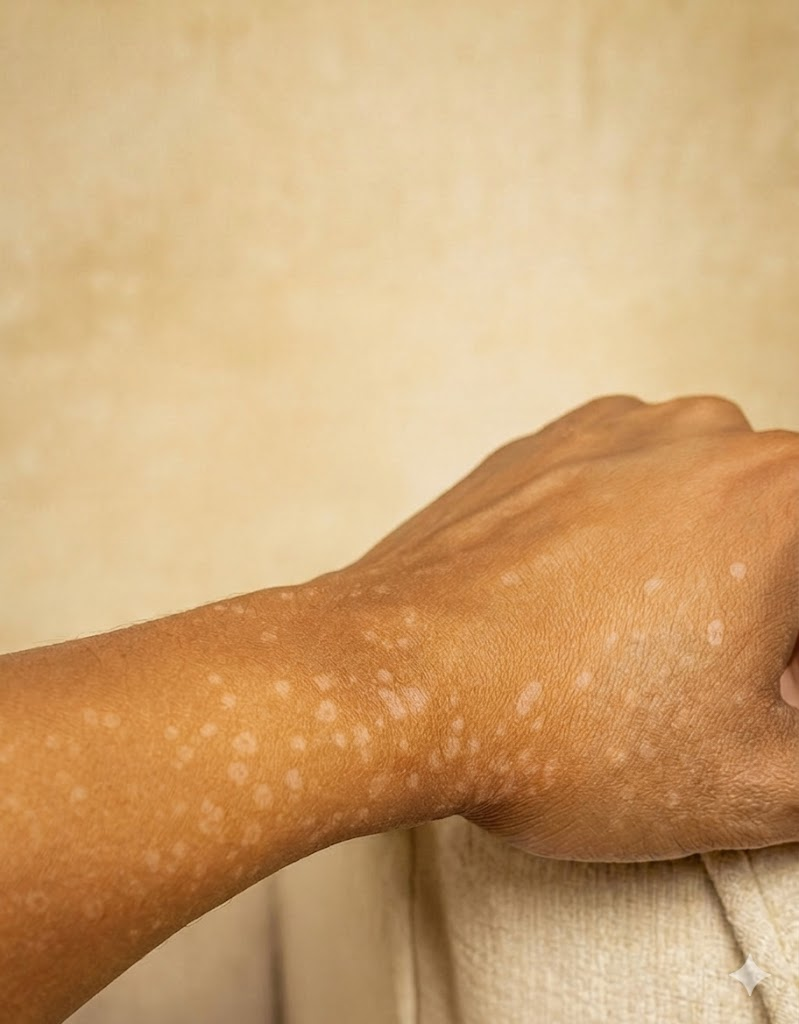
White spots on the skin can appear for many different reasons, especially as people get older. Some causes are harmless and related to sun exposure or dry skin, while others may involve fungal infections, autoimmune conditions, or nutritional deficiencies.
Although many white spots are not dangerous, persistent or changing patches should not be ignored — especially if they spread, itch, become painful, or affect sensitive areas.
Common Causes of White Spots on the Skin
Tinea Versicolor
Tinea versicolor is a common fungal condition caused by an overgrowth of yeast naturally found on the skin.
Symptoms may include:
- White, pink, or brown patches
- Mild scaling
- Itching in some cases
- Spots on the chest, back, shoulders, or arms
Hot weather, sweating, and hormonal changes may increase risk.
Treatment often includes:
- Antifungal creams
- Selenium sulfide shampoo
- Prescription medication if severe
Idiopathic Guttate Hypomelanosis (IGH)
IGH causes small white spots that commonly appear after years of sun exposure.
Typical features:
- Tiny round white dots
- Usually on shins, forearms, or hands
- More common after age 40–50
- Harmless but usually permanent
Sun protection may help prevent more spots from developing.
Pityriasis Alba
This mild skin condition is often linked to dry skin or eczema.
Common signs:
- Light patches with slight dryness
- Usually on the face or arms
- More noticeable after sun exposure
Moisturizers and gentle skincare often help improve appearance over time.
Nutritional Deficiencies
Certain nutrient deficiencies can sometimes affect skin pigmentation.
Possible nutrients involved:
- Vitamin B12
- Vitamin D
- Copper
- Iron
Deficiencies may also cause:
- Fatigue
- Weakness
- Numbness
- Brittle nails or hair changes
A healthcare professional can confirm deficiencies with blood tests.
Post-Inflammatory Hypopigmentation
Sometimes skin loses pigment temporarily after healing from:
- Eczema
- Psoriasis
- Burns
- Rashes
- Minor injuries
These lighter areas often improve slowly over time.
Vitiligo
Vitiligo is an autoimmune condition where pigment-producing cells are lost.
Features may include:
- Clearly defined white patches
- Symmetrical appearance
- Gradual spreading
- Hair whitening in affected areas
Early evaluation by a dermatologist can help guide treatment options.
Lichen Sclerosus
This chronic inflammatory condition often affects genital skin, especially in women after menopause.
Symptoms may include:
- Thin white patches
- Itching
- Pain or discomfort
- Fragile skin
Medical evaluation is important because untreated cases may lead to scarring or complications.
Medication or Chemical-Related Changes
Long-term use of certain skin-lightening creams, steroids, or harsh chemicals may affect pigmentation.
Always use medicated creams exactly as directed by a healthcare provider.
When You Should See a Doctor
Seek medical evaluation if white spots:
- Spread quickly
- Itch or hurt
- Appear in the genital area
- Become scaly or inflamed
- Change shape or texture
- Occur alongside fatigue or other symptoms
A dermatologist may recommend:
- Skin examination
- Wood’s lamp testing
- Blood tests
- Skin biopsy in some cases
Healthy Skin Habits That May Help
Protect Your Skin From Sun Damage
Daily sunscreen helps reduce UV-related pigment changes.
Keep Skin Moisturized
Dry or irritated skin can worsen discoloration.
Eat a Balanced Diet
Focus on foods rich in:
- Vitamin B12
- Copper
- Zinc
- Vitamin D
- Antioxidants
Avoid Harsh Skin Products
Overusing strong bleaching creams or steroid creams may damage the skin barrier.
Frequently Asked Questions
Are white spots always vitiligo?
No. Many white spots are caused by fungal infections, sun damage, or mild skin conditions.
Can diet help improve white spots?
If nutrient deficiencies are involved, correcting them may help improve skin health.
Are white spots dangerous?
Some are harmless, but others may need medical treatment. Persistent or changing spots should be checked professionally.
Can fungal white spots spread?
Yes. Tinea versicolor can spread gradually if untreated.
Final Thoughts
White spots on the skin can have many causes, ranging from harmless sun-related changes to conditions that require medical care. Paying attention to changes in your skin and getting professional evaluation early can help identify the cause and guide the right treatment.
This article is for informational purposes only and does not replace professional medical advice, diagnosis, or treatment.