
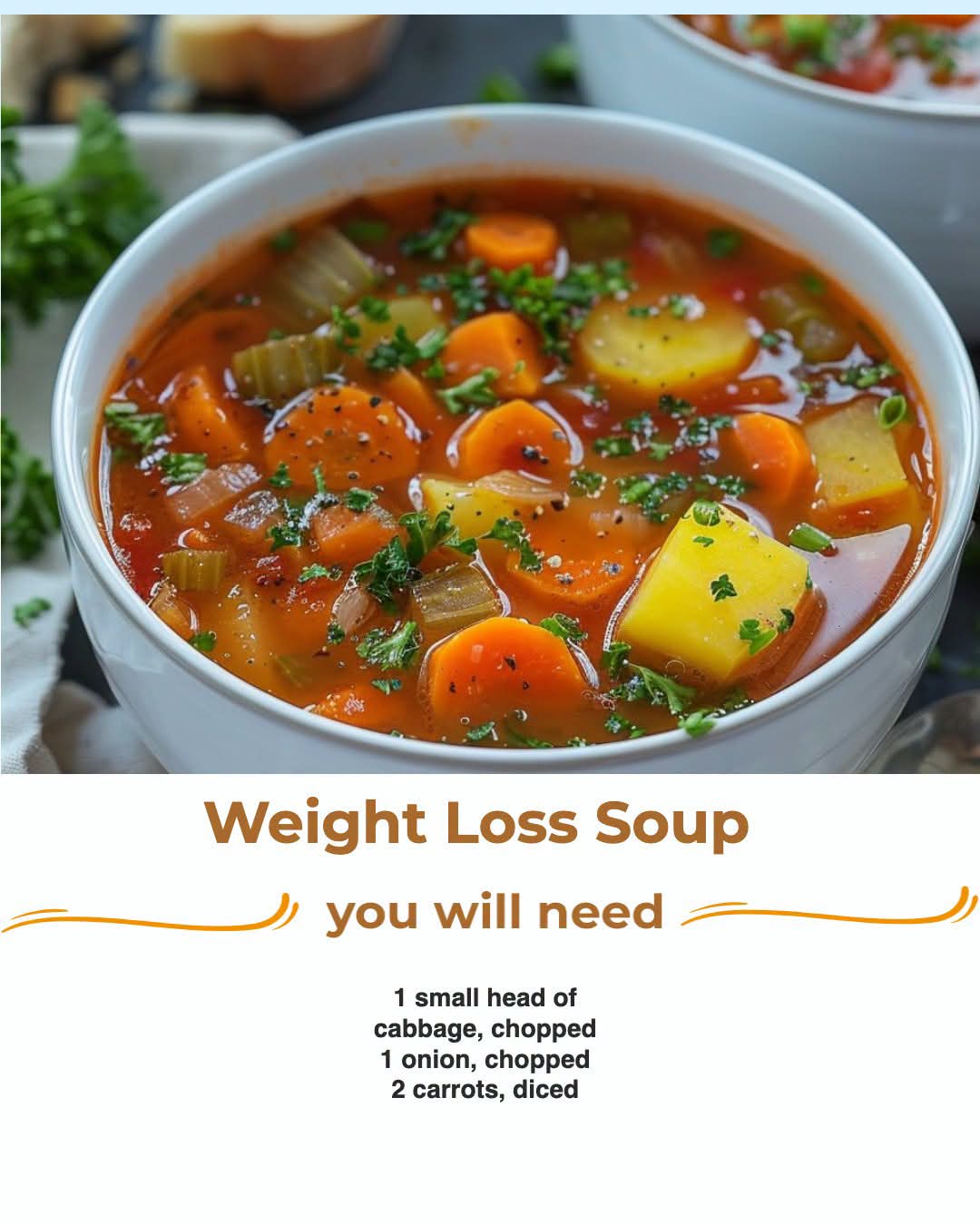
A warm bowl of homemade Weight Loss Soup can make a simple, satisfying addition to a balanced eating plan. Packed with cabbage, carrots, celery, onions, garlic, tomatoes, and vegetable broth, this light soup delivers plenty of vegetables in every spoonful while keeping the preparation wonderfully simple.
Despite its name, this soup doesn’t magically cause weight loss. Instead, it can support healthy eating because vegetables and broth can create a filling meal without requiring heavy ingredients. You can enjoy it as a light lunch, a side dish, or part of a larger meal that includes protein and other nourishing foods.
Best of all, this recipe uses inexpensive ingredients and one pot, so you can prepare a comforting homemade soup without spending hours in the kitchen.
What Is Weight Loss Soup?
Weight Loss Soup is a vegetable-based soup designed to provide a filling, lower-calorie meal option. This version combines cabbage, carrots, celery, onion, garlic, tomatoes, and vegetable broth with a small amount of olive oil.
The vegetables provide different textures and flavors, while the broth creates a light and comforting base.
Rather than relying on restrictive dieting, you can use this soup as one practical part of an overall balanced eating pattern.
Why You’ll Love This Vegetable Soup
This soup offers several advantages:
- Simple ingredients
- Easy one-pot preparation
- Plenty of vegetables
- Warm and satisfying
- Naturally light
- Easy to customize
- Excellent for meal preparation
- Budget-friendly
You can also adjust the herbs and seasonings depending on what you already have in your kitchen.
Ingredients You’ll Need
Vegetables
- 1 small head cabbage, chopped
- 1 onion, chopped
- 2 carrots, diced
- 3 celery stalks, chopped
- 4 cloves garlic, minced
The combination creates a flavorful vegetable base with plenty of texture.
Soup Base
- 6 cups vegetable broth
- 1 can diced tomatoes
- 1 tablespoon olive oil
Choose a vegetable broth that suits your preferred level of saltiness.
Seasonings
- Salt, to taste
- Black pepper, to taste
- Optional thyme
- Optional basil
- Optional parsley
Fresh herbs can brighten the finished soup, while dried herbs offer a convenient alternative.
How to Make Weight Loss Soup
Step 1: Prepare the Vegetables
Wash and chop the cabbage, onion, carrots, and celery.
Mince the garlic.
Try to cut the vegetables into similarly sized pieces so they cook at roughly the same rate.
Step 2: Sauté the Aromatics
Heat the olive oil in a large pot over medium heat.
Add the chopped onion and celery.
Cook for several minutes until the onion begins to soften.
Add the minced garlic and cook briefly until fragrant.
Avoid cooking the garlic for too long because it can develop a bitter taste.
Step 3: Add the Vegetables
Add the chopped cabbage and diced carrots to the pot.
Stir everything together so the vegetables combine with the aromatic onion and garlic mixture.
The cabbage may initially fill much of the pot, but it will shrink considerably as it cooks.
Step 4: Add the Broth and Tomatoes
Pour in the vegetable broth.
Add the diced tomatoes along with their juices.
Stir well.
Season with salt, black pepper, and your choice of thyme, basil, or parsley.
Step 5: Simmer the Soup
Bring the soup to a gentle boil.
Reduce the heat and allow it to simmer until the vegetables become tender.
Depending on the size of your vegetable pieces and your preferred texture, this can take roughly 20 to 30 minutes.
Stir occasionally.
Step 6: Taste and Adjust
Taste the soup once the vegetables have reached your preferred tenderness.
Add additional salt, pepper, or herbs if necessary.
If you prefer a more intense flavor, allow the soup to simmer a little longer.
Step 7: Serve
Ladle the hot soup into bowls.
Add fresh parsley or another favorite herb before serving.
Enjoy it warm as a light meal or alongside a protein-rich dish.
How This Soup Can Fit Into a Healthy Diet
The term “weight loss soup” can sometimes create unrealistic expectations. No individual food can guarantee weight loss.
However, vegetable-based soups can fit nicely into a balanced diet. The cabbage, carrots, celery, tomatoes, onion, and garlic contribute fiber and nutrients, while the broth adds volume and warmth.
For a more complete meal, pair a bowl with a source of protein such as beans, lentils, chicken, tofu, or another protein you enjoy.
Tips for Making Better Vegetable Soup
Don’t Overcook the Vegetables
Cook the vegetables until tender but not mushy if you prefer a little texture.
Season Gradually
Start with a modest amount of salt and adjust near the end.
Use Good Broth
Because broth forms much of the soup’s flavor, choose one that tastes good on its own.
Add Herbs at the Right Time
Dried herbs can simmer with the soup, while fresh parsley often tastes best when you add it near the end.
Easy Variations
Add Beans
Add drained white beans, kidney beans, or chickpeas for extra protein and substance.
Add Lean Chicken
Cooked shredded chicken can turn the vegetable soup into a more substantial meal.
Make It Spicy
Add crushed red pepper flakes, cayenne, or diced chili peppers.
Add More Vegetables
Try adding:
- Zucchini
- Green beans
- Spinach
- Bell peppers
- Mushrooms
Add Lentils
Lentils provide plant-based protein and make the soup much more filling.
How to Store the Soup
Allow the soup to cool before transferring it to airtight containers.
Refrigerate it and enjoy within several days.
For convenient meal preparation, divide the soup into individual portions before refrigerating.
Can You Freeze Weight Loss Soup?
Yes.
Allow the soup to cool completely, then transfer it to freezer-safe containers.
Leave a little room at the top because liquid expands as it freezes.
Thaw the soup in the refrigerator and reheat it gently on the stovetop or in the microwave.
Common Mistakes to Avoid
Adding Too Much Salt
Broth and canned tomatoes can already contain sodium, so taste before adding additional salt.
Cutting Vegetables Unevenly
Large pieces may remain firm while small pieces become overly soft.
Boiling Aggressively
A gentle simmer helps preserve the texture of the vegetables.
Treating Soup as a Complete Diet
A vegetable soup can complement healthy eating, but an overly restrictive soup-only diet may not provide adequate protein, fat, and other nutrients.
Frequently Asked Questions
Does Weight Loss Soup actually help you lose weight?
The soup itself doesn’t cause fat loss. It can support a calorie-conscious eating pattern because vegetables and broth can provide a filling, relatively light meal.
Can I eat this soup every day?
You can include it regularly if it fits your overall diet. However, variety matters, so include other vegetables, protein sources, whole grains, and healthy fats throughout the week.
Can I add potatoes?
Yes. Potatoes can make the soup heartier and add carbohydrates.
Can I add protein?
Absolutely. Beans, lentils, tofu, chicken, or another protein source can make the soup more satisfying.
How long does homemade vegetable soup last?
Properly refrigerated soup generally keeps for several days. Store it promptly in airtight containers.
Can I make this soup spicy?
Yes. Crushed red pepper flakes, cayenne, jalapeños, or chili powder can add plenty of heat.
Conclusion
Weight Loss Soup offers a simple way to add more vegetables and satisfying volume to your meals. Cabbage, carrots, celery, tomatoes, onion, and garlic create a flavorful combination, while vegetable broth keeps the soup light and comforting.
Remember, though, that sustainable weight management involves your overall eating pattern and lifestyle rather than one specific recipe. Enjoy this soup alongside balanced meals, adequate protein, and a variety of nutritious foods for a practical approach to healthy eating.