
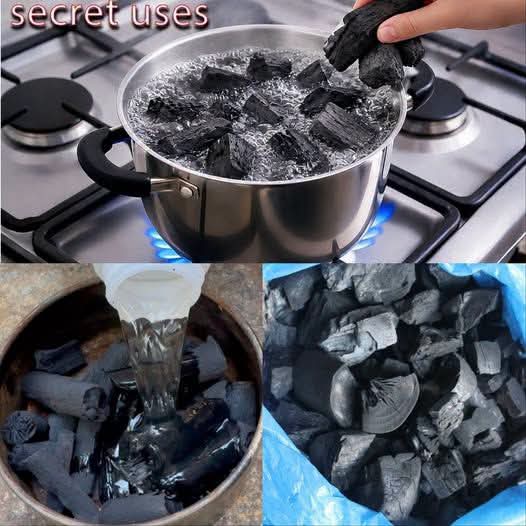
What if something as ordinary as a piece of charcoal could be turned into a useful household resource instead of being thrown away?
Charcoal is inexpensive, widely available, and surprisingly versatile. It has been used for generations for cooking, heating, filtering, gardening, odor control, and many other purposes. Today, charcoal is also associated with crafts, natural products, soil amendments, and small-scale household projects.
But there is one unusual idea that has been circulating online: boiling charcoal and turning the resulting material into something valuable.
The phrase “Boil Charcoal and Make Money!” certainly sounds dramatic. And while boiling charcoal isn’t a magical money-making trick, there are legitimate ways to reuse charcoal and charcoal-derived materials that may save money or potentially become part of a small home-based product business.
The important thing is understanding what charcoal can actually do, what it cannot do, and which ideas are safe and practical.
Let’s take a closer look at the secret uses behind this unusual household material.
What Happens When You Boil Charcoal?
First, it’s important to clarify something.
Charcoal doesn’t simply dissolve in boiling water.
Ordinary charcoal is primarily carbon, along with varying amounts of ash and other substances depending on how it was produced and what it was made from.
When charcoal is placed in hot water, the water can interact with soluble minerals, ash, and other surface materials. Some contaminants or soluble compounds may move into the water.
However, simply boiling ordinary charcoal does not create activated charcoal.
That’s an important distinction because activated carbon is manufactured through controlled processes designed to create a highly porous material with a large internal surface area.
So if you see an online video claiming that boiling ordinary charcoal magically produces activated charcoal, be skeptical.
The process is not that simple.
Why Are People Interested in Charcoal?
Charcoal is interesting because of its porous structure.
Depending on how it is produced, charcoal can contain many tiny pores. These pores give charcoal a large surface area and allow it to interact with certain substances.
That’s one reason carbon-based materials are used in filtration, odor control, industrial processes, and environmental applications.
However, not all charcoal behaves the same way.
Cooking charcoal, lump charcoal, charcoal briquettes, biochar, and activated carbon are different products.
They shouldn’t automatically be treated as interchangeable.
Secret Use #1: Odor Control
One of the simplest legitimate uses for suitable charcoal is odor control.
Charcoal can help reduce certain unpleasant smells in enclosed spaces.
You may find charcoal-based odor absorbers marketed for:
- Refrigerators
- Shoes
- Closets
- Cars
- Pet areas
- Cabinets
- Storage containers
This has created an opportunity for people interested in making simple household odor-control products.
However, homemade charcoal products should be prepared carefully.
You should never place unknown charcoal directly alongside food or use a homemade charcoal product where it could contaminate food.
Commercial activated-carbon odor absorbers are generally a more predictable option.
Secret Use #2: Gardening and Biochar
Another fascinating use for charcoal is in gardening.
A specially prepared type of charcoal known as biochar can be incorporated into soil.
Biochar is produced from organic materials under controlled conditions with limited oxygen. Its characteristics depend heavily on the original material and production process.
Some gardeners use biochar as a soil amendment because its porous structure can interact with water and nutrients.
But there is a major difference between simply dumping barbecue charcoal into your garden and using properly produced biochar.
Commercial briquettes may contain additives, binders, ignition materials, or other substances that aren’t appropriate for soil.
For gardening, use a product specifically intended as biochar or follow a reliable agricultural preparation method.
Secret Use #3: Composting
Biochar can also be incorporated into composting systems.
When appropriately prepared, biochar can provide a porous carbon-rich material that interacts with moisture and organic matter.
Some composting enthusiasts mix small amounts of biochar into compost rather than putting it directly into garden beds.
The idea is to allow the material to become biologically active before it is incorporated into soil.
Again, not every piece of charcoal belongs in compost.
Avoid charcoal products containing lighter fluid, chemical additives, or unknown ingredients.
Secret Use #4: Craft Projects
Charcoal can also become a surprisingly interesting craft material.
Artists have used charcoal for drawing and shading for centuries.
Natural drawing charcoal can create soft black marks that are easy to blend.
That opens the door to handmade art products, charcoal drawing sticks, sketching materials, and decorative craft kits.
If you’re looking for a small business idea, artistic charcoal products can potentially be more realistic than claims that boiling charcoal produces a valuable mystery substance.
The key is consistency.
Artists care about things like:
- Texture
- Hardness
- Smoothness
- Color intensity
- Breakability
- Packaging
A product that performs consistently is much more likely to be useful than a homemade material with unpredictable characteristics.
Secret Use #5: Natural Garden Products
Charcoal-related products can also be incorporated into gardening kits.
For example, a small business could potentially sell properly prepared biochar intended for:
- Container gardening
- Vegetable gardens
- Composting
- Soil improvement
- Indoor plants
But the product needs to be clearly labeled and honestly described.
Avoid promising that charcoal will make plants grow dramatically faster or solve every soil problem.
Gardening products work best when their claims are realistic and supported by appropriate evidence.
Secret Use #6: Charcoal Water Filtration—With a Big Warning
This is one area where people need to be especially careful.
You may have seen demonstrations in which charcoal is placed inside a bottle or container and dirty water appears cleaner afterward.
The problem is that clearer water is not necessarily safe drinking water.
Ordinary charcoal isn’t a reliable substitute for a certified drinking-water filter.
Even activated carbon doesn’t remove every type of contaminant.
Depending on the filter design, source water, and contaminants involved, additional treatment may be necessary.
A homemade charcoal filter can therefore be useful as an educational demonstration, but it should not automatically be treated as a safe drinking-water purification system.
If you’re treating water for drinking, use an appropriate certified filtration or disinfection method.
Secret Use #7: Cleaning and Odor Absorption Around the Home
Charcoal can be useful in household odor-control applications because of its ability to interact with odor-causing compounds.
Commercial activated-carbon products are commonly used in air-cleaning and odor-control applications.
This creates another possible small-business direction: reusable odor absorbers.
For example, a product could be designed as a small breathable pouch containing an appropriate grade of activated carbon.
The advantage isn’t the word “charcoal” itself.
The value comes from creating a product that is clean, properly packaged, convenient, and actually useful.
Can You Really Make Money From Charcoal?
This is where the headline needs some reality.
Boiling charcoal alone isn’t a guaranteed way to make money.
There is no secret cooking method that automatically turns ordinary charcoal into a valuable product.
But charcoal can be the raw material or inspiration for legitimate products.
Think about the difference.
Instead of:
“Boil charcoal and become rich.”
A more realistic idea is:
“Find a useful charcoal-based product, make it consistently, package it professionally, and sell it to a specific group of customers.”
That’s how almost any small product business works.
The money isn’t created by the charcoal.
The value comes from solving a problem.
What Could You Potentially Sell?
Depending on local regulations, equipment, and demand, charcoal-related products might include:
Decorative charcoal products
Artists and hobbyists may purchase drawing charcoal, especially when it has predictable characteristics.
Odor-control products
Activated-carbon pouches can be marketed for closets, shoes, vehicles, and other areas where odors are a concern.
Gardening biochar
Properly prepared and tested biochar may be sold as a soil amendment.
Compost additives
Some gardening customers may be interested in biochar-based compost products.
Educational kits
Charcoal filtration experiments can be turned into educational science projects, provided they’re clearly labeled as demonstrations and not drinking-water purification systems.
The best product depends on local demand, competition, regulations, and your ability to produce it safely and consistently.
What You Should Never Do With Homemade Charcoal
There are several important safety rules.
Don’t eat homemade charcoal
Food-grade activated charcoal is a specialized product. Ordinary barbecue charcoal is not a food ingredient.
Never assume that charcoal intended for grilling is safe to consume.
Don’t use barbecue briquettes as biochar
Briquettes can contain binders and additives that make them unsuitable for gardening.
Use a product specifically designed for soil or biochar applications.
Don’t inhale charcoal dust
Fine particles can irritate the respiratory system.
When handling dusty carbon materials, minimize airborne dust and use appropriate protective equipment and ventilation.
Don’t boil unknown charcoal indoors
Heating charcoal or carbon-containing materials can produce hazardous fumes depending on what the material contains.
Never burn or heat charcoal in an enclosed space.
Carbon monoxide is particularly dangerous because it is colorless and odorless.
Don’t claim that homemade charcoal purifies drinking water
Water safety is too important for guesswork.
A homemade filter that makes dirty water look clear does not prove that harmful microorganisms, chemicals, or heavy metals have been removed.
A Better Way to Think About the “Boil Charcoal” Trend
Internet trends often take a real scientific concept and turn it into a sensational claim.
Charcoal really can interact with various substances.
Activated carbon really is used in filtration and purification systems.
Biochar really is used in some agricultural applications.
Charcoal really can be useful for odor control.
But these facts don’t mean that boiling a random piece of charcoal creates a miracle product.
The interesting part isn’t the boiling.
It’s understanding the material.
Once you understand what charcoal is and how different carbon products are manufactured, you can separate useful ideas from exaggerated ones.
Could This Become a Small Business?
Potentially—but start with the customer, not the charcoal.
Before spending money on equipment, ask:
Who would buy this?
Then ask:
What problem does my product solve?
For example, if you’re considering an odor-control product, research whether people in your area are already purchasing similar products.
If you’re considering biochar, find out whether gardeners actually want it.
If you’re considering charcoal art products, look at what artists are already buying.
Then calculate your costs.
Your expenses might include:
- Raw materials
- Packaging
- Labels
- Equipment
- Protective equipment
- Electricity or fuel
- Transportation
- Marketplace fees
- Advertising
- Storage
- Waste
- Taxes or business registration
A product isn’t profitable simply because the raw material is inexpensive.
Packaging, labor, transportation, and customer acquisition can easily cost more than the charcoal itself.
The Real Secret: Add Value
The most important lesson from the charcoal trend is actually a basic business principle.
Cheap materials can become valuable when they are transformed into useful products.
Wood can become furniture.
Clay can become pottery.
Fabric can become clothing.
And appropriately processed carbon materials can become useful products.
The transformation doesn’t have to be complicated.
Sometimes the value comes from:
- Cleaning
- Processing
- Testing
- Packaging
- Branding
- Convenience
- Education
- Distribution
That’s where the real opportunity lies.
Frequently Asked Questions
Does boiling charcoal make activated charcoal?
No. Simply boiling ordinary charcoal does not reproduce the controlled activation processes used to manufacture activated carbon.
Can I drink water filtered through homemade charcoal?
You should not assume that homemade charcoal filtration makes water safe to drink. Clear-looking water can still contain dangerous microorganisms or chemicals.
Can charcoal be used in a garden?
Certain types of properly prepared biochar can be used as a soil amendment. However, barbecue briquettes and charcoal containing additives should not automatically be added to soil.
Can charcoal remove odors?
Certain charcoal and activated-carbon products can be useful for odor-control applications. Commercial activated-carbon products are generally more predictable than homemade materials.
Can I sell charcoal products?
Potentially, depending on the product, local laws, labeling requirements, safety standards, and marketplace rules. Products intended for food, water treatment, cosmetics, or health-related uses can have additional requirements.
Is charcoal the same as activated carbon?
No. Activated carbon has been processed to develop a highly porous structure and large surface area. Ordinary charcoal does not necessarily have the same properties.
Final Thoughts
The idea of “boiling charcoal and making money” sounds like one of those unbelievable internet hacks that promises an easy secret.
The reality is much more interesting.
Charcoal is genuinely useful, but boiling it doesn’t magically turn it into a valuable substance. The real opportunities come from understanding different carbon materials and turning appropriate ones into practical products.
Odor-control products, biochar, artistic charcoal, gardening products, and educational kits are examples of areas where charcoal or activated carbon can have legitimate uses.
If you’re thinking about making money from the idea, don’t focus on the boiling step.
Focus on value.
Find a real problem, choose the correct type of charcoal or carbon material, make the product safely and consistently, package it professionally, and research what customers are actually willing to buy.
That approach may not be as sensational as a viral “secret trick,” but it’s far more realistic.
And sometimes the most valuable secret isn’t discovering a magical way to transform a cheap material.
It’s discovering a useful way to turn something ordinary into something people genuinely need.