

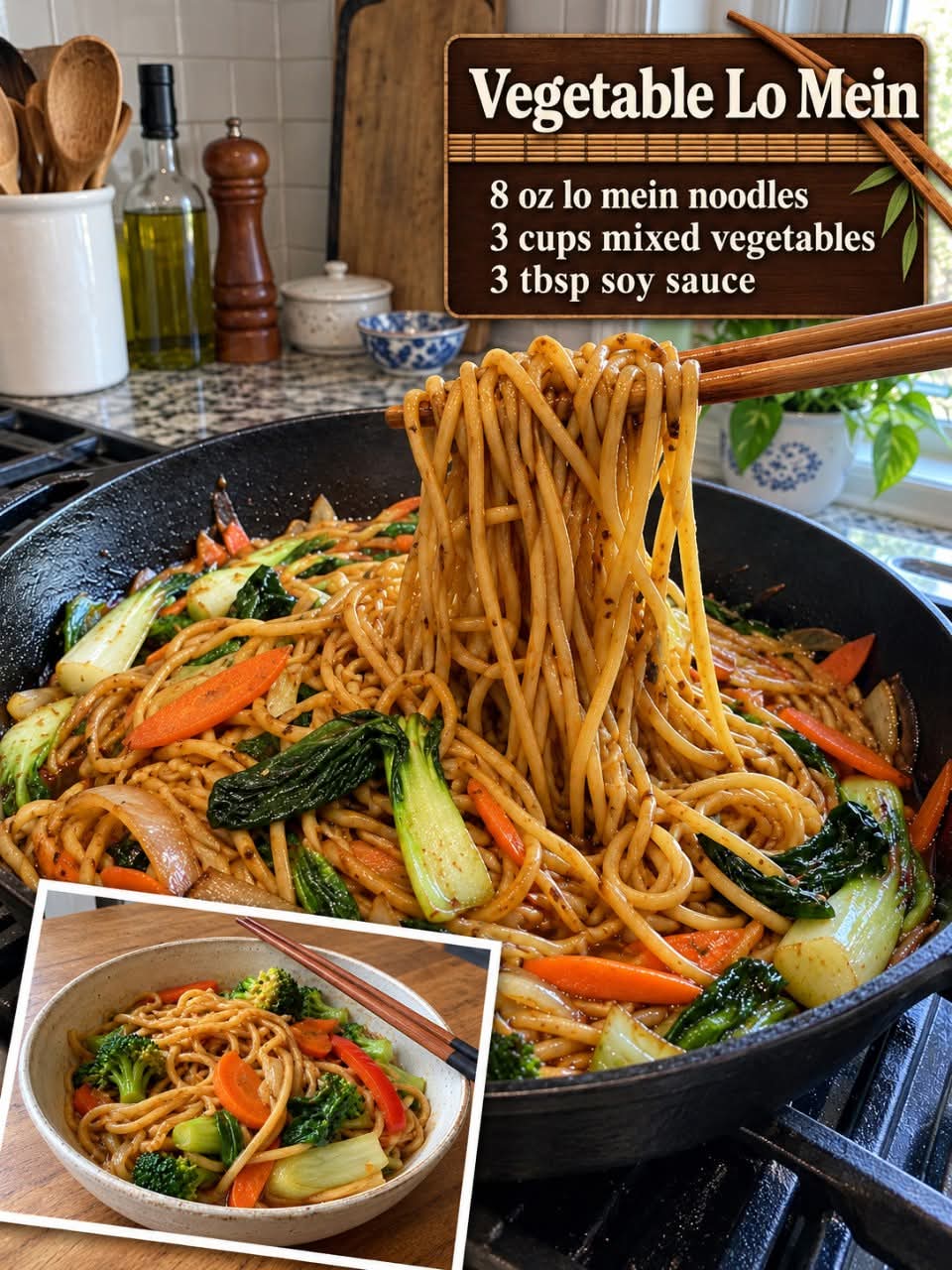
If you love Chinese takeout, this Vegetable Lo Mein recipe is a delicious way to enjoy tender noodles, colorful vegetables, and a savory homemade sauce right in your own kitchen. Every bite is packed with fresh vegetables, aromatic garlic, and the irresistible combination of soy sauce and sesame oil that makes lo mein such a favorite.
This easy vegetable lo mein is perfect for busy weeknights when you want something flavorful without spending hours cooking. The noodles come together quickly in a hot skillet or wok, making this a convenient meal for lunch or dinner. Best of all, you can customize the vegetables according to what you have in your refrigerator.
Serve these homemade lo mein noodles as a satisfying vegetarian main dish or pair them with your favorite Asian-inspired sides. Once you discover how simple it is to make restaurant-style noodles at home, you may find yourself reaching for this recipe whenever a takeout craving strikes.
Why You’ll Love This Vegetable Lo Mein Recipe
- Quick and easy: This noodle dish comes together in about 30 minutes, making it ideal for busy evenings.
- Packed with vegetables: Carrots, bell peppers, cabbage, mushrooms, and other favorite vegetables add color, flavor, and texture.
- Better homemade flavor: A simple soy-based sauce coats the noodles and vegetables beautifully.
- Easy to customize: Use your favorite vegetables or whatever you already have available.
- Perfect for meal prep: Prepare it ahead for convenient lunches or quick dinners.
- Family-friendly: The savory sauce and tender noodles make this a delicious option for anyone who enjoys Asian-inspired meals.
Ingredients You’ll Need
Here are the ingredients for a flavorful homemade vegetable lo mein.
For the Noodles and Vegetables
- 8 ounces dried lo mein noodles: These wheat noodles have a pleasant, chewy texture. You can also use fresh lo mein noodles or another suitable wheat noodle.
- 2 tablespoons vegetable oil: Helps stir-fry the vegetables without overpowering their flavor.
- 3 cloves garlic, minced: Adds a fragrant, savory base to the dish.
- 1 teaspoon freshly grated ginger, optional: Brings a little warmth and freshness to the noodles.
- 1 medium carrot, thinly sliced or julienned: Adds natural sweetness and a bright pop of color.
- 1 red bell pepper, thinly sliced: Contributes sweetness and a crisp texture.
- 1 cup shredded cabbage: Adds crunch and classic takeout-style flavor.
- 1 cup sliced mushrooms: Provide an earthy, savory taste.
- 1 cup snow peas or snap peas: Add freshness and a pleasant crunch.
- 3 green onions, sliced: Bring a mild onion flavor and make a delicious garnish.
- 1 teaspoon toasted sesame oil: Adds a nutty aroma and finishes the dish with classic Asian-inspired flavor.
For the Lo Mein Sauce
- 3 tablespoons soy sauce: Creates the salty, savory foundation of the sauce. Use low-sodium soy sauce if preferred.
- 1 tablespoon oyster sauce or vegetarian mushroom stir-fry sauce: Adds richness and depth. Use a vegetarian mushroom sauce to keep the dish vegetarian.
- 1 teaspoon brown sugar: Balances the saltiness of the sauce.
- 1 teaspoon rice vinegar: Adds a touch of acidity to brighten the flavors.
- 2 tablespoons water: Helps loosen the sauce so it coats the noodles evenly.
- 1 teaspoon cornstarch, optional: Helps create a slightly thicker sauce.
Check the labels of your noodles and sauces if you need a vegetarian or vegan version, as some noodles contain eggs and some sauces contain animal-derived ingredients.
How to Make Vegetable Lo Mein
Step 1: Cook the Noodles
Bring a large pot of water to a boil. Add the lo mein noodles and cook according to the package instructions until tender but still slightly firm.
Avoid overcooking the noodles because they will be tossed in the hot skillet later. Drain them thoroughly and rinse briefly with cool water if needed to prevent sticking.
Set the noodles aside. If they are likely to sit for several minutes, toss them with a small amount of oil to keep them from clumping together.
Step 2: Prepare the Sauce
In a small bowl, whisk together the soy sauce, oyster sauce or vegetarian mushroom sauce, brown sugar, rice vinegar, water, and optional cornstarch.
Stir until the sugar dissolves and the mixture is well combined. Set the sauce aside while you prepare the vegetables.
Preparing the sauce before you start stir-frying makes the cooking process much easier because everything comes together quickly once the pan is hot.
Step 3: Heat the Oil and Cook the Aromatics
Place a large skillet or wok over medium-high heat. Add the vegetable oil and allow it to heat until shimmering.
Add the minced garlic and optional grated ginger. Stir-fry for about 30 seconds, just until fragrant.
Keep the garlic moving in the pan so it doesn’t burn. Burnt garlic can make the entire dish taste bitter.
Step 4: Stir-Fry the Vegetables
Add the carrots and sliced bell pepper to the hot pan. Stir-fry for about 2 minutes, allowing the vegetables to begin softening while retaining some of their crunch.
Add the mushrooms, shredded cabbage, and snow peas. Continue cooking for another 2 to 3 minutes, stirring frequently.
The vegetables should be crisp-tender rather than completely soft. This gives the finished lo mein a pleasant contrast between the tender noodles and fresh vegetables.
If your skillet is small, cook the vegetables in batches to avoid overcrowding the pan.
Step 5: Add the Noodles
Add the cooked, drained noodles to the skillet with the vegetables.
Use tongs or two large spoons to gently toss everything together. Separate any noodles that have clumped together so the vegetables are distributed evenly.
Keep the heat at medium-high to help the noodles heat quickly without becoming soggy.
Step 6: Pour in the Sauce
Pour the prepared lo mein sauce over the noodles and vegetables.
Toss continuously for 1 to 2 minutes, making sure the sauce coats the noodles evenly. If you included cornstarch, the sauce should thicken slightly as it heats.
Add a splash of water if the noodles seem too dry or the sauce becomes too thick. Taste and adjust the seasoning as needed.
Step 7: Finish with Sesame Oil and Green Onions
Remove the skillet from the heat. Drizzle the toasted sesame oil over the noodles and add most of the sliced green onions.
Toss everything one final time to distribute the flavors.
Transfer the vegetable lo mein to serving bowls and garnish with the remaining green onions. Serve immediately while the noodles are hot and the vegetables are still crisp.
Tips for the Best Vegetable Lo Mein
Prepare everything before cooking. Stir-frying happens quickly, so chop your vegetables, mix the sauce, and cook the noodles before heating the skillet.
Don’t overcook the noodles. Cook them just until tender, following the package instructions. Slightly firm noodles hold their texture better when tossed with the sauce.
Use a large skillet or wok. A spacious pan allows the vegetables to stir-fry instead of steaming. If necessary, cook in batches.
Cut the vegetables evenly. Thin, similarly sized pieces cook quickly and distribute more evenly throughout the noodles.
Keep the heat relatively high. Medium-high heat helps cook the vegetables quickly while preserving their texture. Adjust the heat if the garlic begins to brown too quickly.
Add sesame oil near the end. Toasted sesame oil has a strong aroma and is best used as a finishing ingredient rather than the main cooking oil.
Taste before adding extra salt. Soy sauce and other prepared sauces already contain salt. Taste the finished noodles before making additional seasoning adjustments.
Avoid adding too much sauce at once. Start with the recommended amount, toss thoroughly, and add a little water if needed to help everything combine.
Easy Vegetable Lo Mein Variations
One of the best things about homemade vegetable lo mein is how easy it is to change the ingredients according to your preferences.
Vegetable Lo Mein with Broccoli
Add small broccoli florets for extra color and texture. If the florets are large or firm, blanch them briefly or stir-fry them before adding the more delicate vegetables.
Mushroom Lo Mein
Use a combination of shiitake, cremini, or button mushrooms for a deeper, earthier flavor. Cook the mushrooms until their moisture evaporates and they begin to brown slightly before adding the other vegetables.
Spicy Vegetable Lo Mein
Add chili garlic sauce, a little sriracha, or red pepper flakes to the sauce for a spicy variation. Start with a small amount and increase it to suit your taste.
Vegetable Lo Mein with Tofu
For a more substantial vegetarian meal, add firm tofu cut into cubes. Pat the tofu dry and brown it in a little oil before cooking the vegetables. Return it to the skillet when you add the noodles.
Vegetable Lo Mein with Chicken
If you prefer a protein-rich meal, add thinly sliced chicken. Cook it thoroughly in the skillet before adding the vegetables, then continue with the recipe. Keep the chicken separate from ready-to-eat ingredients while raw, and cook it to an internal temperature of 165°F (74°C).
Gluten-Free Vegetable Lo Mein
Use certified gluten-free noodles and replace regular soy sauce with gluten-free tamari or another suitable alternative. Check the labels of the other sauces to ensure they are also gluten-free.
Vegan Vegetable Lo Mein
Choose egg-free noodles and replace oyster sauce with vegetarian mushroom sauce or another plant-based stir-fry sauce. Check all ingredient labels to make sure the finished dish meets your dietary requirements.
What to Serve with Vegetable Lo Mein
Vegetable lo mein is satisfying on its own, but it also pairs well with other dishes for a complete meal.
- Vegetable spring rolls: A crispy side that complements the soft noodles.
- Steamed dumplings: A delicious addition to an Asian-inspired dinner.
- Asian cucumber salad: Adds a cool, refreshing contrast to the warm noodles.
- Steamed broccoli: A simple vegetable side that works well with the savory sauce.
- Hot and sour soup: A flavorful soup that makes the meal feel like a restaurant-style dinner.
- Edamame: A quick side dish that adds texture and plant-based protein.
- Crispy tofu: A tasty option if you want an entirely vegetarian meal with extra substance.
For a simple weeknight dinner, serve the noodles in large bowls with a side of steamed vegetables or crispy spring rolls.
How to Store Vegetable Lo Mein
Vegetable lo mein is best enjoyed fresh, but leftovers can be stored and reheated for another meal.
In the Refrigerator
Allow the noodles to cool slightly, then transfer them to an airtight container and refrigerate within 2 hours of cooking.
For best food safety, eat the leftovers within 3 to 4 days. Store them in individual portions if you want to make lunch or dinner easier throughout the week.
In the Freezer
You can freeze vegetable lo mein, although the vegetables may soften after thawing and reheating.
Place cooled noodles in freezer-safe airtight containers or bags, removing excess air where possible. For best quality, use within about 1 to 2 months.
Thaw the noodles in the refrigerator overnight before reheating.
How to Reheat Vegetable Lo Mein
For the best texture, reheat the noodles in a skillet over medium heat with a small splash of water. Toss frequently until the noodles are hot throughout.
You can also microwave an individual portion in a microwave-safe container. Cover loosely, stir halfway through heating, and continue until evenly heated.
Avoid reheating the noodles repeatedly, as this can make them dry and cause the vegetables to lose their texture.
Frequently Asked Questions
What is vegetable lo mein?
Vegetable lo mein is a Chinese-style noodle dish made with wheat noodles, vegetables, and a savory sauce. The noodles are cooked and then tossed with stir-fried vegetables and seasonings until everything is evenly coated.
It is popular as a vegetarian main dish or as a side to other Asian-inspired meals.
What noodles are best for lo mein?
Fresh lo mein noodles are an excellent choice because they have a pleasantly chewy texture. Dried lo mein noodles also work well when cooked according to the package instructions.
If you cannot find lo mein noodles, spaghetti or another wheat noodle can be used as a substitute, although the texture will be slightly different.
Can I make vegetable lo mein without a wok?
Absolutely. A large skillet works well for homemade lo mein. Choose a pan with enough room to toss the noodles and vegetables without overcrowding.
If your skillet is small, stir-fry the vegetables in batches and combine everything at the end.
Why are my lo mein noodles sticky?
Noodles can stick together if they are overcooked, insufficiently drained, or left sitting without being separated.
Cook them according to the package instructions, drain thoroughly, and toss them with a small amount of oil if they need to wait before being added to the skillet.
How do I keep the vegetables crisp?
Slice the vegetables thinly and cook them over medium-high heat for only a few minutes. Add softer vegetables later in the cooking process and avoid covering the skillet, which can trap steam.
The goal is to make the vegetables tender while retaining a little crunch.
Can I prepare vegetable lo mein ahead of time?
Yes. You can chop the vegetables and mix the sauce ahead of time, then store them separately in the refrigerator.
For the best noodle texture, cook and combine everything shortly before serving. You can also prepare the complete dish in advance and refrigerate it for convenient lunches or dinners.
Can I use frozen vegetables?
Yes. Frozen vegetables are convenient and can save preparation time. Add them directly to the hot skillet, but avoid adding too many at once because excess moisture can make the noodles soggy.
For the best results, cook off excess moisture before adding the noodles and sauce.
Is vegetable lo mein vegetarian?
It can be. Use vegetables, egg-free noodles if needed, soy sauce, and a vegetarian mushroom-based stir-fry sauce instead of oyster sauce.
Always check the ingredient labels, as some noodles contain eggs and some prepared sauces contain animal-derived ingredients.
Final Thoughts
This easy Vegetable Lo Mein recipe brings the flavors of your favorite takeout meal into your home kitchen. Tender noodles, crisp vegetables, fragrant garlic, and a savory soy-based sauce combine to create a delicious dish that’s simple enough for a busy weeknight.
With plenty of ways to customize the ingredients, you can make it with your favorite vegetables, add tofu for extra substance, or adjust the sauce to suit your taste. It’s a practical way to use up vegetables in the refrigerator while creating a meal that feels fresh and satisfying.
Serve it hot, garnish with sliced green onions, and enjoy a homemade noodle dish that’s full of flavor and easy to make again and again.