
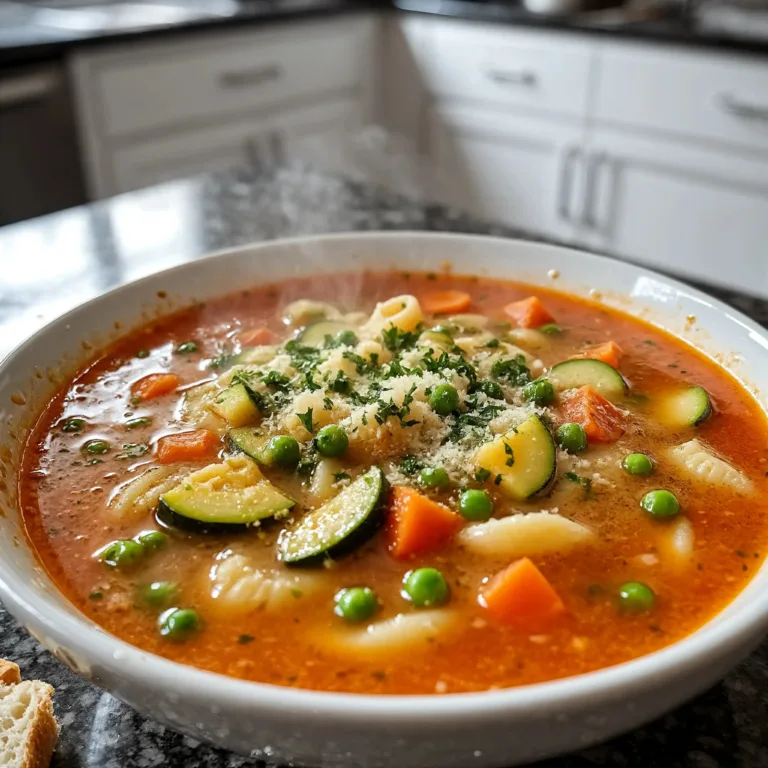
When warmer days arrive, heavy soups often lose their appeal. That’s where Spring Minestrone Soup comes in. This colorful vegetable soup combines tender potatoes, zucchini, asparagus, spinach, peas, cannellini beans, and small pasta in a light vegetable broth. A spoonful of basil pesto, Parmesan cheese, and fresh lemon juice gives the finished soup an extra layer of flavor.
Unlike a winter soup that relies on rich ingredients and long cooking times, this spring minestrone keeps things fresh and vibrant. The vegetables cook quickly, so they retain some texture and color instead of becoming soft and dull.
Whether you want a comforting lunch, an easy weeknight dinner, or a nourishing meal for the whole family, this recipe offers plenty of flavor without complicated preparation.
What Is Spring Minestrone Soup?
Spring Minestrone Soup is a fresh variation of traditional Italian-style minestrone. It combines seasonal vegetables, beans, pasta, broth, herbs, and Parmesan into one hearty bowl.
This version focuses on spring-friendly vegetables such as asparagus, peas, spinach, and zucchini. Cannellini beans add substance, while ditalini pasta makes the soup satisfying enough to serve as a complete meal.
The pesto and lemon juice added at the end create a bright finish that keeps the soup from tasting heavy.
Why You’ll Love This Spring Minestrone
There are plenty of reasons to keep this soup in your regular recipe rotation:
- Packed with colorful vegetables
- Includes plant-based protein from cannellini beans
- Easy one-pot preparation
- Ready in a relatively short time
- Fresh and bright flavor
- Comforting without feeling heavy
- Great for lunch or dinner
- Easy to customize with seasonal vegetables
It’s also a fantastic way to use several vegetables in one meal without making separate side dishes.
Ingredients You’ll Need
The Vegetable Base
You’ll start with olive oil, onion, carrot, celery, and Yukon gold potatoes.
These vegetables create the foundation of the soup. The onion provides sweetness, while carrot and celery build classic savory flavor. Yukon gold potatoes add body and make the soup more filling.
Garlic and Seasonings
You’ll need:
- 3 cloves garlic
- 1 teaspoon dried Italian seasoning
- 1 teaspoon kosher salt
- ½ teaspoon black pepper
Garlic brings savory depth, while Italian seasoning reinforces the Mediterranean character of the soup.
Fresh Spring Vegetables
The recipe uses:
- 1 medium zucchini
- 1½ cups chopped spinach
- 1 cup chopped asparagus
- ½ cup frozen peas
These vegetables provide different colors, textures, and flavors.
Beans and Pasta
You’ll also need:
- 1 can cannellini beans
- ½ cup ditalini pasta
The beans add heartiness and protein, while the tiny pasta creates a satisfying texture throughout the broth.
Finishing Ingredients
The final flavor comes from:
- ¼ cup Parmesan cheese
- 3 tablespoons basil pesto
- 2 tablespoons lemon juice
- Fresh basil
- Additional Parmesan
These ingredients transform the soup from a simple vegetable broth into a bright, savory meal.
How to Make Spring Minestrone Soup
Step 1: Sauté the Vegetables
Heat the olive oil in a large pot over medium-high heat.
Add the chopped onion, diced carrot, celery, and Yukon gold potatoes.
Cook for about 5 minutes, stirring occasionally.
The vegetables should begin to soften without becoming completely tender.
Step 2: Add the Garlic
Add the minced garlic.
Cook for approximately 1 minute, stirring frequently.
The garlic should become fragrant without browning heavily.
Step 3: Add Zucchini and Seasonings
Add the diced zucchini, Italian seasoning, salt, and black pepper.
Cook for about 2 minutes while stirring.
This short cooking period allows the seasonings to coat the vegetables and develop their flavor.
Step 4: Add the Broth, Beans, and Pasta
Pour the vegetable broth into the pot.
Add the rinsed cannellini beans and ditalini pasta.
Stir everything together.
Bring the soup to a boil, then reduce the heat to low.
Step 5: Simmer the Soup
Leave the pot uncovered and simmer for approximately 8 to 10 minutes.
The pasta should become al dente, while the potatoes should become tender.
Stir occasionally to prevent the pasta from settling against the bottom of the pot.
Step 6: Add the Spring Vegetables
Stir in the chopped spinach, asparagus, and frozen peas.
Simmer for another 2 minutes.
Keep this cooking stage short. The goal is to soften the vegetables while preserving their bright colors and fresh texture.
Step 7: Finish with Pesto, Parmesan, and Lemon
Add the Parmesan cheese, basil pesto, and lemon juice.
Stir until the Parmesan melts and the pesto blends into the broth.
Taste the soup and adjust the salt and pepper as needed.
Step 8: Garnish and Serve
Ladle the hot soup into bowls.
Finish each serving with fresh basil and additional Parmesan cheese.
Serve immediately while the soup remains hot and fragrant.
Tips for the Best Spring Minestrone Soup
Cut Vegetables Evenly
Try to cut the vegetables into similarly sized pieces so they cook at a similar rate.
Don’t Overcook the Spring Vegetables
Asparagus, peas, and spinach need very little cooking. Adding them near the end helps maintain their color and texture.
Keep the Pasta Al Dente
Small pasta continues absorbing broth as it sits. Cook it until just tender rather than completely soft.
Add Lemon at the End
Fresh lemon juice works best as a finishing ingredient. Its acidity brightens the entire soup.
Use Fresh Parmesan
Freshly grated Parmesan melts more smoothly and gives the broth a richer savory flavor.
Easy Spring Minestrone Variations
Add Green Beans
Replace some of the zucchini or asparagus with chopped green beans for extra crunch.
Use White Beans
Great Northern beans can replace cannellini beans if that’s what you have available.
Add Fresh Herbs
Parsley, chives, dill, or extra basil can add even more freshness.
Make It Gluten-Free
Use your favorite gluten-free small pasta instead of traditional ditalini.
Make It Vegan
Skip the Parmesan or replace it with a plant-based Parmesan alternative.
Add More Greens
Kale, Swiss chard, or additional spinach can easily increase the vegetable content.
What to Serve with Spring Minestrone Soup
Although this soup can stand alone as a complete meal, a few simple sides work beautifully.
Try serving it with:
- Crusty sourdough bread
- Garlic bread
- Toasted baguette
- Simple green salad
- Bruschetta
- Parmesan toast
A piece of crusty bread is especially useful for soaking up the flavorful broth.
Common Mistakes to Avoid
Adding Everything at Once
Different vegetables require different cooking times. Adding delicate vegetables too early can make them mushy.
Overcooking the Pasta
The pasta continues absorbing liquid after cooking, so avoid cooking it far beyond al dente.
Using Too Much Pesto
Pesto has a strong flavor. Start with the recommended amount and add more if desired.
Forgetting the Lemon
The lemon juice provides acidity that balances the savory Parmesan and pesto.
Skipping the Taste Test
Broth, Parmesan, pesto, and beans can all contain different amounts of salt. Taste the soup before serving and adjust the seasoning accordingly.
How to Store Spring Minestrone Soup
Allow leftover soup to cool before transferring it to airtight containers.
Refrigerate for up to 4 days.
Keep in mind that the pasta will continue absorbing broth while the soup sits. When reheating, add a splash of vegetable broth or water if the soup has become too thick.
Reheat gently on the stovetop or in the microwave until hot.
Can You Freeze Spring Minestrone Soup?
Yes, but the pasta may soften after freezing and thawing.
For the best texture, consider preparing and freezing the soup without the pasta. Cook fresh ditalini separately and add it when you reheat the soup.
If you freeze the complete soup, allow it to cool completely before placing it in freezer-safe containers.
Frequently Asked Questions
Can I use frozen vegetables?
Yes. Frozen peas work particularly well, and you can also use frozen spinach if fresh spinach isn’t available.
Can I replace the ditalini pasta?
Absolutely. Small shells, elbow macaroni, or another small pasta shape can work well.
Can I use chicken broth?
Yes, if you don’t need the soup to remain vegetarian. Chicken broth will give the soup a slightly richer savory flavor.
Why do you add spinach at the end?
Spinach cooks quickly. Adding it near the end helps preserve its fresh flavor and vibrant green color.
Can I make this soup ahead of time?
Yes. The soup reheats well, although the pasta will become softer as it sits. Add extra broth when reheating if necessary.
What can I use instead of pesto?
Fresh basil, olive oil, garlic, and Parmesan can provide similar flavors, although pesto gives the soup a more concentrated herbal taste.
Conclusion
Spring Minestrone Soup brings together everything that’s wonderful about a fresh seasonal meal. Tender potatoes, zucchini, asparagus, spinach, peas, cannellini beans, and ditalini pasta create a colorful and satisfying soup, while Parmesan, basil pesto, and lemon juice give the broth a bright and savory finish.
The recipe also proves that comforting food doesn’t have to feel heavy. With a single pot and a handful of everyday ingredients, you can create a nourishing meal that’s perfect for spring lunches, weeknight dinners, or relaxed family gatherings. Serve it with crusty bread, add a little extra Parmesan, and enjoy every fresh, flavorful spoonful.