
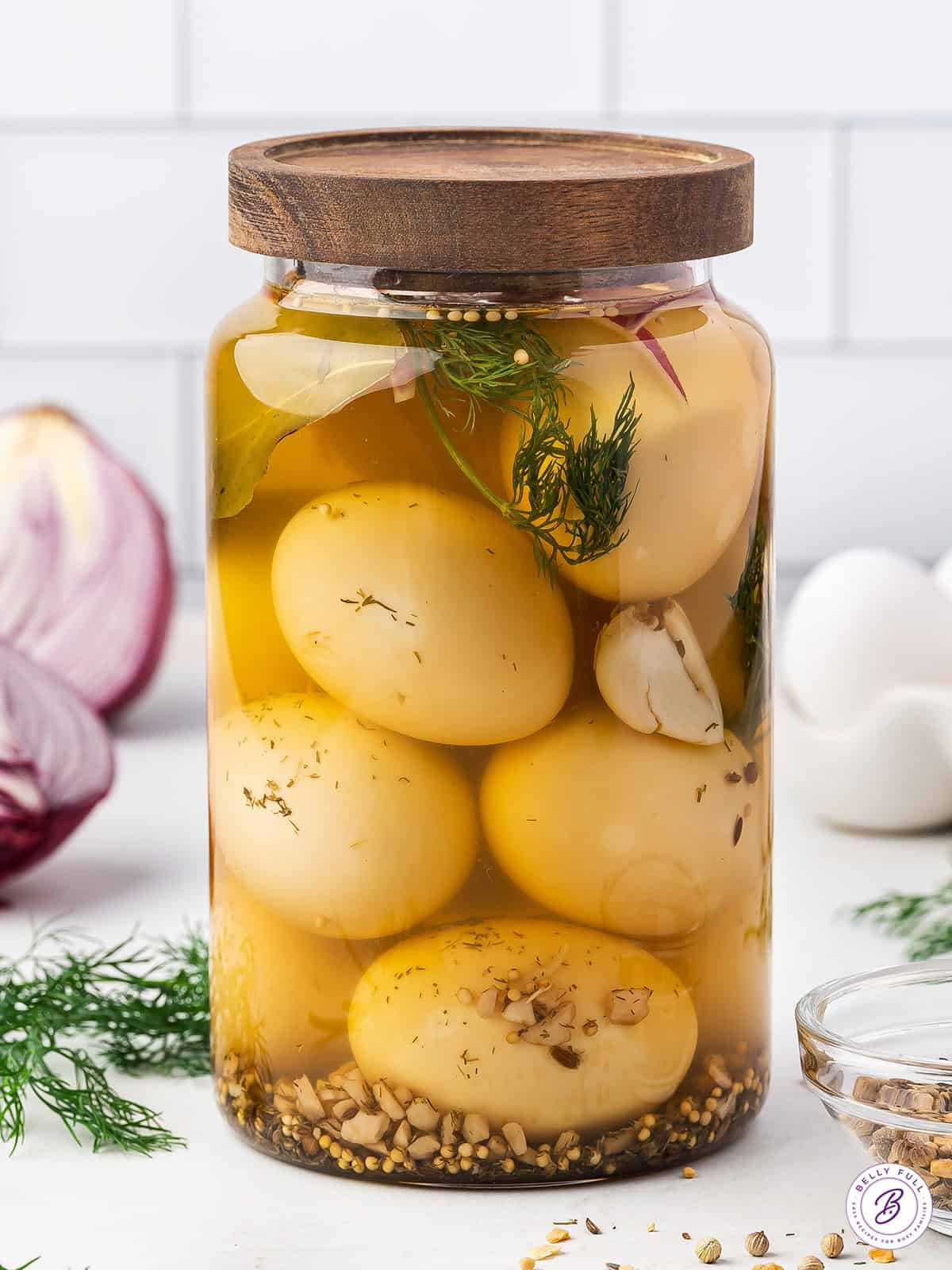
Pickled eggs are a simple, tangy snack made by soaking hard-boiled eggs in a seasoned vinegar brine. The eggs absorb the sharp, savory flavor of vinegar, garlic, mustard seeds, peppercorns, and onion while developing a deliciously bold taste.
This pickled eggs recipe makes 12 eggs and requires only about 20 minutes of active preparation. The hardest part is waiting. The eggs need at least three days in the refrigerator so the brine can work its way into the whites and create that classic pickled flavor.
Serve them chilled as a quick high-protein snack, add them to a charcuterie board, slice them over salads, or use them to make flavorful deviled eggs. Once you have a jar ready in the refrigerator, you will have an easy snack whenever a salty, tangy craving hits.
Why You’ll Love This Pickled Eggs Recipe
Simple Ingredients
You do not need a long shopping list to make homemade pickled eggs. The base is simply hard-boiled eggs, vinegar, water, salt, sugar, and a few spices.
Bold Tangy Flavor
White vinegar gives the eggs their signature tang, while sugar balances the acidity. Garlic, onion, mustard seeds, and peppercorns add layers of savory flavor.
Great Make-Ahead Snack
Pickled eggs need time to develop their flavor, which makes them ideal for preparing ahead. Once chilled, they are ready whenever you need a quick snack.
Easy to Customize
You can make the brine spicy, herby, savory, or colorful. Simple additions such as red pepper flakes, dill, beets, or curry powder can create completely different versions.
Ingredients You’ll Need
For the Eggs
- 12 large eggs – Use eggs that are suitable for hard-boiling and easy to peel.
- Water – Enough to cover the eggs while boiling.
For the Pickling Brine
- 2 cups white vinegar – Creates the sharp, tangy base of the brine.
- 1 cup water – Helps balance the strength of the vinegar.
- 1 tablespoon sugar – Adds mild sweetness and rounds out the acidity.
- 1 tablespoon salt – Enhances the overall flavor.
- 1 teaspoon black peppercorns – Adds earthy pepper flavor.
- 1 teaspoon mustard seeds – Bring a traditional pickling flavor.
- 1/2 teaspoon crushed red pepper flakes – Optional, but excellent if you enjoy heat.
- 2 cloves garlic, smashed – Adds savory depth.
- 1 small onion, sliced – Adds sweetness and extra flavor to the brine.
How to Make Pickled Eggs
1. Hard-Boil the Eggs
Place the eggs in a saucepan and cover them completely with cold water. Bring the water to a boil over medium-high heat.
Once the water reaches a boil, remove the saucepan from the heat and cover it with a lid. Let the eggs stand for about 12 minutes.
2. Cool the Eggs
Transfer the cooked eggs immediately to a bowl of ice water.
Let them cool completely. The ice bath stops the cooking process and helps prevent the eggs from developing an unattractive green ring around the yolks.
3. Peel the Eggs
Once the eggs are cold, gently tap each egg against the counter and peel away the shell.
Try to keep the egg whites intact and smooth. Rinse away any small pieces of shell and set the peeled eggs aside.
4. Make the Pickling Brine
Add the white vinegar, water, sugar, salt, black peppercorns, mustard seeds, red pepper flakes, smashed garlic, and sliced onion to a saucepan.
Stir the mixture and bring it to a boil.
5. Simmer the Brine
Once the mixture boils, reduce the heat and let it simmer for about 5 minutes.
This gives the spices, garlic, and onion time to release their flavors into the vinegar mixture.
6. Add the Eggs to a Jar
Place the peeled eggs in a clean glass jar or another suitable refrigerator-safe container.
Carefully pour the hot pickling liquid over the eggs. Make sure the eggs are completely covered by the brine.
7. Cool and Refrigerate
Allow the jar to cool to room temperature.
Seal the container and place it in the refrigerator.
Do not leave the finished eggs sitting at room temperature for extended periods.
8. Let the Eggs Pickle
For the best flavor, let the eggs sit in the refrigerator for at least 3 days before eating.
The longer they remain in the brine, the more pronounced the pickled flavor becomes.
Tips for the Best Pickled Eggs
Use Eggs That Peel Easily
Very fresh eggs can sometimes be more difficult to peel. Eggs that have been stored for a little longer are often easier to peel after boiling.
Always Use an Ice Bath
An ice bath quickly cools the eggs after cooking. It also helps stop the cooking process and can make peeling easier.
Keep the Eggs Fully Submerged
Every egg should remain completely covered by the pickling liquid. This helps the brine flavor the eggs evenly.
Use a Glass Container
A clean glass jar is a practical choice for storing eggs in an acidic vinegar brine. Make sure the container is thoroughly cleaned before use.
Give the Eggs Time
Three days is the minimum recommended waiting period in this recipe, but the flavor will become stronger as the eggs continue to sit in the refrigerated brine.
Don’t Overcook the Eggs
Overcooked eggs can develop rubbery whites and dry yolks. Follow the cooking time carefully and cool the eggs promptly in an ice bath.
Easy Pickled Egg Variations
Spicy Pickled Eggs
Increase the amount of crushed red pepper flakes for a hotter version. You can also add other dried peppers to the brine if you enjoy extra heat.
Beet Pickled Eggs
Add slices of cooked or canned beets to the jar. The beet juice gives the eggs a beautiful pink color and adds a slightly earthy flavor.
Dill Pickled Eggs
Add fresh dill and extra garlic to the brine for a fresh, savory flavor reminiscent of classic dill pickles.
Curry Pickled Eggs
Add about 1 tablespoon of curry powder to the brine. The curry adds warm spices and gives the eggs a distinctive golden color.
Garlic Pickled Eggs
For a stronger garlic flavor, add additional smashed garlic cloves to the brine. Garlic pairs especially well with the sharp vinegar base.
How to Fix Common Problems
The Egg Whites Are Rubbery
Rubbery whites usually mean the eggs were cooked for too long. Use a controlled cooking time and transfer the eggs to an ice bath immediately after cooking.
The Eggs Are Difficult to Peel
Try using eggs that are not extremely fresh. Cooling them completely before peeling can also make the process easier.
The Pickled Flavor Is Too Strong
If the vinegar flavor is overwhelming, adjust the balance of the brine in your next batch by slightly increasing the water or sugar. Keep the basic vinegar proportion consistent when preparing preserved foods.
The Eggs Don’t Have Enough Flavor
Give them more time. Pickled eggs need several days for the brine to penetrate the egg whites. If you taste them too soon, the center may still have a mild flavor.
The Coating or Spices Are Uneven
Make sure the eggs are fully submerged. Turning or gently repositioning the eggs in the jar can also help distribute the brine.
How to Serve Pickled Eggs
Pickled eggs are delicious straight from the refrigerator, but there are plenty of other ways to enjoy them.
As a Snack
Serve one or two chilled eggs as a quick protein-rich snack. They are especially convenient when you want something savory without preparing a full meal.
On a Charcuterie Board
Add pickled eggs alongside cheeses, cured meats, crackers, olives, and other pickled vegetables. Their bright acidity helps balance richer foods.
In Salads
Slice the eggs and add them to green salads, potato salads, or pasta salads. The tangy whites add plenty of flavor without needing a heavy dressing.
For Deviled Eggs
Use pickled eggs as the base for deviled eggs. The vinegar-infused whites give the finished appetizer an extra layer of tanginess.
With Sandwiches
Sliced pickled eggs can add a sharp, savory contrast to sandwiches, burgers, and wraps.
How to Store Pickled Eggs
Keep the eggs refrigerated in their covered container.
Make sure the eggs remain submerged in the brine. Use clean utensils whenever removing eggs from the container to help keep the contents clean.
Because homemade pickled eggs are a refrigerated food, do not treat this recipe as a shelf-stable canning recipe. Keep the finished eggs refrigerated rather than storing them at room temperature.
For best quality, prepare a reasonable amount that you can enjoy while refrigerated rather than making a very large batch.
Can You Make Pickled Eggs Ahead of Time?
Yes. In fact, making them ahead is one of the best things about this recipe.
Prepare the eggs and brine, place everything in a clean glass container, and refrigerate. The eggs need at least three days for the flavor to develop, so they are perfect for preparing before a gathering.
You can make them several days before you plan to serve them and allow the brine to infuse the eggs while they chill.
Frequently Asked Questions
How long do pickled eggs need to sit before eating?
For this recipe, allow the eggs to pickle for at least 3 days in the refrigerator. This gives the vinegar and spices enough time to flavor the egg whites.
Do pickled eggs need to be refrigerated?
Yes. Keep homemade pickled eggs refrigerated in a covered container. This recipe is designed for refrigerator storage, not room-temperature storage.
Can I use apple cider vinegar instead of white vinegar?
The recipe specifically uses white vinegar because it provides the intended flavor and acidity. For a reliable result, follow the recipe as written rather than changing the vinegar type.
Why are my pickled eggs not very flavorful?
They may simply need more time. The flavor develops gradually as the brine penetrates the eggs. Give them at least three days before deciding that the flavor is too weak.
Can I make spicy pickled eggs?
Absolutely. Add crushed red pepper flakes to the brine for heat. You can increase the amount according to your preferred spice level.
Why do my eggs have a green ring around the yolk?
A green ring usually develops when eggs are overcooked. An ice bath immediately after cooking helps stop the cooking process and can prevent this from happening.
Can I add vegetables to the jar?
Yes. Sliced onion is already included in this recipe, and you can experiment with additions such as cooked beets, fresh dill, or extra garlic for different flavors.
Can I eat pickled eggs straight from the jar?
Yes. Once they have been properly chilled and have had enough time to pickle, they can be served cold as a snack or used in other dishes.
Recipe Summary
Recipe: Pickled Eggs
Prep Time: About 20 minutes active preparation
Pickling Time: At least 3 days
Yield: 12 eggs
Category: Snack, Appetizer
Method: Boiling and refrigerator pickling
Main Flavor: Tangy, savory, slightly sweet
Final Thoughts
This pickled eggs recipe turns ordinary hard-boiled eggs into a bold and flavorful refrigerator snack. The combination of white vinegar, garlic, onion, mustard seeds, and peppercorns gives every bite a bright, savory flavor with plenty of tang.
The process is straightforward: cook and cool the eggs, prepare the seasoned brine, combine everything in a clean glass jar, and let the refrigerator do the rest.
The most important part is patience. Give the eggs at least three days to absorb the brine, and you will have a flavorful snack ready to enjoy.
Whether you serve them on a party platter, slice them into a salad, or eat them straight from the refrigerator, homemade pickled eggs are an easy way to add something tangy and satisfying to your menu.