

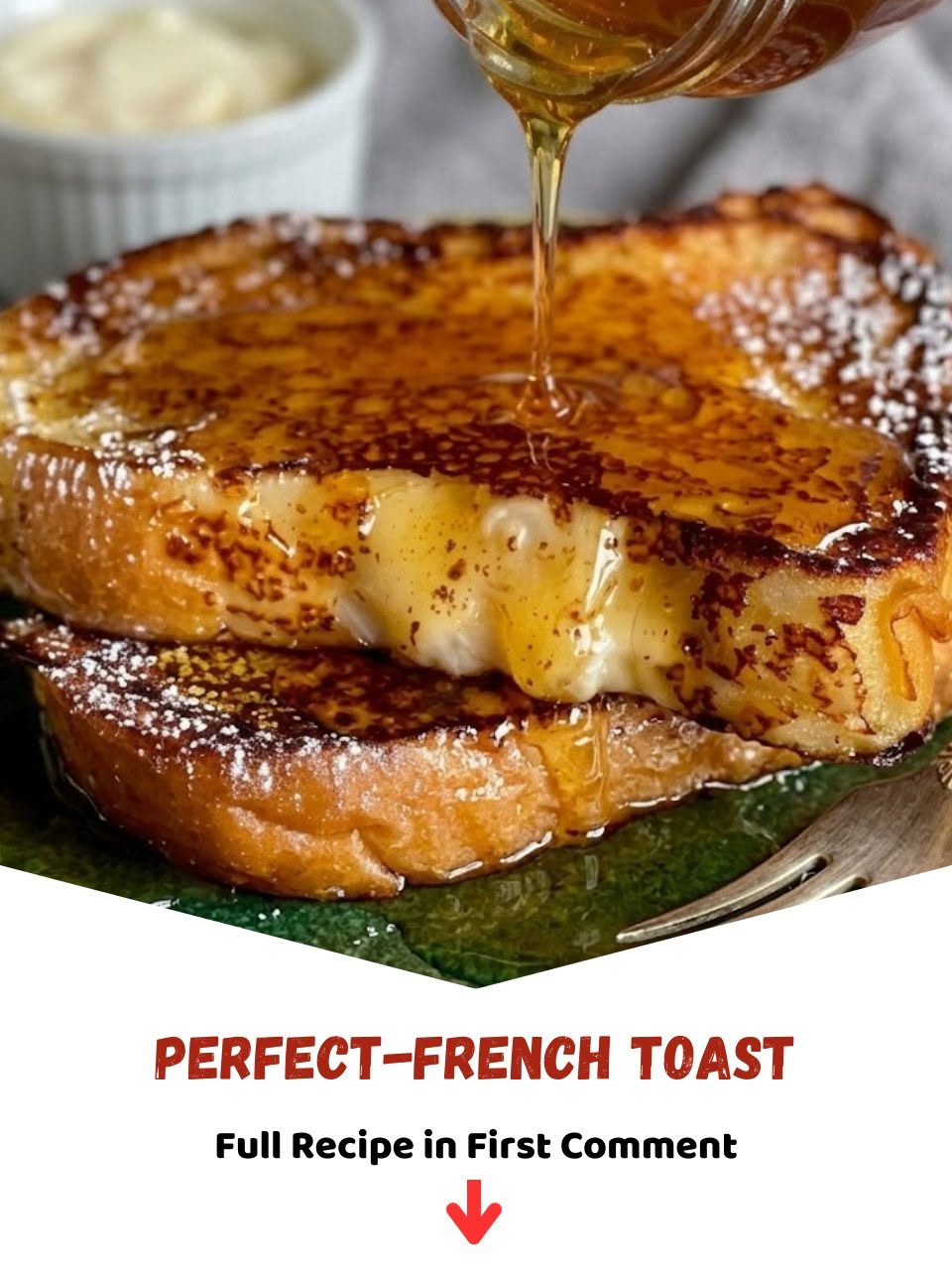
Few breakfast dishes are as comforting and satisfying as classic French toast. With its golden-brown exterior, soft custardy center, and rich flavor, French toast transforms simple pantry ingredients into a meal that feels special. Whether you’re preparing a weekend family breakfast, a holiday brunch, or a quick weekday treat, this recipe delivers consistently delicious results every time.
The secret to perfect French toast lies in the balance between the bread and the custard mixture. Thick slices of bread absorb just enough of the egg mixture without becoming soggy, while a combination of milk, eggs, vanilla, and cinnamon creates a rich flavor and beautiful texture.
Why You’ll Love This Recipe
- Crispy outside and soft inside
- Easy to make with simple ingredients
- Perfect for breakfast or brunch
- Customizable with your favorite toppings
- Ready in less than 30 minutes
Ingredients
For the French Toast
- 8 thick slices brioche, challah, or Texas toast
- 4 large eggs
- 1 cup whole milk
- 2 tablespoons heavy cream (optional)
- 2 tablespoons granulated sugar
- 1 teaspoon vanilla extract
- 1 teaspoon ground cinnamon
- ¼ teaspoon nutmeg
- Pinch of salt
- 2 tablespoons butter for cooking
Optional Toppings
- Maple syrup
- Fresh berries
- Sliced bananas
- Powdered sugar
- Whipped cream
- Chopped pecans or walnuts
- Honey
Choosing the Best Bread
The bread you choose can make a big difference.
Best options include:
- Brioche
- Challah
- Texas toast
- French bread
- Sourdough
Slightly stale bread works best because it absorbs the custard mixture without falling apart. Fresh bread can become overly soft and difficult to handle.
Preparing the Custard Mixture
In a large shallow bowl, whisk together:
- Eggs
- Milk
- Heavy cream
- Sugar
- Vanilla extract
- Cinnamon
- Nutmeg
- Salt
Continue whisking until the mixture is completely smooth and well combined.
The spices add warmth and depth, while vanilla enhances the overall sweetness and aroma.
Soaking the Bread
Place each slice of bread into the custard mixture.
Allow it to soak for about 10 to 15 seconds per side.
Avoid soaking for too long, as the bread may become overly saturated and difficult to cook properly.
The goal is to coat the bread evenly while maintaining its structure.
Cooking the French Toast
Heat a large skillet or griddle over medium heat.
Add a small amount of butter and allow it to melt.
Place the soaked bread slices onto the hot surface without overcrowding the pan.
Cook for 3 to 4 minutes per side, or until:
- Golden brown
- Slightly crisp on the outside
- Fully cooked in the center
Add additional butter between batches if needed.
Serving Suggestions
Serve the French toast immediately while warm.
Popular toppings include:
- Warm maple syrup
- Fresh strawberries and blueberries
- Sliced bananas
- Powdered sugar
- Whipped cream
- Toasted nuts
For a more indulgent breakfast, add a drizzle of caramel sauce or chocolate syrup.
Variations
Stuffed French Toast
Spread cream cheese, Nutella, or fruit preserves between two slices of bread before dipping into the custard.
Cinnamon Roll French Toast
Add extra cinnamon and a simple cream cheese glaze.
Berry French Toast
Top with mixed berries and a spoonful of Greek yogurt.
Crunchy French Toast
Coat soaked bread lightly with crushed cornflakes before cooking.
Storage and Reheating
Refrigerator
Store leftovers in an airtight container for up to 3 days.
Freezer
Freeze cooked slices in a single layer, then transfer to a freezer-safe bag for up to 2 months.
Reheating
- Toaster: 2–3 minutes
- Oven: 350°F (175°C) for 8–10 minutes
- Air Fryer: 3–4 minutes
Tips for Perfect French Toast
- Use thick-cut bread for the best texture.
- Slightly stale bread absorbs custard better.
- Cook over medium heat to prevent burning.
- Don’t over-soak the bread.
- Use real vanilla extract for richer flavor.
- Let the skillet fully preheat before cooking.
- Serve immediately for the best texture.
Common Mistakes to Avoid
Using thin sandwich bread
Thin bread often falls apart during soaking and cooking.
Cooking at high heat
High temperatures can burn the outside before the center cooks.
Skipping the spices
Cinnamon and nutmeg provide classic French toast flavor.
Overcrowding the skillet
Give each slice enough room to brown evenly.
Nutritional Information
Approximate per serving (2 slices):
- Calories: 320
- Protein: 11g
- Carbohydrates: 30g
- Fat: 17g
- Sugar: 10g
- Fiber: 2g
Values may vary depending on ingredients and toppings.
Final Thoughts
Perfect French Toast is a timeless breakfast favorite that combines simple ingredients with rich flavor and comforting texture. Whether topped with maple syrup, fresh fruit, or whipped cream, this easy recipe creates a restaurant-quality breakfast right at home. Once you master the basic technique, you can customize it with endless flavors and toppings to suit every occasion.
Frequently Asked Questions
Can I make French toast without milk?
Yes. You can substitute almond milk, oat milk, soy milk, or coconut milk.
What bread is best for French toast?
Brioche and challah are considered the best options because of their rich texture and ability to absorb custard.
Why is my French toast soggy?
The bread may have soaked too long, or the skillet temperature may be too low.
Can I prepare French toast ahead of time?
Yes. Cook the French toast, refrigerate it, and reheat before serving.
Can French toast be frozen?
Absolutely. Freeze cooked slices for up to 2 months and reheat directly from frozen.