

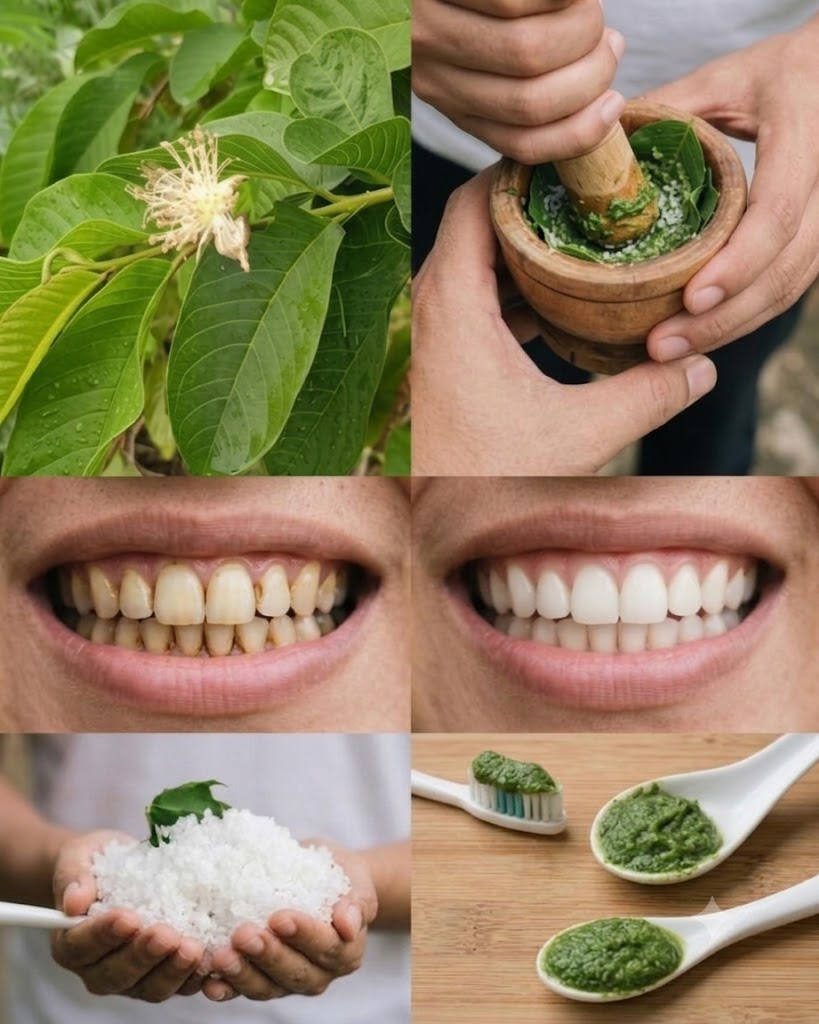
Guava leaves have been used in traditional wellness practices for generations, particularly in parts of Asia, Africa, and Latin America. Recently, social media has revived interest in these leaves, with many people claiming that brushing with guava leaves helps brighten teeth, reduce bad breath, and improve gum health.
While guava leaves are not a miracle solution for dental problems, they do contain natural compounds that have attracted scientific interest for their potential oral health benefits. The key is understanding what guava leaves can and cannot do.
In this article, we’ll explore the science behind guava leaves, their possible benefits for oral hygiene, safe ways to use them, and important precautions to keep in mind.
Why Teeth Become Yellow Over Time
Many people assume yellow teeth are simply caused by poor brushing habits, but tooth discoloration is often more complex.
Common causes include:
- Plaque buildup
- Tartar accumulation
- Coffee and tea stains
- Tobacco use
- Aging and enamel thinning
- Certain medications
- Poor oral hygiene
As enamel gradually wears down, the naturally yellow dentin beneath becomes more visible. This means that whitening teeth is not always as simple as removing surface stains.
What Makes Guava Leaves Interesting for Oral Health?
Guava leaves come from the tropical plant commonly known as guava. They contain several naturally occurring compounds that researchers have studied for their antimicrobial and antioxidant properties.
These compounds include:
Flavonoids
Flavonoids are plant compounds known for their antioxidant activity. Some studies suggest they may help reduce the growth of certain bacteria associated with plaque formation.
Tannins
Tannins are natural compounds that may contribute to a tightening sensation in oral tissues and have been traditionally used in herbal preparations.
Polyphenols
Polyphenols help protect plants from environmental stress and may also contribute to maintaining a healthier oral environment.
Natural Antimicrobial Compounds
Research has found that guava leaf extracts may help reduce certain bacteria commonly associated with oral plaque and bad breath.
Potential Benefits of Guava Leaves for Oral Hygiene
May Help Reduce Plaque Formation
Dental plaque is a sticky film of bacteria that constantly forms on teeth.
Some laboratory studies suggest that guava leaf extracts may help limit the growth of bacteria involved in plaque development.
This may support cleaner teeth when combined with proper brushing and flossing.
May Support Gum Health
Healthy gums are an essential part of overall oral health.
Some research indicates that guava leaf compounds may help support gum comfort and reduce minor inflammation when used as part of good oral hygiene practices.
May Help Freshen Breath
Bad breath is often caused by bacteria that produce sulfur compounds in the mouth.
Because guava leaves contain natural antimicrobial compounds, some people use guava leaf rinses as part of their breath-freshening routine.
May Support a Balanced Oral Environment
Maintaining a healthy balance of oral bacteria is important for dental health.
Guava leaves may contribute to a cleaner oral environment, although they should not replace regular brushing or professional dental care.
What Guava Leaves Cannot Do
Despite the viral claims online, guava leaves have limitations.
They do not:
- Replace toothpaste
- Remove deep tartar buildup
- Cure gum disease
- Repair cavities
- Whiten teeth like professional bleaching treatments
- Replace routine dental checkups
Any article claiming guava leaves can completely transform your teeth overnight is exaggerating the available evidence.
Safe Ways to Use Guava Leaves
If you’d like to try guava leaves as part of your oral care routine, moderation and proper preparation are important.
Guava Leaf Mouth Rinse
Many dental professionals consider a rinse safer than brushing directly with leaves.
Ingredients
- 3–5 fresh guava leaves
- 2 cups water
Instructions
- Wash the leaves thoroughly.
- Bring water to a boil.
- Add the guava leaves.
- Simmer for 10–15 minutes.
- Allow the liquid to cool completely.
- Strain the leaves.
- Use as a mouth rinse after brushing.
Do not swallow large amounts of the rinse.
Gentle Guava Leaf Paste
Some people choose to make a mild herbal paste.
Instructions
- Wash one fresh guava leaf thoroughly.
- Crush it into a soft paste.
- Apply gently to the gums for a short period.
- Rinse thoroughly afterward.
Avoid vigorous scrubbing, which can irritate gums or damage enamel.
Why Direct Brushing May Not Be Ideal
Social media often shows people brushing their teeth directly with crushed leaves.
However, aggressive brushing with plant material may:
- Irritate sensitive gums
- Cause discomfort
- Potentially contribute to enamel wear if done excessively
Using a mouth rinse is generally a gentler option.
Who Should Avoid Using Guava Leaves?
Certain individuals should use caution.
People With Oral Ulcers
If you have mouth sores, cuts, or ulcers, plant compounds may cause irritation.
People With Known Plant Allergies
Anyone with a history of allergic reactions to guava or related plants should avoid using guava leaf preparations.
Individuals With Severe Dental Problems
Persistent pain, bleeding gums, loose teeth, or dental infections require professional treatment, not home remedies.
Tips for Better Oral Health
Guava leaves may offer some support, but they work best alongside proven dental habits.
Brush Twice Daily
Use a fluoride toothpaste recommended by dental professionals.
Floss Every Day
Flossing removes plaque between teeth where toothbrushes cannot reach.
Limit Sugary Foods and Drinks
Sugar feeds the bacteria responsible for cavities.
Stay Hydrated
Water helps maintain saliva production, which naturally protects teeth.
Schedule Regular Dental Checkups
Professional cleanings help remove tartar and identify problems early.
Frequently Asked Questions
Can guava leaves whiten teeth?
Not in the same way professional whitening treatments do. They may help reduce plaque buildup, which can make teeth appear cleaner and brighter over time.
Is it safe to brush with guava leaves every day?
Daily brushing directly with leaves is generally not recommended. A mild mouth rinse is usually a gentler option.
Can guava leaves cure gum disease?
No. Gum disease requires professional dental evaluation and treatment.
Do guava leaves help with bad breath?
They may help reduce bacteria associated with bad breath, but they are not a guaranteed solution.
Can children use guava leaf rinses?
Parents should consult a healthcare or dental professional before introducing herbal remedies to children.
Final Thoughts
Guava leaves have a long history of traditional use and contain natural compounds that may support oral hygiene. Research suggests they possess antimicrobial and antioxidant properties that could help reduce plaque-forming bacteria and support gum comfort.
However, guava leaves are not a replacement for toothpaste, flossing, or professional dental care. They should be viewed as a complementary practice rather than a cure-all solution.
For most people, maintaining excellent oral health still comes down to consistent brushing, daily flossing, regular dental visits, and a balanced diet. Guava leaves may offer a helpful addition to that routine, but healthy habits remain the true foundation of a bright and healthy smile.