

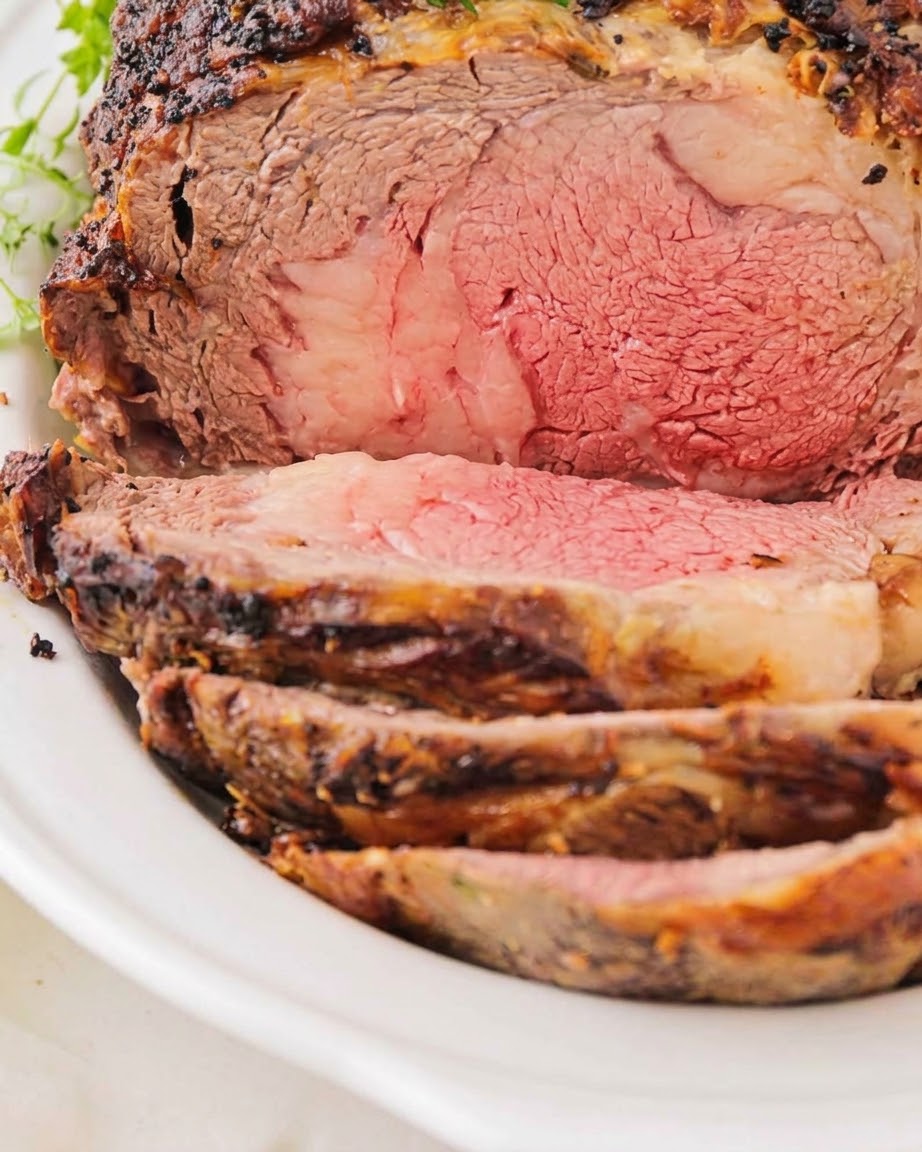
If you’re looking for a show-stopping dinner that tastes like it came straight from a fancy steakhouse, this Juicy Prime Rib Roast is exactly what you need! With a beautifully browned, flavorful crust and a tender, juicy center, this classic roast is perfect for Christmas dinner, holiday gatherings, Sunday suppers, or any special occasion.
The secret to making an unforgettable prime rib is simple: season it generously, let it come closer to room temperature before roasting, and use a meat thermometer to avoid overcooking. A quick high-heat start followed by lower-temperature roasting helps create a gorgeous crust while keeping the inside wonderfully tender.
Once you try this method, prime rib might become your favorite special-occasion meal!
Why You’ll Love This Prime Rib Recipe
- Incredibly juicy: Careful temperature control helps preserve the natural juices of the beef.
- Flavorful crust: Garlic, rosemary, thyme, and butter create a delicious golden exterior.
- Simple preparation: A few everyday seasonings transform a beautiful cut of beef.
- Perfect for special occasions: It’s an impressive centerpiece for holiday dinners and family celebrations.
- Easy to customize: Adjust the seasoning and cooking temperature to your preferred doneness.
Ingredients You’ll Need
- 1 bone-in prime rib roast, approximately 5–6 pounds
- 4 tablespoons unsalted butter, softened
- 5 cloves garlic, minced
- 2 tablespoons olive oil
- 2 teaspoons kosher salt
- 1 teaspoon freshly ground black pepper
- 1 tablespoon fresh rosemary, finely chopped
- 1 tablespoon fresh thyme leaves
- 1 teaspoon onion powder
- 1 teaspoon paprika
- 1 cup beef broth
Instructions
Step 1: Prepare the Prime Rib
Remove the prime rib from the refrigerator about 1–2 hours before cooking so it can lose some of its chill. Keep it covered and do not leave it at room temperature longer than 2 hours.
Pat the roast thoroughly dry with paper towels. A dry surface helps create a beautiful browned crust.
Preheat your oven to 450°F (232°C).
Step 2: Make the Garlic Herb Butter
In a small bowl, combine the softened butter, minced garlic, olive oil, salt, black pepper, rosemary, thyme, onion powder, and paprika.
Mix until everything is well combined.
Step 3: Season the Roast
Place the prime rib in a roasting pan, bone-side down if using a bone-in roast.
Spread the garlic herb butter generously over the entire surface of the beef, making sure to cover the sides as well.
Let the seasoned roast sit for a few minutes while the oven finishes preheating.
Step 4: Start with High Heat
Place the roast in the oven at 450°F (232°C) and roast for 15 minutes.
This initial high-temperature cooking helps brown the outside and develop a delicious crust.
Step 5: Lower the Temperature
Reduce the oven temperature to 325°F (163°C) without removing the roast.
Pour the beef broth into the bottom of the roasting pan, being careful not to pour it directly over the seasoned crust.
Continue roasting until the center reaches your desired internal temperature. Cooking time will vary depending on the roast’s size, shape, starting temperature, and oven.
Step 6: Check the Internal Temperature
Insert a reliable meat thermometer into the thickest part of the roast, avoiding the bone.
For a traditional prime rib, these are useful temperature targets when removing the roast from the oven:
- Rare: 115–120°F (46–49°C)
- Medium-rare: 120–125°F (49–52°C)
- Medium: 130–135°F (54–57°C)
The temperature will rise during resting. For food safety, the USDA recommends cooking whole beef roasts to at least 145°F (63°C), followed by a 3-minute rest. Lower doneness temperatures are traditional culinary preferences rather than USDA food-safety recommendations.
Step 7: Let the Roast Rest
Remove the roast from the oven and loosely tent it with aluminum foil.
Allow it to rest for approximately 20–30 minutes before carving. Resting helps the juices redistribute throughout the meat.
Avoid wrapping it too tightly, as trapped steam can soften the beautiful crust.
Step 8: Carve and Serve
If using a bone-in roast, carefully remove the bones before slicing.
Cut the prime rib into thick or thin slices, depending on your preference. Spoon a little of the flavorful pan juices over the meat and serve immediately.
Enjoy every tender, juicy bite!
The Secret to the Juiciest Prime Rib
The biggest secret is controlling the internal temperature rather than relying only on cooking time.
A meat thermometer takes the guesswork out of roasting and helps prevent the beef from becoming dry and overcooked.
A few additional tricks make a big difference:
- Dry the surface: Removing excess moisture helps the outside brown beautifully.
- Season generously: Prime rib is a large cut, so it needs enough seasoning to flavor every slice.
- Use fresh herbs: Rosemary and thyme add wonderful aroma and flavor.
- Avoid constant oven opening: Keeping the oven closed helps maintain a consistent cooking temperature.
- Rest before slicing: Give the roast enough time to rest so it stays juicy when carved.
Delicious Variations
Classic Garlic Butter Prime Rib: Add extra minced garlic and melted butter for a richer, more savory flavor.
Horseradish Crust: Mix 2 tablespoons prepared horseradish into the herb butter for a delicious tangy kick.
Smoky Herb Prime Rib: Add smoked paprika and a pinch of cayenne pepper for extra depth.
Red Wine Prime Rib: Replace half of the beef broth with dry red wine for a richer pan sauce.
Simple Steakhouse Style: Use only kosher salt, black pepper, garlic powder, and olive oil for a classic seasoning combination.
What to Serve with Prime Rib
Prime rib pairs beautifully with traditional comfort-food sides. Try serving it with:
- Creamy mashed potatoes
- Garlic roasted potatoes
- Roasted carrots
- Green beans with garlic butter
- Creamed spinach
- Yorkshire pudding
- Fresh dinner rolls
- Horseradish cream sauce
- Homemade beef gravy
For a complete holiday dinner, serve the roast with two vegetable sides, potatoes, and a fresh salad.
How to Make Easy Prime Rib Pan Gravy
Don’t throw away those flavorful pan drippings!
- Remove the roast from the roasting pan and set it aside to rest.
- Pour the pan juices into a measuring cup and skim off excess fat.
- Place the roasting pan over medium heat or transfer the drippings to a saucepan.
- Whisk in 2 tablespoons of flour and cook for about 1 minute.
- Gradually add 2 cups of beef broth, whisking continuously.
- Simmer until the gravy thickens.
- Season with salt and black pepper to taste.
Serve warm over sliced prime rib and mashed potatoes.
How to Store Leftover Prime Rib
Refrigerator: Allow leftover beef to cool slightly, then transfer it to an airtight container. Refrigerate within 2 hours of cooking and enjoy within 3–4 days.
Freezer: Wrap individual portions tightly in freezer-safe packaging and freeze for up to 2–3 months for best quality.
Reheating: For the best texture, place slices in a covered baking dish with a little beef broth. Warm in a 250°F (120°C) oven until heated through. Avoid overheating, which can make the meat dry.
Frequently Asked Questions
How long does it take to cook a prime rib roast?
Cooking time depends on the roast’s weight, thickness, oven temperature, and desired doneness. A 5–6-pound roast may take approximately 1½–2½ hours after the initial high-heat sear, but always use an instant-read thermometer rather than relying on time alone.
Should prime rib be cooked covered or uncovered?
Prime rib is generally roasted uncovered to help develop a flavorful, browned crust. You can loosely tent it with foil while it rests after cooking.
Should I cook prime rib bone-in or boneless?
Both options are delicious. Bone-in prime rib is traditional and makes a beautiful presentation, while boneless prime rib is easier to carve. Cooking times may differ, so monitor the internal temperature carefully.
Why is my prime rib not tender?
Overcooking is one of the most common reasons prime rib becomes tough or dry. Using a thermometer, allowing the roast to rest, and slicing against the grain can help produce tender results.
Can I prepare prime rib the night before?
Yes! You can season the roast with salt, pepper, and herbs, then refrigerate it uncovered on a rack overnight. This helps dry the surface for better browning. Apply the butter mixture before roasting if preferred.
How do I know when prime rib is done?
The most reliable method is checking the thickest part of the roast with a meat thermometer, away from the bone. Remember that the temperature will continue rising slightly while the roast rests.
Juicy Prime Rib Roast Recipe
This Juicy Prime Rib Roast is the ultimate centerpiece for a memorable dinner. With its rich garlic herb butter, beautifully browned crust, and tender beef, it’s a recipe that makes any gathering feel extra special.
Whether you’re preparing Christmas dinner, hosting a holiday celebration, or simply treating your family to an unforgettable meal, this prime rib is guaranteed to impress.
Follow the temperature tips, give the roast time to rest, and get ready to serve a delicious, restaurant-style meal right from your own kitchen!