

Dry, frizzy hair can feel like a constant struggle. You try different products, hoping for shine and softness, but many store-bought solutions end up doing the opposite. Heavy formulas, synthetic ingredients, and buildup can leave your hair looking dull instead of healthy. That’s where a simple, natural alternative can make a real difference.
Homemade aloe vera oil is one of those remedies that feels both practical and rewarding. It uses minimal ingredients, takes less than an hour to prepare, and gives you full control over what goes into your hair care routine. Even better, it fits easily into weekly habits without requiring complicated steps.
This guide walks you through everything—from understanding why aloe vera works, to making your own oil, to using it effectively for the best results
Why Aloe Vera Oil Is So Popular
A Natural Approach to Hair Care
Aloe vera has been used for generations in beauty routines. Its gel contains nutrients that support moisture balance and help hair feel softer and easier to manage. When infused into oil, it becomes even more versatile.
What Makes It Effective
Aloe vera contains:
- Vitamins that support hair appearance
- Enzymes that may help soothe the scalp
- Amino acids that contribute to smooth texture
- Natural hydration compounds
When combined with oils like coconut or olive oil, it creates a lightweight blend that nourishes without feeling too heavy.
What Aloe Vera Oil Really Is
Understanding the Infusion Process
Aloe vera oil is not extracted like essential oils. Instead, it is made by infusing aloe gel into a carrier oil. This allows the beneficial compounds to blend into the oil slowly.
Why Oil Form Is Better for Storage
Fresh aloe gel spoils quickly because it contains water. When infused into oil, the mixture lasts longer and becomes easier to apply to hair without dripping or drying out.
Ingredients You’ll Need
Basic Ingredients
- 1 to 2 large fresh aloe vera leaves
- 2 cups of carrier oil (coconut or olive oil)
Optional Additions
- Vitamin E oil (for longer shelf life)
- A few drops of essential oil (for scent)
Choosing the Right Ingredients
Fresh aloe leaves are always better than processed gel. Look for thick, healthy leaves with clear gel inside. For oil, choose based on your hair type:
- Coconut oil for thicker or dry hair
- Olive oil for lighter texture and shine
Step-by-Step Instructions
Preparing the Aloe Vera
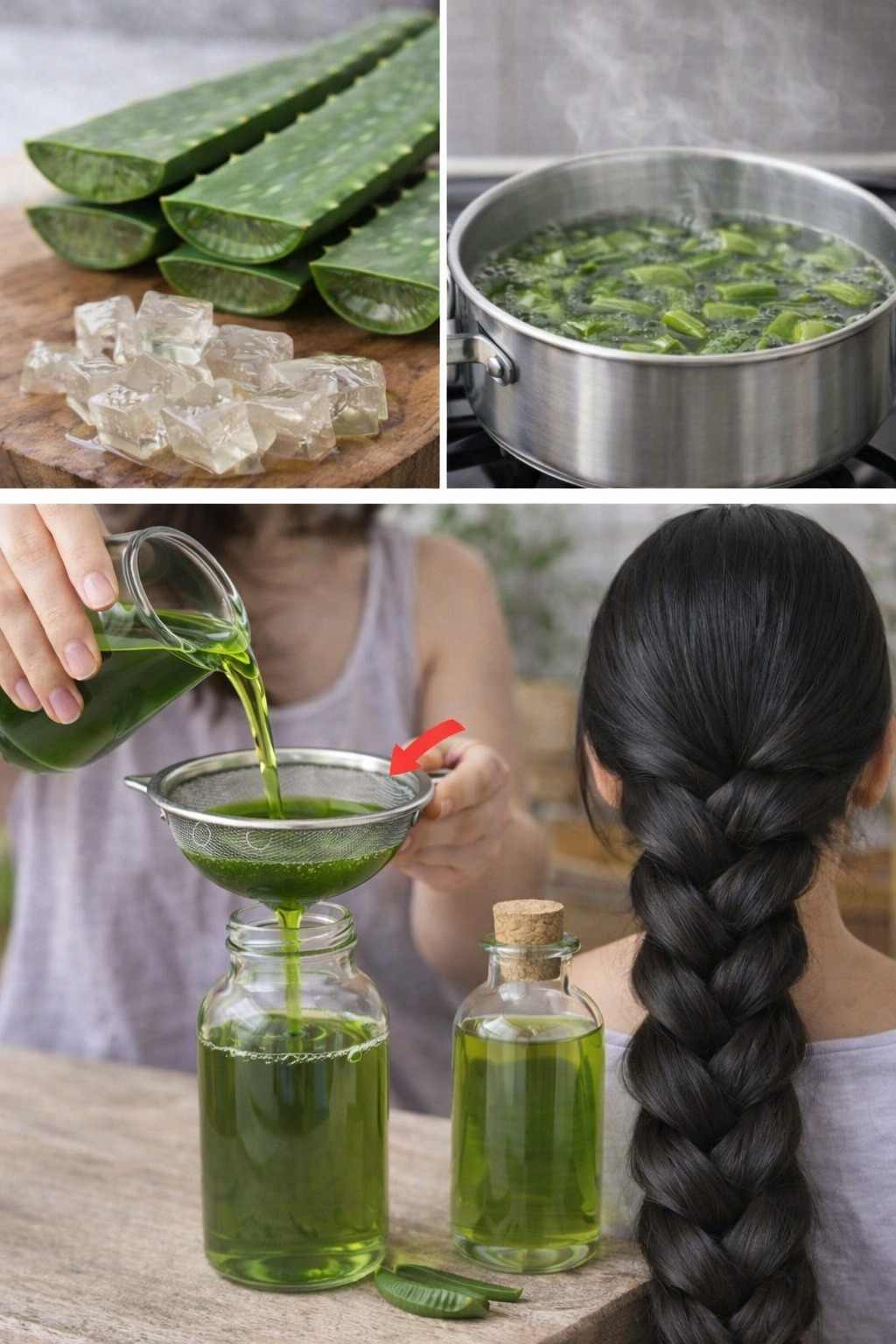
Wash the leaves thoroughly to remove dirt. Trim the edges and cut into small pieces. You can also scoop out the gel and chop it into cubes.
Heating the Oil
Pour your carrier oil into a pan. Heat it on low temperature. Avoid high heat, as it can damage the nutrients.
Infusing the Aloe
Add the aloe pieces to the warm oil. Let the mixture simmer gently for about 15 to 25 minutes. Stir occasionally.
You may notice a slight sizzling sound. This happens as moisture from the aloe evaporates.
Cooling and Straining
Turn off the heat and allow the oil to cool completely. Once cooled, strain it using a fine cloth or sieve. Press gently to extract as much oil as possible.
Storing the Oil
Pour the oil into a clean glass bottle. Keep it in a cool, dark place. Letting it sit for a day can improve the infusion.
How to Use Aloe Vera Oil
Pre-Wash Treatment
Apply the oil to dry hair and scalp. Leave it on for 30 to 60 minutes before washing.
Scalp Massage
Use a small amount and massage gently into your scalp. This helps distribute the oil evenly.
Leave-In Option
Apply a tiny amount to the ends of your hair for shine and control. Avoid using too much.
Benefits You May Notice
Softer Hair Texture
Regular use can help hair feel smoother and less rough.
Improved Moisture Balance
The oil helps retain moisture, especially for dry hair types.
Reduced Frizz
It creates a light coating that smooths hair strands.
Healthier Appearance
Hair may look shinier and more manageable over time.
Common Mistakes to Avoid
Using High Heat
Too much heat can destroy beneficial compounds. Always use low heat.
Not Straining Properly
Leaving aloe pieces in the oil can cause spoilage.
Using Old Aloe Leaves
Fresh, clear gel is important. Avoid yellow or dry leaves.
Variations You Can Try
Different Oils
- Jojoba oil for a lighter feel
- Castor oil for thicker consistency
Added Ingredients
- Rosemary oil for scalp care
- Lavender oil for fragrance
Adjusting Texture
Mixing oils can give you the exact consistency you prefer.
Storage and Shelf Life
Homemade aloe vera oil usually lasts 2 to 3 months. Adding vitamin E can extend its life slightly. Always check for changes in smell or color before use.
Tips for Best Results
Start Small
Use a small amount at first to see how your hair responds.
Warm Before Use
Rub the oil between your hands to make it easier to apply.
Stay Consistent
Use it regularly for better results instead of expecting instant change.
Combine with Routine
Pair it with gentle shampoo and balanced diet for overall improvement.
FAQs
How often should I use aloe vera oil?
Two to three times per week is enough for most people. Adjust based on your hair type.
Can I leave it overnight?
Yes, but use a small amount and protect your pillow with a cover.
Is it suitable for all hair types?
Generally yes, but lighter oils work better for fine hair, while thicker oils suit dry or coarse hair.
Can I use store-bought aloe gel?
Fresh aloe is better, but you can use store-bought gel if it is pure and free from additives.
What if my scalp feels oily?
Reduce the amount used and focus more on the ends of your hair.
Conclusion
Making aloe vera oil at home is simple, affordable, and effective. It gives you control over your ingredients while offering a natural way to care for your hair. With regular use, you may notice softer texture, better moisture, and a healthier overall look.
You don’t need complicated routines or expensive products. Sometimes, the best results come from simple, consistent habits.