

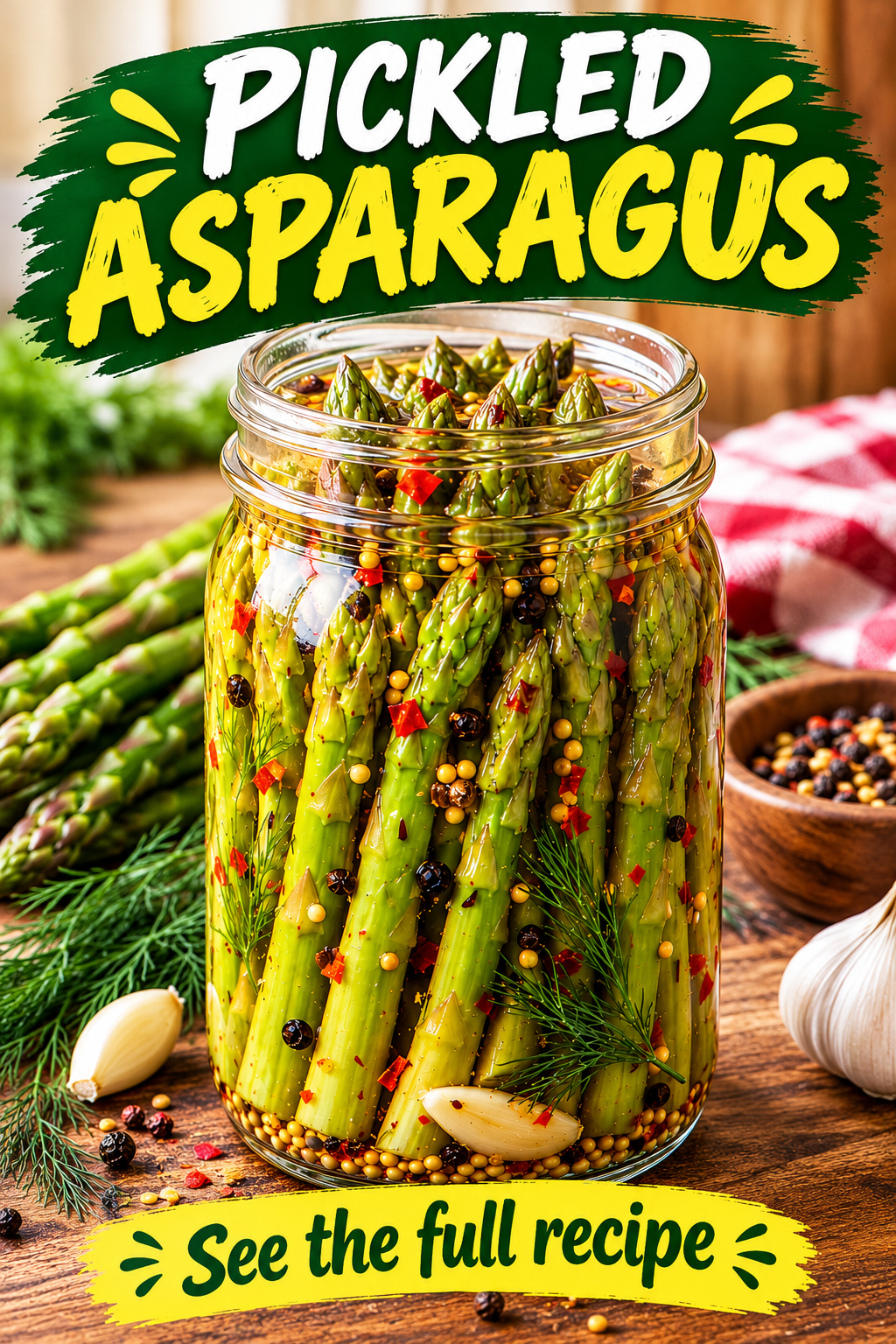
If you love crunchy, tangy pickled vegetables, this Homemade Pickled Asparagus is a recipe worth keeping in your kitchen. Fresh asparagus spears are packed with garlic, dill, mustard seeds, peppercorns, and a simple vinegar brine to create a delicious pickle with just the right balance of savory, sweet, and tangy flavors.
This easy refrigerator pickle recipe requires only a few minutes of preparation and no special canning equipment. Simply prepare the brine, pour it over the asparagus, and let the jars chill in the refrigerator for at least 48 hours. The result is crisp, flavorful asparagus that makes a wonderful snack or addition to your favorite meals.
Serve these homemade pickles alongside sandwiches, burgers, grilled meats, salads, or charcuterie boards. They’re also delicious straight from the jar whenever you’re craving something crunchy and refreshing.
Why You’ll Love This Homemade Pickled Asparagus
- Easy to prepare: No complicated canning process or special equipment required.
- Full of flavor: Garlic, dill, mustard seeds, and peppercorns create a delicious savory brine.
- Perfectly tangy: White vinegar gives the asparagus its classic pickled flavor.
- Crisp and refreshing: Fresh asparagus keeps its satisfying crunch when prepared and stored properly.
- Versatile: Enjoy it as a snack, side dish, or addition to sandwiches and salads.
- Make-ahead friendly: Prepare the jars ahead of time and let the flavors develop in the refrigerator.
Ingredients You’ll Need
- Fresh asparagus: Choose firm, bright green spears with tightly closed tips. Thicker spears are especially good for refrigerator pickles because they hold their texture.
- White vinegar: Use regular white vinegar with 5% acidity to create the tangy pickling brine.
- Water: Balances the acidity of the vinegar.
- Granulated sugar: Adds a little sweetness to balance the sharp vinegar flavor.
- Salt: Enhances the flavor and helps create a well-seasoned brine.
- Garlic cloves: Peeled and smashed garlic adds a delicious savory aroma.
- Black peppercorns: Provide gentle peppery flavor throughout the pickles.
- Mustard seeds: Add a subtle, slightly spicy flavor that works beautifully with asparagus.
- Red pepper flakes: Bring a little heat to the brine. Adjust the amount to your preference.
- Dill seeds: Add classic pickling flavor.
- Fresh dill sprigs: Give the asparagus a fresh herbal aroma and traditional dill pickle taste.
How to Make Homemade Pickled Asparagus
Step 1: Prepare the Asparagus
Wash the asparagus spears thoroughly under cool running water. Trim away the tough, woody ends so the spears are tender and pleasant to eat.
Measure the asparagus against your glass jars and cut the spears to fit upright, leaving enough space at the top for the brine.
Step 2: Prepare the Jars and Seasonings
Use clean glass jars suitable for refrigerator storage. Divide the smashed garlic, black peppercorns, mustard seeds, red pepper flakes, dill seeds, and fresh dill sprigs between the jars.
Distributing the seasonings evenly helps every jar develop a balanced flavor.
Step 3: Pack the Asparagus
Arrange the asparagus spears upright inside the jars, packing them snugly without crushing them. Keep the tips facing upward and leave enough room for the hot brine to cover the vegetables completely.
Step 4: Make the Pickling Brine
In a medium saucepan, combine the white vinegar, water, granulated sugar, and salt.
Place the saucepan over medium heat and bring the mixture to a gentle boil. Stir until the sugar and salt have completely dissolved.
Step 5: Pour the Brine Over the Asparagus
Carefully pour the hot vinegar mixture into the prepared jars. Make sure the asparagus spears are completely submerged.
If necessary, gently adjust the spears so the brine reaches all the way around them.
Step 6: Cool and Refrigerate
Allow the jars to cool briefly, then cover them and place them promptly in the refrigerator. Do not leave the jars sitting at room temperature for extended periods.
Step 7: Let the Flavors Develop
Refrigerate the asparagus for at least 48 hours before serving. For a stronger pickled flavor, allow it to sit a little longer.
Serve chilled and enjoy the crisp, tangy flavor.
Tips for the Best Pickled Asparagus
- Choose fresh asparagus: Fresh, firm spears produce the best texture and flavor.
- Trim the woody ends: Removing the tough bottoms makes the finished pickles easier to eat.
- Use 5% acidity vinegar: This recipe is designed for regular white vinegar with 5% acidity.
- Pack the jars carefully: Keep the spears snug but avoid crushing them.
- Keep the asparagus submerged: All pieces should remain covered by the brine during refrigeration.
- Allow enough pickling time: Give the asparagus at least 48 hours to absorb the garlic, dill, and vinegar flavors.
- Keep refrigerated: These are refrigerator pickles, not shelf-stable canned vegetables.
Easy Variations
Spicy Pickled Asparagus: Increase the red pepper flakes or add a few thin slices of fresh jalapeño for extra heat.
Extra Garlic Pickled Asparagus: Add another smashed garlic clove to each jar for a stronger garlic flavor.
Lemon Dill Asparagus: Add a few thin strips of lemon peel for a fresh citrus note alongside the dill.
Sweet Pickled Asparagus: Increase the sugar slightly if you prefer a sweeter pickle.
Herb Pickled Asparagus: Add fresh thyme or a small sprig of rosemary for a different herbal flavor.
Peppery Pickled Asparagus: Add extra black peppercorns for a stronger pepper flavor.
What to Serve with Pickled Asparagus
Homemade pickled asparagus is a delicious addition to many meals. Its tangy flavor pairs especially well with rich, savory foods.
Try serving it with:
- Grilled chicken or steak
- Burgers and sandwiches
- Pulled pork or barbecue
- Potato salad or pasta salad
- Cheese and charcuterie boards
- Deviled eggs
- Roasted vegetables
- Fresh green salads
- Wraps and deli sandwiches
You can also chop the pickled asparagus into small pieces and add it to salads, pasta dishes, or savory appetizer spreads.
How to Store Homemade Pickled Asparagus
Refrigerator: Keep the jars covered and refrigerated at 40°F (4°C) or below. Enjoy within 2 weeks.
Keep submerged: Make sure the asparagus remains covered with the pickling brine while stored.
Use clean utensils: Always remove the asparagus with clean utensils to help maintain freshness.
Do not store at room temperature: This is a refrigerator pickle recipe, not a tested shelf-stable canning recipe. Do not store the jars in a pantry or treat them as canned vegetables.
Freezing: Freezing is not recommended because it can make the asparagus soft and affect its crisp texture.
Frequently Asked Questions
How long does pickled asparagus need before it’s ready to eat?
Allow the asparagus to pickle in the refrigerator for at least 48 hours. This gives the vinegar, garlic, dill, and spices time to flavor the spears.
Why is my pickled asparagus not crunchy?
The freshness and thickness of the asparagus can affect the final texture. Choose firm spears, avoid overcooking them, and refrigerate the jars promptly after preparation.
Can I use apple cider vinegar instead of white vinegar?
White vinegar with 5% acidity is recommended for this recipe because it provides a clean, traditional pickled flavor. If you use another vinegar, make sure it has 5% acidity and understand that the flavor will be different.
Can I make pickled asparagus without sugar?
Yes. You can omit the sugar if you prefer a sharper, less sweet pickle. The finished flavor will be more strongly acidic.
Do I need to sterilize the jars?
Use thoroughly washed, clean glass jars suitable for food storage. Since this recipe is refrigerated rather than processed for shelf storage, it does not use a traditional shelf-stable canning method.
Can I reuse the pickling brine?
For the best flavor and food safety, prepare a fresh brine for each batch. Do not reuse leftover brine for another batch of refrigerator pickles.
Is this recipe safe for pantry storage?
No. This recipe is specifically designed for refrigerator storage. The jars must remain refrigerated at 40°F (4°C) or below and should be enjoyed within 2 weeks. It has not been developed or tested as a shelf-stable canning recipe.
Homemade Pickled Asparagus Recipe
Prep Time: 15 minutes
Cook Time: 5 minutes
Pickling Time: At least 48 hours
Total Time: 48 hours 20 minutes
Storage: Refrigerate at 40°F (4°C) or below and enjoy within 2 weeks.
Ingredients
- 1 lb fresh asparagus spears, trimmed
- 1 cup white vinegar (5% acidity)
- 1 cup water
- 2 tablespoons granulated sugar
- 1 tablespoon salt
- 3 garlic cloves, peeled and smashed
- 1 teaspoon black peppercorns
- 1 teaspoon mustard seeds
- 1/2 teaspoon red pepper flakes
- 1/2 teaspoon dill seeds
- 2 fresh dill sprigs
Instructions
- Wash the asparagus thoroughly and trim away the woody ends.
- Cut the spears to fit upright inside clean glass jars.
- Divide the garlic, black peppercorns, mustard seeds, red pepper flakes, dill seeds, and fresh dill between the jars.
- Pack the asparagus spears tightly into the jars without crushing them.
- Combine the white vinegar, water, sugar, and salt in a saucepan.
- Bring the mixture to a gentle boil, stirring until the sugar and salt dissolve completely.
- Carefully pour the hot brine over the asparagus until the spears are completely submerged.
- Allow the jars to cool briefly, then cover and refrigerate promptly.
- Refrigerate for at least 48 hours before serving.
- Serve chilled as a crunchy snack or alongside sandwiches, salads, and grilled dishes.
Important Storage Note: This is a refrigerator pickle recipe only. Keep refrigerated at 40°F (4°C) or below and enjoy within 2 weeks. Do not store at room temperature or consider it shelf-stable canned asparagus.
Final Thoughts
Homemade Pickled Asparagus is a simple and flavorful way to enjoy fresh asparagus with a delicious tangy twist. The combination of garlic, dill, mustard seeds, and peppercorns creates a wonderfully seasoned brine that transforms crisp asparagus into a refreshing refrigerator pickle.
Make a batch, give it time to chill, and keep it ready to serve with your favorite meals. Whether you enjoy it straight from the jar or add it to sandwiches, salads, and appetizer boards, this homemade pickle is a delicious addition to your refrigerator.