

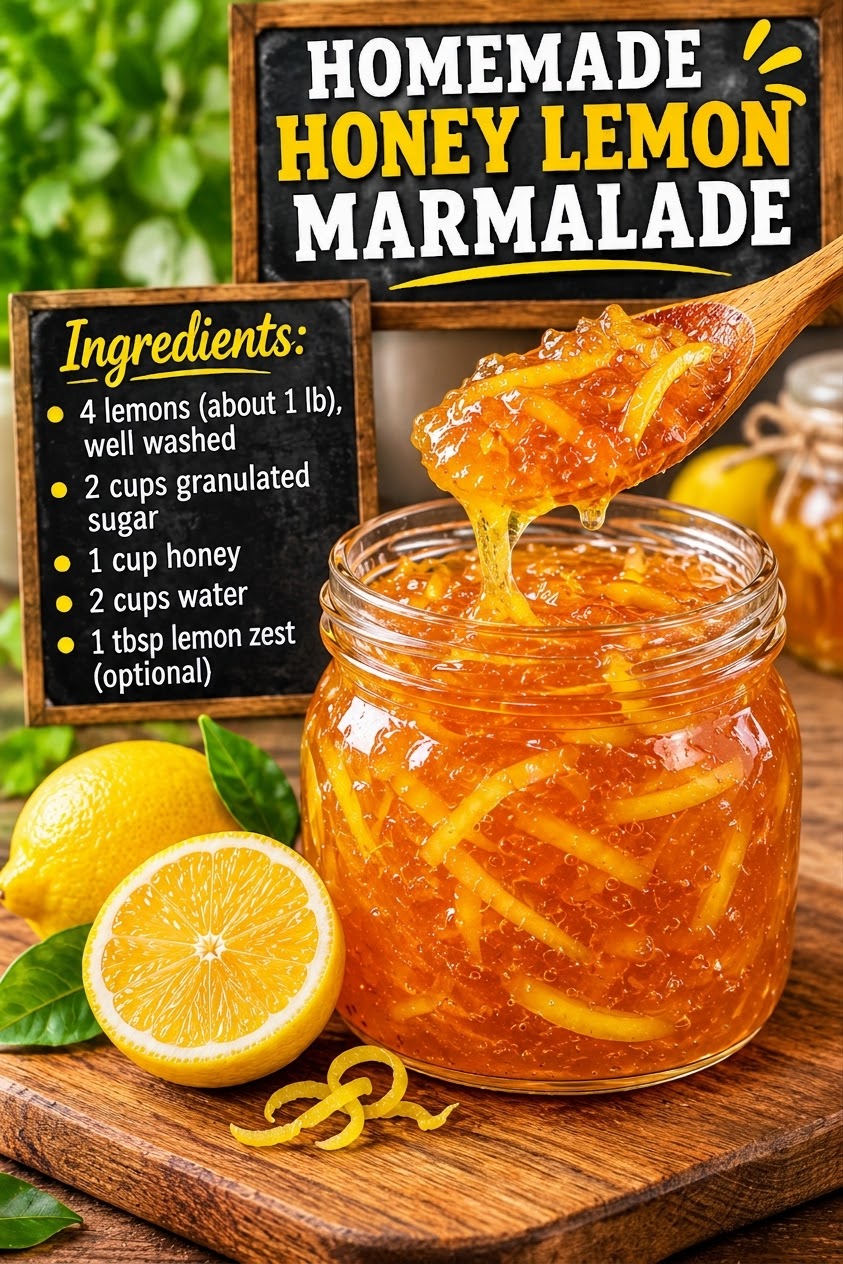
Homemade Honey Lemon Marmalade is a delicious combination of bright citrus flavor, natural sweetness, and a wonderfully thick, glossy texture. Made with fresh lemons, granulated sugar, honey, and water, this easy homemade marmalade brings a beautiful balance of sweet and tangy flavors to your breakfast table.
Unlike many store-bought citrus spreads, this homemade honey lemon marmalade is prepared with simple ingredients and fresh lemons, including their fragrant peel and juicy pulp. The result is a flavorful spread with tender strips of lemon peel and a lovely golden color.
Whether you spread it over warm buttered toast, serve it with freshly baked biscuits, or spoon it over pancakes and scones, this easy lemon marmalade is a wonderful way to enjoy the fresh taste of lemons. It also makes a thoughtful homemade gift for friends and family.
Why You’ll Love This Homemade Honey Lemon Marmalade
- Simple ingredients: You only need a handful of everyday ingredients to make this delicious citrus spread.
- Naturally sweetened with honey: Honey adds a lovely floral sweetness that balances the tartness of fresh lemons.
- Sweet and tangy flavor: Every spoonful combines refreshing lemon flavor with just the right amount of sweetness.
- Beautiful homemade texture: Thin strips of lemon peel create the traditional marmalade consistency.
- Versatile: Enjoy it on toast, pancakes, biscuits, scones, or even as a topping for yogurt.
- Perfect for gifting: Homemade lemon marmalade looks beautiful in glass jars and makes a lovely edible gift.
Ingredients You’ll Need
- 4 lemons (about 1 pound): Choose fresh, juicy lemons with bright yellow skins. Since the peel is included, wash them thoroughly before cooking.
- 2 cups granulated sugar: Helps balance the natural tartness of the lemons and gives the marmalade its sweetness and texture.
- 1 cup honey: Adds a rich, delicate sweetness and a lovely floral flavor that complements the citrus.
- 2 cups water: Softens the lemon peel during the first cooking stage and helps create the marmalade base.
- 1 tablespoon lemon zest (optional): Adds an extra burst of fresh lemon aroma and intensifies the citrus flavor.
How to Make Homemade Honey Lemon Marmalade
Step 1: Wash and Prepare the Lemons
Wash the lemons thoroughly under running water, gently scrubbing the skins to remove dirt, wax, or residue.
Cut each lemon in half and remove all visible seeds. If you want to use the natural pectin from the seeds, place them in a small piece of cheesecloth and tie it securely.
Step 2: Slice the Lemons
Slice the lemons into very thin strips, including the peel and pulp. Thin slices help create a beautiful traditional marmalade texture and allow the lemon peel to soften evenly.
If you prefer a milder, less bitter flavor, remove some of the thick white pith before slicing. Keep in mind that the white pith also contributes natural pectin, which helps the marmalade thicken.
Step 3: Cook the Lemon Slices
Place the sliced lemons and 2 cups of water into a large, heavy-bottomed saucepan.
Bring the mixture to a gentle boil over medium-high heat. Once boiling, reduce the heat and let it simmer for 25–35 minutes, stirring occasionally.
Cook until the lemon peel becomes soft and tender. This step is important because it ensures the finished marmalade has a pleasant texture rather than tough or chewy pieces of peel.
Step 4: Add the Sugar
Once the lemon peel is tender, add the granulated sugar to the saucepan.
Stir continuously until the sugar has completely dissolved. Make sure no sugar crystals remain along the sides or bottom of the pan.
Step 5: Stir in the Honey
Pour in the honey and stir gently until it is fully incorporated into the lemon mixture.
If using additional lemon zest, add it at this stage for an extra layer of fresh citrus aroma and flavor.
Step 6: Cook Until Thickened
Increase the heat slightly and bring the mixture to a steady boil, stirring frequently to prevent sticking or scorching.
Continue cooking for approximately 20–35 minutes, or until the marmalade thickens and reaches 220°F (104–105°C) at sea level.
Cooking time can vary depending on the size of your saucepan, the amount of natural pectin in the lemons, and your altitude.
For the most accurate result, use a candy thermometer to monitor the temperature.
Step 7: Test the Marmalade
To check whether your honey lemon marmalade is ready, place a small spoonful onto a chilled plate.
Put the plate in the refrigerator for 1–2 minutes. Then gently push the marmalade with your finger.
If the surface wrinkles slightly and the marmalade holds its shape, it has reached the desired consistency.
If it still looks too runny, return the saucepan to the heat and simmer for another 5 minutes before repeating the chilled plate test.
Step 8: Let the Marmalade Rest
Remove the saucepan from the heat and allow the marmalade to rest for approximately 5 minutes.
This short resting period helps distribute the lemon peel evenly throughout the mixture.
Step 9: Fill the Jars
Carefully spoon the hot marmalade into clean, heat-safe glass jars, leaving a little space at the top.
Wipe the jar rims clean, secure the lids, and allow the jars to cool.
Once cooled, transfer the jars to the refrigerator. This recipe is intended for refrigerated storage and is not a shelf-stable canning recipe.
Step 10: Serve and Enjoy
Once the marmalade has cooled completely, enjoy it on buttered toast, warm biscuits, pancakes, scones, or freshly baked bread.
Its sweet and tangy flavor also makes a delicious addition to yogurt, oatmeal, and desserts.
Tips for the Best Honey Lemon Marmalade
Choose fresh lemons: Fresh, juicy lemons with fragrant skins provide the best flavor and texture.
Wash the lemon skins thoroughly: Since the peel is included in the recipe, make sure the lemons are properly cleaned before slicing.
Slice the lemons thinly: Thin strips of lemon peel cook more evenly and create a delicate marmalade texture.
Adjust the bitterness: If you prefer a sweeter, milder marmalade, remove some of the thick white pith before slicing the lemons.
Don’t rush the first cooking stage: The lemon peel needs enough time to soften before adding the sugar. Adding sugar too early can make the peel take longer to become tender.
Stir frequently: Once the sugar and honey have been added, stir regularly to prevent the mixture from sticking to the bottom of the saucepan.
Use the chilled plate test: This is a simple way to check the marmalade’s consistency if you don’t have a thermometer.
Allow it to cool completely: Marmalade continues to thicken as it cools, so don’t worry if it looks slightly softer while still hot.
How to Serve Homemade Honey Lemon Marmalade
This homemade citrus spread is incredibly versatile and can be enjoyed in many delicious ways.
- Buttered toast: Spread a generous spoonful over warm, crispy toast for an easy breakfast.
- Freshly baked biscuits: Pair it with warm homemade biscuits for a comforting treat.
- Pancakes and waffles: Drizzle or spread it over pancakes and waffles for a sweet citrus twist.
- Scones: Serve it alongside freshly baked scones with butter or cream.
- Yogurt: Stir a little marmalade into plain Greek yogurt for a refreshing breakfast or snack.
- Oatmeal: Add a spoonful to warm oatmeal for extra sweetness and citrus flavor.
- Desserts: Use it as a filling for cakes, pastries, cookies, or sweet crepes.
- Cheese boards: Pair it with creamy cheeses and crackers for a delicious sweet-and-savory combination.
Variations and Substitutions
Honey Orange Lemon Marmalade
For a sweeter citrus flavor, replace one lemon with a small orange. The orange adds a gentle sweetness and creates a delicious combination of citrus flavors.
Ginger Honey Lemon Marmalade
Add 1–2 teaspoons of freshly grated ginger while cooking the lemon slices. Ginger brings a warm, slightly spicy flavor that pairs beautifully with honey and lemon.
Vanilla Honey Lemon Marmalade
Add a small amount of vanilla extract near the end of cooking for a delicate vanilla aroma and a softer, dessert-like flavor.
Less Bitter Lemon Marmalade
If you prefer a milder citrus taste, remove more of the thick white pith before slicing. You can also choose thinner-skinned lemons for a more delicate texture.
Extra Tangy Lemon Marmalade
For a stronger lemon flavor, add a little extra fresh lemon zest. This gives the finished marmalade a brighter citrus aroma without significantly changing the overall texture.
Storage Instructions
Refrigerator: Once the marmalade has cooled, transfer it to clean, airtight glass jars and refrigerate. For this refrigerator recipe, use within 3–4 weeks.
Freezer: For longer storage, freeze the marmalade in suitable freezer-safe containers. Leave some space at the top for expansion. Thaw it in the refrigerator before serving.
Important food safety note: This recipe has not been developed or tested as a shelf-stable canning recipe. Do not store the jars at room temperature or rely on simply tightening the lids to preserve the marmalade. For pantry storage, use a tested lemon marmalade canning recipe and follow its exact jar preparation and boiling-water processing instructions.
Frequently Asked Questions
Can I use regular sugar instead of honey?
This recipe uses both granulated sugar and honey to create its signature flavor. You can experiment with adjusting their proportions, but changing the amounts may affect the sweetness, flavor, and setting consistency.
Why is my lemon marmalade bitter?
Lemon peel naturally contains bitter compounds, especially in the white pith. Removing some of the thick pith before slicing can help create a milder flavor. Choosing fresh lemons and cooking the peel until tender also helps improve the overall taste.
How do I know when the marmalade is ready?
The marmalade is generally ready when it reaches approximately 220°F (104–105°C) at sea level. You can also use the chilled plate test. Place a small spoonful on a cold plate, chill for 1–2 minutes, and gently push it. If it wrinkles slightly, it is ready.
Why is my honey lemon marmalade still runny?
Marmalade may be runny if it hasn’t cooked long enough or hasn’t reached its setting point. Continue simmering for another 5 minutes and repeat the chilled plate test. Remember that it will also thicken further as it cools.
Can I make this recipe without removing the lemon peel?
Yes! The peel is an important part of traditional marmalade and provides its characteristic texture and citrus flavor. Just make sure to slice it thinly and cook it until completely tender.
Can I use bottled lemon juice?
Fresh lemons are strongly recommended because this recipe uses the peel and pulp as well as the juice. Bottled lemon juice cannot replace the texture and natural citrus oils provided by whole lemons.
Can I reduce the amount of sugar?
You can experiment with using less sugar, but sugar contributes to the flavor, texture, and setting of marmalade. Reducing it may result in a softer spread and can affect how long the marmalade keeps. Keep the recipe refrigerated and follow the recommended storage time.
How long does homemade honey lemon marmalade last?
When stored in clean, airtight jars in the refrigerator, this marmalade should be used within 3–4 weeks. For longer storage, freeze it in suitable containers.
Can I give homemade honey lemon marmalade as a gift?
Absolutely! Transfer the cooled marmalade into attractive, clean glass jars and decorate them with simple labels or ribbons. Keep the jars refrigerated and let recipients know that the marmalade must be stored in the refrigerator.
Final Thoughts
Homemade Honey Lemon Marmalade is a simple yet delicious way to turn fresh lemons into a sweet, tangy, and fragrant homemade spread. With tender strips of lemon peel, the natural sweetness of honey, and the perfect balance of citrus flavor, every spoonful feels like a little taste of sunshine.
Whether you enjoy it on morning toast, serve it with warm scones, or use it to add a citrus twist to your favorite desserts, this easy lemon marmalade is a wonderful addition to your homemade recipe collection.
Make a batch, fill a few glass jars, and enjoy the delicious combination of honey and fresh lemons whenever you’re craving something sweet and refreshing!