

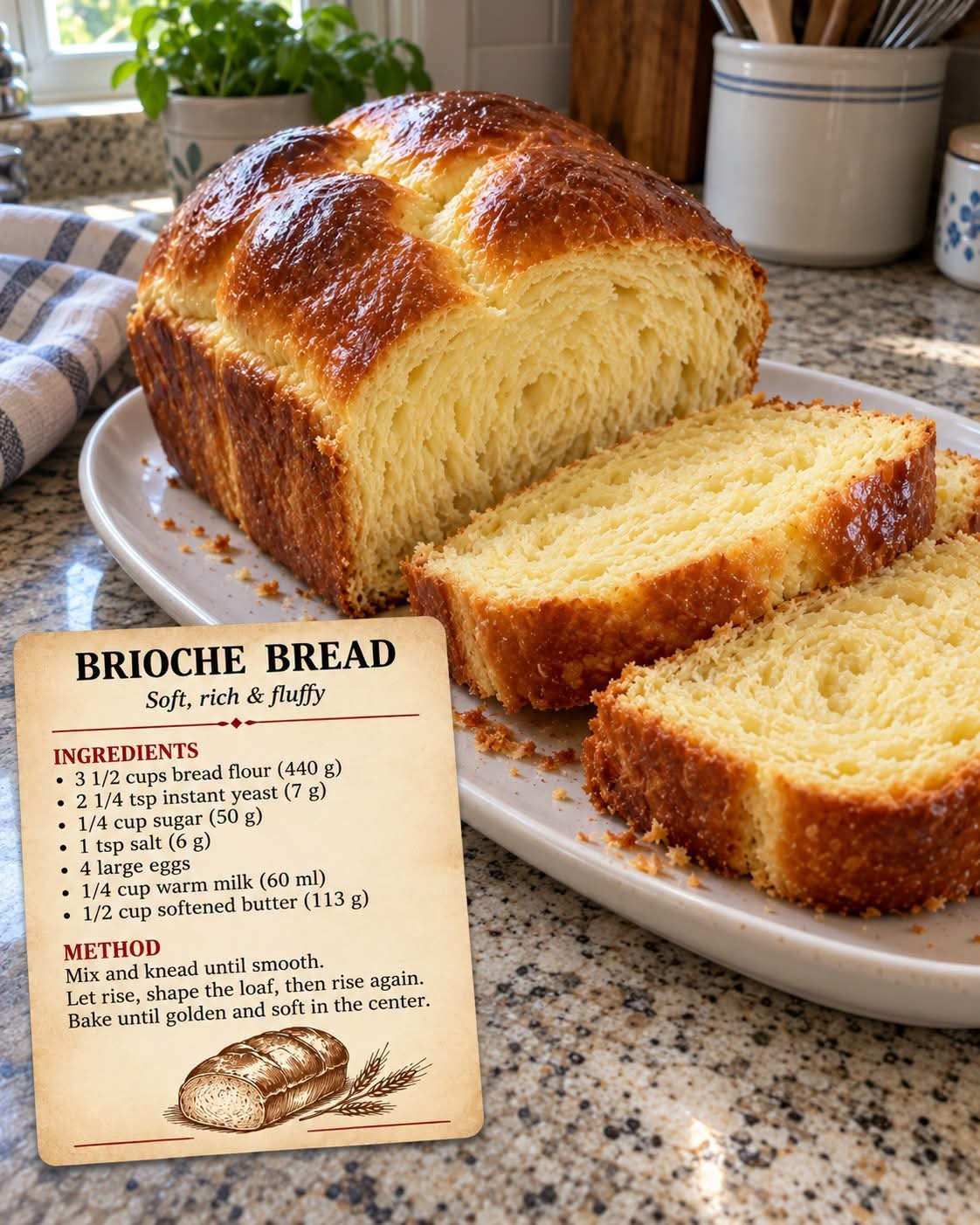
Homemade Brioche Bread is a wonderfully soft, rich, and buttery bread with a tender crumb and a beautiful golden crust. Made with bread flour, eggs, milk, sugar, and plenty of butter, this classic French-style bread is slightly sweet, deliciously fluffy, and perfect for breakfast, brunch, or an afternoon treat.
Although brioche looks impressive, making it at home is easier than you might think. The dough requires time to knead and rise, but the result is a beautiful loaf with a delicate texture and rich flavor that is worth the wait.
This easy homemade brioche recipe uses simple ingredients and produces one gorgeous loaf that can be enjoyed fresh, toasted with butter, or transformed into French toast, bread pudding, and other delicious dishes.
Why You Will Love This Homemade Brioche Bread
- Soft and fluffy texture: Eggs and butter create a tender crumb that practically melts in your mouth.
- Rich buttery flavor: Real butter gives this bread its signature taste and delicate texture.
- Slightly sweet: A little granulated sugar adds a gentle sweetness without making the bread taste like cake.
- Perfect for sweet or savory meals: Enjoy it with jam, honey, cheese, eggs, or your favorite sandwich fillings.
- Beautiful homemade loaf: Three dough balls arranged in a loaf pan create an attractive, bakery-style shape.
- Excellent for special breakfasts: Serve it for weekend brunches, holidays, or family gatherings.
- Versatile and freezer-friendly: Leftover brioche can be frozen or used in French toast and bread pudding.
Ingredients for Homemade Brioche Bread
You only need a few basic ingredients to make this rich, tender bread.
- 3 1/2 cups bread flour (440 g): Bread flour provides the gluten structure needed for a stretchy dough and a soft, well-developed crumb.
- 2 1/4 teaspoons instant yeast (7 g): Helps the dough rise and gives the loaf its light texture.
- 1/4 cup granulated sugar (50 g): Adds a subtle sweetness and contributes to the golden-brown crust.
- 1 teaspoon salt (6 g): Enhances the flavor and balances the sweetness.
- 4 large eggs: Add richness, moisture, color, and structure to the dough.
- 1/4 cup warm milk (60 ml): Helps bring the dough together and adds tenderness. Use warm rather than hot milk.
- 1/2 cup unsalted butter, softened (113 g): Creates the rich, buttery flavor and soft texture that make brioche special.
- A little extra milk, for brushing: Gives the top of the loaf a lovely golden finish.
For the best results, weigh the flour and butter when possible. Accurate measurements help produce a dough with the right consistency.
How to Make Homemade Brioche Bread
Brioche dough develops its characteristic texture through kneading, gradual butter incorporation, and two rising periods. Follow these steps for a beautiful homemade loaf.
Step 1: Combine the Dry Ingredients
In a large mixing bowl, combine the bread flour, instant yeast, granulated sugar, and salt.
Stir the ingredients together until evenly distributed. Keeping the salt and yeast well mixed throughout the flour helps ensure consistent flavor and rising.
Step 2: Mix the Eggs and Milk
In a separate bowl, whisk the eggs and warm milk until combined.
The milk should feel comfortably warm, not hot. Excessive heat can damage the yeast and affect the dough’s ability to rise.
Step 3: Make the Dough
Gradually pour the egg and milk mixture into the dry ingredients while mixing.
Continue mixing until all the flour is moistened and a soft, sticky dough forms. At this stage, the dough may look rough and uneven. That is normal.
Brioche dough is naturally softer and stickier than many basic bread doughs because of its high egg and butter content.
Step 4: Knead the Dough
Knead the dough for about 5–7 minutes, either by hand or with a stand mixer fitted with a dough hook, until it begins to become smoother and more elastic.
If kneading by hand, use a dough scraper to help manage the sticky dough. Avoid adding large amounts of extra flour, as this can make the finished bread dense.
Step 5: Add the Butter Gradually
With the mixer running on low speed, or while continuing to knead by hand, add the softened butter a little at a time.
Wait until each addition is mostly incorporated before adding more. The dough may become slippery, soft, and messy at first, but it will gradually come together.
Continue kneading for another 10–15 minutes, or until the dough is smooth, stretchy, and elastic. It should remain slightly sticky but should have enough structure to stretch without immediately tearing.
If the dough becomes very warm during kneading, pause and refrigerate it briefly before continuing.
Step 6: Let the Dough Rise
Place the dough in a lightly greased bowl. Turn it gently so the surface is lightly coated, then cover the bowl with plastic wrap or a clean kitchen towel.
Leave the dough in a warm, draft-free place for about 1 1/2–2 hours, or until it has doubled in size.
The exact rising time depends on the room temperature and the activity of the yeast. Look at the dough rather than relying only on the clock.
Step 7: Shape the Loaf
Once the dough has risen, gently press it down to release some of the accumulated gas.
Transfer it to a lightly floured work surface and divide it into three equal portions. Shape each portion into a smooth ball by tucking the edges underneath.
Try to make the balls similar in size so the loaf rises and bakes evenly.
Step 8: Arrange the Dough in the Pan
Lightly grease a 9-by-5-inch loaf pan.
Place the three dough balls side by side in the pan, spacing them evenly. The balls will expand during the second rise and join together as they bake.
Step 9: Let the Dough Rise Again
Cover the loaf pan loosely with a clean kitchen towel or lightly greased plastic wrap.
Allow the dough to rise for approximately 1–1 1/2 hours, or until the balls look beautifully puffy and the dough has expanded noticeably.
Avoid letting the dough rise too far. Overproofed dough can lose its structure and may collapse during baking.
Toward the end of this rising period, preheat your oven to 350°F (175°C).
Step 10: Brush the Loaf
Lightly brush the top of the risen dough with a little milk.
This helps the crust develop an attractive golden color while baking. Brush gently to avoid deflating the soft dough.
Step 11: Bake the Brioche
Place the loaf pan in the preheated oven and bake for 30–35 minutes.
The brioche should develop a deep golden-brown crust. For a reliable doneness check, the center should reach approximately 190°F (88°C) on an instant-read thermometer.
If the top browns too quickly before the center is done, loosely cover the loaf with aluminum foil during the final minutes of baking.
Step 12: Cool Before Slicing
Remove the brioche from the oven and let it rest in the pan for about 10 minutes.
Carefully transfer the loaf to a wire rack and allow it to cool for approximately 30 minutes, or longer if necessary, before slicing.
Cooling helps the crumb finish setting and makes it easier to cut neat slices without crushing the soft bread.
Tips for the Best Homemade Brioche Bread
Measure the flour accurately. Too much flour can make brioche dry and heavy. Weighing the flour is the most reliable method.
Use softened butter. Butter should be pliable but not melted. Melted butter can make the dough greasy and interfere with its structure.
Add butter slowly. Gradual incorporation allows the dough to absorb the fat and develop a smooth, elastic texture.
Be patient with kneading. Brioche takes longer to develop than many simple bread doughs. Continue kneading until it becomes stretchy and smooth.
Avoid adding too much flour. The dough should be slightly sticky. A small amount of flour on the work surface is useful, but excessive flour can reduce the bread’s tenderness.
Allow enough time for both rises. The dough needs time to develop its airy texture. Temperature affects rising speed, so use the dough’s appearance as your guide.
Watch the loaf during baking. Brioche contains sugar and eggs, which help it brown quickly. Cover the top loosely with foil if it becomes too dark before the center is fully baked.
Let the loaf cool. Cutting into hot brioche can compress the crumb and make the inside appear gummy. Allowing it to cool improves the texture.
Easy Variations
This basic brioche recipe is delicious on its own, but you can customize it in several ways.
Vanilla Brioche Bread
Add about 1 teaspoon of vanilla extract to the egg and milk mixture for a gentle vanilla aroma that works especially well for breakfast and sweet snacks.
Chocolate Chip Brioche
After the dough has developed its structure and the butter is fully incorporated, gently knead in a small handful of chocolate chips. Chill the dough briefly if it becomes too soft to shape.
Cinnamon Brioche
Add 1–2 teaspoons of ground cinnamon to the dry ingredients for a warm, spiced flavor. You can also sprinkle a little cinnamon sugar over the loaf before baking, though this may change how quickly the surface browns.
Raisin Brioche
Fold in a small handful of raisins near the end of kneading. If the raisins are very dry, soak them briefly in warm water, then drain and pat them thoroughly dry before adding.
Braided Brioche
Instead of dividing the dough into three balls, divide it into three equal ropes and braid them. Place the braid in a greased loaf pan or on a parchment-lined baking sheet and allow it to rise until puffy before baking.
Mini Brioche Rolls
Divide the dough into smaller portions and shape them into rolls. Arrange them in a greased baking dish, allow them to rise, and bake until golden. Because smaller rolls bake faster than a full loaf, begin checking them early.
What to Serve with Homemade Brioche Bread
Homemade brioche is incredibly versatile and can be served in both sweet and savory ways.
- Butter and jam: A simple combination that lets the buttery bread shine.
- Honey: Drizzle a little honey over a warm slice for a sweet breakfast.
- Fresh fruit: Serve brioche with berries, sliced bananas, or seasonal fruit.
- Scrambled eggs: The soft texture pairs beautifully with eggs for a satisfying breakfast.
- Cheese: Mild cheeses or creamy spreads complement the bread’s gentle sweetness.
- French toast: Thick slices make rich, tender French toast with a soft center.
- Sandwich fillings: Use the bread for chicken sandwiches, egg salad, or other favorite fillings.
- Coffee or tea: A slice of brioche makes a lovely companion to a warm drink.
For a special brunch, serve thick slices with butter, jam, fresh fruit, and a pot of coffee or tea.
How to Store Homemade Brioche Bread
Because brioche contains eggs, butter, and milk, storing it properly helps preserve its flavor and texture.
At room temperature: Once the loaf has cooled completely, place it in an airtight bag or container. Store it in a cool, dry place and enjoy it within 2–3 days for the best texture.
In the refrigerator: Refrigeration can cause bread to stale more quickly, so it is generally unnecessary for plain brioche. If your kitchen is very warm or humid, choose a cool, dry storage area or freeze the loaf for longer storage.
In the freezer: Slice the cooled loaf or leave it whole, then wrap it tightly and place it in a freezer-safe bag. Freeze for up to 2–3 months for the best quality. Slicing the loaf before freezing makes it easier to remove only what you need.
How to Reheat Brioche Bread
To refresh brioche, warm individual slices in a toaster on a low setting or heat them briefly in a skillet with a little butter.
For a larger portion, wrap the bread loosely in foil and warm it in a 300°F (150°C) oven until heated through.
Avoid overheating the loaf, as the delicate crumb can dry out. Frozen slices can often be toasted directly from frozen.
Frequently Asked Questions
What makes brioche different from regular bread?
Brioche is an enriched bread made with ingredients such as eggs, butter, milk, and sugar. These additions give it a richer flavor, softer crumb, and more tender texture than many basic breads.
Why is my brioche dough so sticky?
Brioche dough contains a relatively high amount of eggs and butter, so it naturally feels softer and stickier than ordinary bread dough. Continue kneading until it becomes smooth and elastic rather than adding lots of extra flour.
Can I make brioche without a stand mixer?
Yes. You can knead the dough by hand, although it requires more effort and patience. Use a dough scraper to help handle the sticky dough, and add the butter gradually as you knead.
Can I prepare brioche dough the night before?
Yes. After kneading, place the dough in a covered bowl and refrigerate it overnight. The cold temperature slows fermentation and makes the dough firmer and easier to handle. The next day, shape the dough and allow it to rise until puffy before baking. Depending on its temperature, it may need additional time to rise.
How do I know when brioche dough has risen enough?
During the first rise, the dough should approximately double in size. During the second rise, it should look noticeably puffy and expand in the loaf pan. Rising times vary with room temperature, so use the dough’s appearance as your main guide.
Why did my brioche turn out dense?
Dense brioche can result from insufficient kneading, underproofing, inactive yeast, too much flour, or cutting the bread before it has cooled. Make sure the dough develops a stretchy texture, allow both rises to finish properly, and measure ingredients accurately.
Why is the top of my brioche too dark?
The sugar and eggs in brioche encourage browning. If the crust becomes dark before the center is cooked, loosely cover the loaf with aluminum foil and continue baking until it reaches the proper internal temperature.
Can I use all-purpose flour instead of bread flour?
Yes, all-purpose flour can work, although the texture may be slightly less chewy and structured. The dough may also behave differently during kneading, so focus on its consistency rather than adding flour automatically.
Can I use active dry yeast instead of instant yeast?
Yes. Active dry yeast can be substituted, but it may benefit from being dissolved in the warm milk according to the yeast package instructions before mixing. Rising times may vary.
What is the best way to use leftover brioche?
Leftover brioche is excellent for French toast, bread pudding, grilled sandwiches, or toasted slices served with butter and jam. Its rich texture makes it especially good in recipes that benefit from a soft, flavorful bread.
Homemade Brioche Bread Recipe
Prep Time: 30 minutes
First Rising Time: 1 hour 30 minutes to 2 hours
Second Rising Time: 1 hour to 1 hour 30 minutes
Bake Time: 30–35 minutes
Cooling Time: Approximately 30 minutes
Total Time: Approximately 4 hours to 5 hours 5 minutes, depending on rising and cooling time
Yield: 1 loaf
Course: Bread, Breakfast
Cuisine: French-inspired
Ingredients
- 3 1/2 cups bread flour (440 g)
- 2 1/4 teaspoons instant yeast (7 g)
- 1/4 cup granulated sugar (50 g)
- 1 teaspoon salt (6 g)
- 4 large eggs
- 1/4 cup warm milk (60 ml)
- 1/2 cup unsalted butter, softened (113 g)
- A little extra milk, for brushing
Instructions
- In a large mixing bowl, combine the bread flour, instant yeast, granulated sugar, and salt.
- In a separate bowl, whisk together the eggs and warm milk.
- Gradually add the egg mixture to the dry ingredients, mixing until a soft, sticky dough forms.
- Knead for 5–7 minutes until the dough begins to become smooth and elastic.
- Add the softened butter a little at a time, continuing to knead until fully incorporated.
- Knead for another 10–15 minutes until the dough is smooth, stretchy, and slightly sticky.
- Place the dough in a lightly greased bowl, cover, and let it rise in a warm place for 1 1/2–2 hours, or until doubled in size.
- Gently press down the dough and transfer it to a lightly floured surface.
- Divide the dough into three equal portions and shape each portion into a smooth ball.
- Lightly grease a 9-by-5-inch loaf pan and arrange the dough balls side by side.
- Cover loosely and allow the dough to rise for 1–1 1/2 hours, until puffy.
- Preheat the oven to 350°F (175°C).
- Lightly brush the top of the loaf with milk.
- Bake for 30–35 minutes, until deeply golden brown and the center reaches approximately 190°F (88°C).
- If the top browns too quickly, loosely cover it with aluminum foil during the final minutes of baking.
- Remove the loaf from the oven and let it cool in the pan for 10 minutes.
- Transfer the brioche to a wire rack and allow it to cool before slicing.
Final Thoughts
Homemade Brioche Bread is a rewarding baking project that produces a soft, buttery loaf with a delicate crumb and beautiful golden crust. While the dough needs time to rise and develop, the process is straightforward when you follow each step and allow the ingredients to work together.
Serve it fresh with butter and jam, turn it into rich French toast, or use it to make delicious sandwiches. With its gentle sweetness and tender texture, this homemade brioche is a versatile addition to your baking collection and a wonderful way to bring bakery-style bread into your kitchen.