

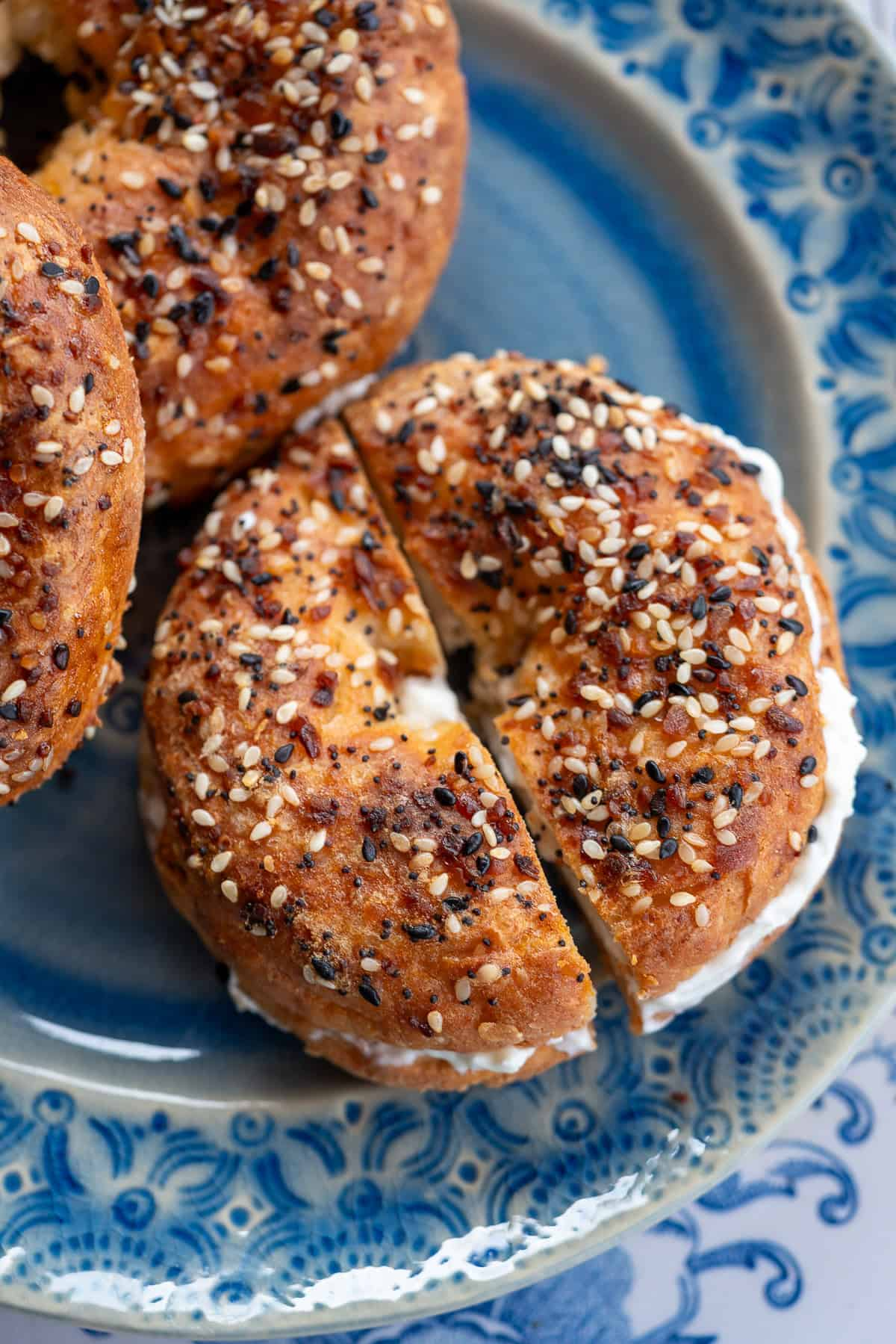
These High-Protein Cottage Cheese Bagels are soft, chewy, satisfying, and surprisingly easy to make. Unlike traditional bagels that require yeast, kneading, and a long rise, this simple recipe uses cottage cheese and self-rising flour to create delicious homemade bagels with minimal effort.
The cottage cheese adds moisture and protein while keeping the inside tender. After shaping, the bagels are brushed with egg wash and baked until golden brown. Add everything bagel seasoning, sesame seeds, or poppy seeds on top for extra flavor.
They’re perfect for breakfast, brunch, lunch, or an easy snack. Slice one open and fill it with cream cheese, eggs, avocado, smoked salmon, turkey, or your favorite bagel toppings.
Why You’ll Love These Cottage Cheese Bagels
There are plenty of reasons to keep this recipe in your regular breakfast rotation.
No Yeast Required
There’s no waiting for dough to rise. The bagels go from mixing bowl to oven quickly.
Simple Ingredients
You only need a few basic ingredients to make the dough.
Soft and Chewy
The cottage cheese creates a tender center while the outside becomes lightly golden.
Easy to Customize
Change the toppings or add herbs, cheese, or spices to make the bagels your own.
Great for Meal Prep
Bake a batch ahead of time and enjoy them throughout the week.
Ingredients
For the Bagels
- 1 cup cottage cheese
- 1½ cups self-rising flour
- 1 large egg
- 1 tablespoon honey
- ½ teaspoon garlic powder
- ¼ teaspoon salt
- ½ teaspoon baking powder, optional if your flour is not very fresh
For the Egg Wash
- 1 large egg
- 1 tablespoon water
For the Topping
- 2 tablespoons everything bagel seasoning
You can also use sesame seeds, poppy seeds, dried onion, dried garlic, or shredded cheese.
Kitchen Equipment
- Food processor or blender
- Mixing bowl
- Baking sheet
- Parchment paper
- Bench scraper or sharp knife
- Pastry brush
- Wire cooling rack
How to Make High-Protein Cottage Cheese Bagels
Step 1: Preheat the Oven
Preheat your oven to 375°F (190°C).
Line a baking sheet with parchment paper and set it aside.
Step 2: Blend the Cottage Cheese
Add the cottage cheese to a blender or food processor.
Blend until mostly smooth and creamy.
This step helps create a smoother bagel dough without large pieces of cottage cheese throughout the finished bagels.
Step 3: Make the Dough
Add the blended cottage cheese to a large mixing bowl.
Add the self-rising flour, egg, honey, garlic powder, and salt.
Stir with a spatula until a soft dough begins to form.
Step 4: Knead Briefly
Transfer the dough to a lightly floured surface.
Knead gently for about 1–2 minutes, just until the dough comes together.
Avoid adding too much extra flour because it can make the bagels dense.
Step 5: Divide the Dough
Divide the dough into 4 equal portions.
Roll each portion into a smooth ball.
Step 6: Shape the Bagels
Press your thumb through the center of each dough ball.
Gently stretch the opening until you have a bagel shape.
Make the hole slightly larger than you think you need because it will shrink somewhat during baking.
Step 7: Prepare the Egg Wash
Whisk together one egg and one tablespoon of water.
Brush the tops and sides of each bagel with the egg wash.
Step 8: Add the Toppings
Sprinkle each bagel generously with everything bagel seasoning.
Press the seasoning gently into the surface so it stays in place during baking.
Step 9: Bake
Place the bagels on the prepared baking sheet.
Bake for 20–25 minutes, or until golden brown and cooked through.
For a deeper golden color, you can increase the oven temperature to 400°F during the final few minutes, watching carefully.
Step 10: Cool
Transfer the bagels to a wire rack.
Allow them to cool for at least 10 minutes before slicing.
The centers will continue to set as they cool.
How to Serve Cottage Cheese Bagels
These bagels are delicious with both sweet and savory toppings.
Savory Toppings
- Cream cheese
- Avocado
- Scrambled eggs
- Fried eggs
- Smoked salmon
- Turkey
- Sliced chicken
- Tomato
- Cucumber
- Hummus
- Cottage cheese
- Fresh herbs
Sweet Toppings
- Peanut butter
- Almond butter
- Strawberry jam
- Honey
- Cream cheese and berries
- Banana slices
- Cinnamon and butter
Tips for the Best Cottage Cheese Bagels
Use Thick Cottage Cheese
A thick cottage cheese works best because it creates a dough that’s easier to handle.
Blend the Cottage Cheese
Blending creates a smoother texture and helps distribute the cottage cheese throughout the dough.
Don’t Overwork the Dough
Knead only until the dough comes together. Excessive kneading can make the bagels tough.
Don’t Add Too Much Flour
The dough may feel slightly sticky at first. Add flour gradually rather than covering it with a large amount.
Make the Holes Generous
The center openings shrink as the bagels bake, so shape them slightly larger than you want them to be.
Delicious Variations
Everything Bagel
Keep the classic everything seasoning topping for a savory breakfast bagel.
Cheddar Herb Bagels
Fold ½ cup shredded cheddar cheese and 1 teaspoon dried Italian herbs into the dough.
Cinnamon Raisin Bagels
Leave out the garlic powder and add 1 teaspoon cinnamon, 2 tablespoons brown sugar, and ¼ cup raisins.
Jalapeño Cheddar Bagels
Add ½ cup shredded cheddar and 2 tablespoons finely chopped jalapeños.
Garlic Parmesan Bagels
Mix ¼ cup Parmesan cheese and ½ teaspoon garlic powder into the dough.
Sesame Bagels
Top with white and black sesame seeds instead of everything seasoning.
Make-Ahead Instructions
You can prepare the dough several hours ahead and keep it covered in the refrigerator until you’re ready to shape and bake it.
For the easiest meal prep, bake the entire batch and allow the bagels to cool completely before storing.
Storage Instructions
Room Temperature
Store cooled bagels in an airtight container or zip-top bag for up to 2 days.
Refrigerator
Keep them refrigerated for up to 5 days.
Warm them in a toaster or oven before serving.
Freezer
Freeze completely cooled bagels for up to 3 months.
Slice them before freezing if you plan to toast them directly from frozen.
Wrap each bagel individually and place them in a freezer-safe bag.
How to Reheat Cottage Cheese Bagels
Toaster
Slice the bagel in half and toast until warm and lightly crisp.
Oven
Heat at 350°F (175°C) for about 5–8 minutes.
Air Fryer
Heat at 325°F (165°C) for about 3–5 minutes.
Common Mistakes to Avoid
Using Too Much Flour
Extra flour can produce dry, dense bagels.
Skipping the Egg Wash
The egg wash helps the bagels develop their beautiful golden-brown finish and helps toppings stick.
Making the Holes Too Small
The openings can close during baking, so give them plenty of space.
Cutting Them While Very Hot
Let the bagels cool slightly before slicing to prevent the center from becoming gummy.
Overbaking
Remove them once they’re golden brown and cooked through to preserve their tender texture.
Expert Tips
- Drain very watery cottage cheese before blending.
- Full-fat or low-fat cottage cheese can both work in this recipe.
- Use parchment paper to prevent sticking.
- Wet your hands slightly when shaping the dough if it feels sticky.
- Flour your work surface lightly rather than adding large amounts of flour directly to the dough.
- Add toppings immediately after brushing with egg wash so they adhere properly.
- For extra crunch, sprinkle sesame seeds over the everything seasoning.
- Toast the finished bagels before serving for a crisp exterior and warm center.
- Store cooled bagels completely before sealing them in a container.
- Freeze individual bagels so you can take out only what you need.
Frequently Asked Questions
Are cottage cheese bagels actually chewy?
They have a tender, slightly chewy texture, although they aren’t exactly the same as traditional yeast-risen bagels. They develop a lightly crisp exterior and soft center when baked properly.
Do I have to blend the cottage cheese?
Blending isn’t absolutely required, but it produces a smoother dough and more uniform texture. It’s especially helpful if you don’t want visible cottage cheese curds in the finished bagels.
Can I use all-purpose flour?
Yes, but you’ll need to adjust the recipe because all-purpose flour doesn’t contain the leavening and salt found in self-rising flour. You can use 1½ cups all-purpose flour with approximately 2 teaspoons baking powder and ½ teaspoon salt.
Can I use Greek yogurt instead of cottage cheese?
Greek yogurt can work in similar high-protein dough recipes, but the moisture level differs between brands. You may need to adjust the amount of flour to achieve a soft, workable dough.
Can I make these bagels gluten-free?
You can try a gluten-free self-rising flour blend designed for baking. Since gluten-free flours absorb liquid differently, the dough may require adjustments.
Can I add cheese to the dough?
Absolutely. Shredded cheddar, mozzarella, Parmesan, or pepper jack can add wonderful flavor.
Why is my dough sticky?
Cottage cheese varies in moisture content. If the dough is too sticky to shape, add flour one tablespoon at a time until it’s manageable.
How much protein is in each bagel?
The exact amount depends on the cottage cheese, flour, and egg brands you use. For the most accurate nutrition information, calculate the recipe using the nutrition labels of your specific ingredients.
Can I freeze these bagels?
Yes. Once completely cooled, wrap them individually and freeze for up to three months. Slice them before freezing for easy toasting.
Recipe at a Glance
- Prep Time: 10 minutes
- Cook Time: 20–25 minutes
- Total Time: About 35 minutes
- Servings: 4 bagels
- Category: Breakfast
- Cuisine: American
- Method: Baking
Final Thoughts
These High-Protein Cottage Cheese Bagels are an easy homemade alternative to traditional bagels when you want something quick and satisfying. With a handful of ingredients, no yeast, and no lengthy rising time, they’re simple enough for a weekday breakfast while still being delicious enough for a weekend brunch.
Serve them warm with cream cheese and smoked salmon, make a breakfast sandwich with eggs, or keep things sweet with peanut butter and fresh fruit. Once you try this easy cottage cheese bagel recipe, you’ll have plenty of reasons to keep a batch in your freezer.