

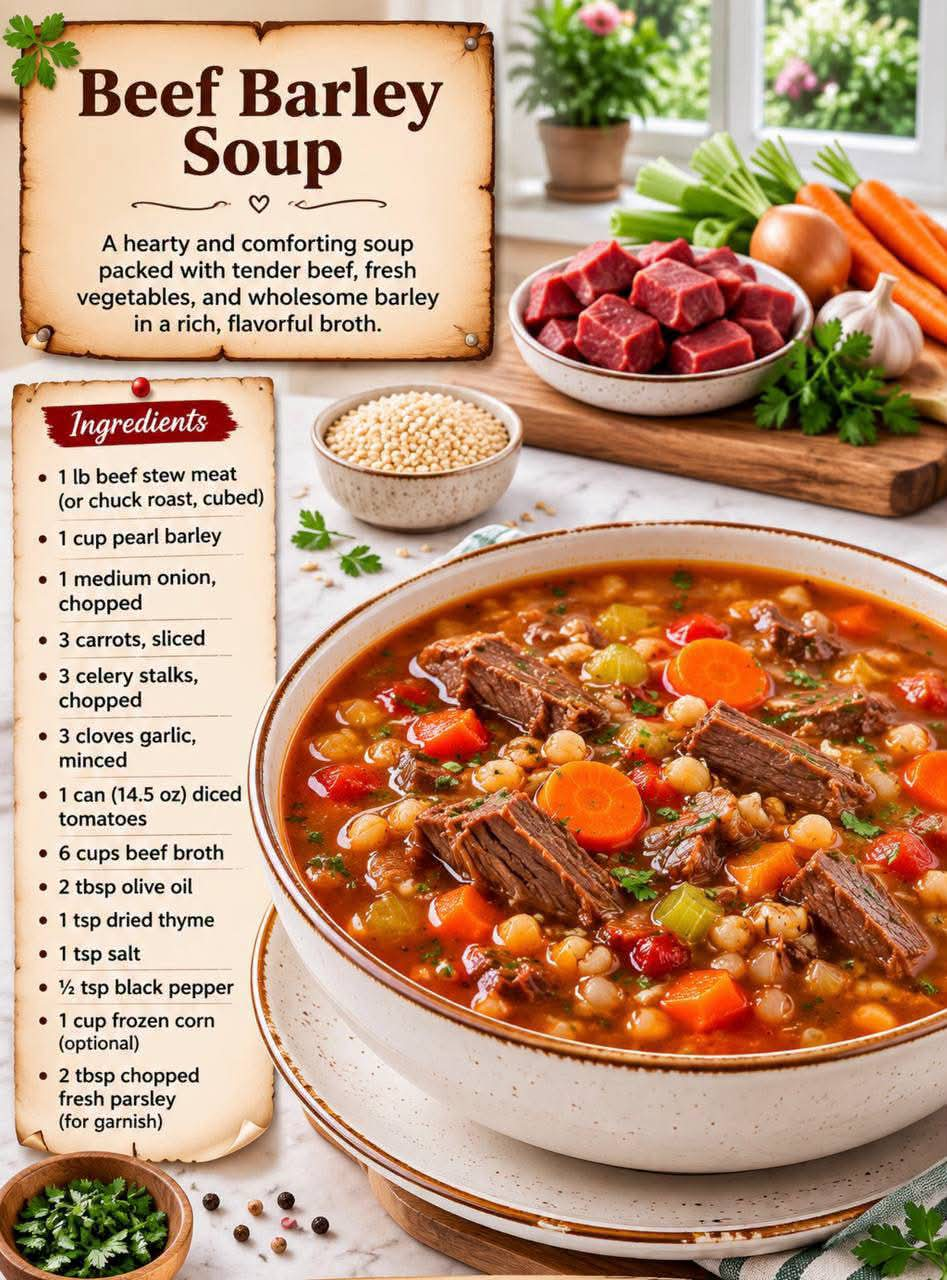
Beef Barley Soup is a warm, satisfying meal filled with tender beef, wholesome vegetables, chewy pearl barley, and a rich, savory broth. This old-fashioned soup brings together simple ingredients to create a comforting dish that tastes like it has been simmering in the kitchen all day.
With carrots, celery, onions, tomatoes, sweet corn, and perfectly seasoned beef broth, every spoonful delivers delicious homemade flavor. The pearl barley adds a pleasant nutty taste and hearty texture, making this soup filling enough to serve as a complete meal.
Whether you prepare it for a chilly evening, a cozy family dinner, or make-ahead lunches, this Beef Barley Soup is an easy recipe to keep in your regular rotation. You can make it on the stovetop, in a slow cooker, or in an Instant Pot, depending on how much time you have.
Why You’ll Love This Beef Barley Soup
- Hearty and filling: Tender beef, pearl barley, and vegetables make this soup satisfying enough for dinner.
- Rich homemade flavor: Browning the beef and sautéing the vegetables creates a flavorful foundation for the broth.
- Simple ingredients: Everything comes together with familiar pantry staples and fresh vegetables.
- Perfect for meal prep: The soup stores well and tastes even better after the flavors have had time to develop.
- Flexible cooking methods: Prepare it on the stovetop, in a slow cooker, or in a pressure cooker.
- Easy to customize: Add your favorite vegetables or adjust the seasonings to suit your family’s preferences.
Ingredients for Beef Barley Soup
Beef Stew Meat
Use 1½ to 2 pounds of beef stew meat or chuck roast cut into bite-sized cubes. Stew meat is convenient for a quicker stovetop version, while chuck roast becomes especially tender when simmered for a longer period.
Pearl Barley
Three-quarters of a cup of pearl barley gives the soup its signature chewy texture and helps make the broth more substantial. Rinse the barley under cold water before adding it to the pot.
Carrots
Three carrots add natural sweetness, color, and a tender texture that complements the beef.
Celery
Three celery ribs provide a classic savory flavor and help build the soup’s aromatic base.
Onion and Garlic
A large onion and three cloves of garlic bring depth and fragrance to the broth. Sautéing them before adding the liquid helps release their flavor.
Diced Tomatoes
One can of diced tomatoes adds a mild tanginess that balances the richness of the beef.
Corn
Corn kernels provide little bursts of sweetness and a pleasant contrast to the savory broth. Fresh, frozen, or canned corn can be used.
Beef Broth
Eight cups of low-sodium beef broth create the flavorful base. Low-sodium broth allows you to adjust the salt more easily at the end.
Tomato Paste
Two tablespoons of tomato paste deepen the color and add concentrated tomato flavor.
Worcestershire Sauce
Two teaspoons of Worcestershire sauce contribute a savory, slightly tangy flavor that pairs beautifully with beef.
Seasonings
Dried thyme, a bay leaf, kosher salt, and black pepper provide a simple, classic seasoning combination.
Olive Oil
Two tablespoons of olive oil help brown the beef and soften the vegetables.
Optional Additions
A cup of peas adds extra color and sweetness. Fresh parsley makes a bright, fresh garnish just before serving.
Ingredients
- 1½–2 pounds beef stew meat or chuck roast, cut into 1-inch cubes
- 2 tablespoons olive oil, divided
- 1 large onion, diced
- 3 carrots, peeled and sliced
- 3 celery ribs, sliced
- 3 cloves garlic, minced
- ¾ cup pearl barley, rinsed
- 1 can (14.5 ounces) diced tomatoes, with juices
- 1½ cups corn kernels, fresh, frozen, or canned and drained
- 8 cups low-sodium beef broth
- 2 tablespoons tomato paste
- 2 teaspoons Worcestershire sauce
- 1 teaspoon dried thyme
- 1 bay leaf
- 1 teaspoon kosher salt, or to taste
- ½ teaspoon black pepper, or to taste
- 1 cup peas, optional
- 1 tablespoon chopped fresh parsley, optional
How to Make Beef Barley Soup on the Stovetop
Step 1: Prepare the Beef
Pat the beef cubes dry with paper towels. Season them with some of the salt and black pepper.
Drying the meat helps it brown rather than steam, creating a richer flavor in the finished soup.
Step 2: Brown the Beef
Heat 1 tablespoon of olive oil in a large Dutch oven or heavy-bottomed soup pot over medium-high heat.
Add the beef in batches, leaving enough space between the pieces for proper browning. Sear for approximately 6–8 minutes, turning the cubes until they develop a deep brown crust on several sides.
Transfer the browned beef to a plate. Avoid overcrowding the pot, as this can prevent the meat from browning properly.
Step 3: Sauté the Vegetables
Add the remaining tablespoon of olive oil to the pot if needed.
Stir in the diced onion, sliced carrots, and celery. Cook for 5–6 minutes, stirring occasionally, until the vegetables begin to soften.
Add the minced garlic and cook for another 30 seconds, just until fragrant.
Step 4: Add the Tomato Paste
Stir the tomato paste into the vegetables and cook for approximately 1 minute.
Pour in a small splash of beef broth and scrape the bottom of the pot with a wooden spoon to loosen the browned bits left behind by the beef. These bits add wonderful depth to the broth.
Step 5: Add the Broth and Barley
Return the browned beef to the pot. Add the remaining beef broth, diced tomatoes with their juices, rinsed pearl barley, Worcestershire sauce, dried thyme, and bay leaf.
Stir everything together and bring the mixture to a boil.
Step 6: Simmer Until the Beef Is Tender
Reduce the heat to low and partially cover the pot with a lid.
For beef stew meat, simmer for approximately 50–60 minutes, or until the beef is tender and the barley is cooked. If using chuck roast, allow approximately 90–120 minutes, checking the tenderness as it cooks.
Stir occasionally to prevent the barley from sticking to the bottom. If the soup becomes too thick before the beef is tender, add more broth or water.
Step 7: Add the Corn and Peas
Stir in the corn and optional peas during the final 5–10 minutes of cooking.
Continue simmering until the vegetables are heated through and tender. Remove the bay leaf and discard it.
Step 8: Adjust the Seasoning
Taste the soup and add more salt or black pepper as needed.
If you prefer a thinner consistency, stir in a little extra hot broth. If you want a more concentrated flavor, allow the soup to simmer uncovered for a few additional minutes.
Step 9: Serve Warm
Ladle the soup into bowls and garnish with chopped fresh parsley if desired.
Serve with crusty bread, dinner rolls, crackers, or cornbread for a comforting homemade meal.
Tips for the Best Beef Barley Soup
Brown the Beef in Batches
One of the most important steps is browning the beef properly. If too much meat is added at once, it releases moisture and steams instead of searing. Working in batches creates a deeper flavor that carries through the entire soup.
Choose the Right Cut of Beef
Stew meat is convenient and works well for a relatively quick stovetop recipe. Chuck roast is an excellent choice when you have extra time because its connective tissue softens during longer cooking, producing tender, flavorful pieces of beef.
Rinse the Barley
Rinsing pearl barley removes excess surface starch and helps keep the broth from becoming unnecessarily cloudy or thick.
Add More Liquid When Needed
Barley absorbs liquid as it cooks and continues to thicken the soup as it rests. Keep extra broth nearby and add it whenever the soup becomes thicker than you prefer.
Don’t Rush the Simmering Process
Gentle simmering allows the beef to become tender while the vegetables, tomatoes, and seasonings develop a balanced flavor. Avoid boiling the soup aggressively for long periods.
Season at the End
Beef broth and Worcestershire sauce can vary in saltiness. Taste the soup near the end of cooking and adjust the seasoning gradually.
Let the Soup Rest Briefly
Allowing the finished soup to rest for a few minutes before serving gives the flavors time to settle together. Add a little broth if it thickens while resting.
Easy Variations
Mushroom Beef Barley Soup
Add 8 ounces of sliced mushrooms when sautéing the onion, carrots, and celery. Mushrooms provide an earthy flavor that pairs especially well with beef and barley.
Vegetable Beef Barley Soup
Add green beans, peas, or additional diced carrots for an even more vegetable-packed meal. Add delicate vegetables toward the end so they do not become overly soft.
Herb-Loaded Beef Barley Soup
For extra herbal flavor, add a little dried rosemary or a few fresh parsley stems while the soup simmers. Remove any woody stems before serving.
Richer Tomato Beef Barley Soup
If you enjoy a stronger tomato flavor, increase the tomato paste slightly or add a little extra diced tomato. Balance the acidity with additional broth and seasonings as needed.
Gluten-Free Beef Soup
Pearl barley contains gluten, so it is not suitable for a gluten-free version. Replace it with rinsed rice or diced potatoes, and check that your broth and Worcestershire sauce are labeled gluten-free. Adjust the cooking time according to the substitute.
Slow Cooker Beef Barley Soup
Brown the beef in a skillet before adding it to the slow cooker for the best flavor. Add the sautéed vegetables, barley, tomatoes, broth, tomato paste, Worcestershire sauce, thyme, bay leaf, salt, and pepper.
Cover and cook on LOW for 7–8 hours or HIGH for 4–5 hours, until the beef and barley are tender. Add the corn and optional peas during the final 15 minutes.
Cooking times can vary by slow cooker, so check the texture before serving and add broth if necessary.
Instant Pot Beef Barley Soup
Use the sauté function to brown the beef and cook the vegetables. Stir in the tomato paste, then add the broth, barley, diced tomatoes, Worcestershire sauce, thyme, bay leaf, salt, and pepper.
Lock the lid and cook at high pressure for approximately 20 minutes for stew meat or 30 minutes for chuck roast. Allow a 10-minute natural pressure release before carefully releasing the remaining pressure according to the appliance instructions.
Stir in the corn and optional peas using the sauté function, cooking for 3–5 minutes until heated through. Check the beef and barley for tenderness before serving.
What to Serve with Beef Barley Soup
This hearty soup can stand on its own, but a simple side dish makes it even more satisfying.
- Crusty bread: Perfect for soaking up the savory broth.
- Garlic bread: Adds buttery, garlicky flavor to the meal.
- Cornbread: A slightly sweet side that complements the beef.
- Dinner rolls: Soft rolls are ideal for a cozy family dinner.
- Green salad: A crisp salad provides a refreshing contrast to the rich soup.
- Roasted vegetables: Serve with roasted green beans, broccoli, or Brussels sprouts for extra vegetables.
For a simple weeknight dinner, pair a generous bowl of soup with warm bread and a small side salad.
How to Store Beef Barley Soup
Let the soup cool slightly, then transfer it to airtight containers. Refrigerate it within two hours of cooking.
Refrigerator: Store for up to 4 days.
Freezer: Freeze in freezer-safe containers for up to 3 months. Leave a little room at the top for expansion and label the containers with the date.
Reheating: Warm the soup gently in a saucepan over medium-low heat, stirring occasionally, until steaming hot. Individual portions can also be reheated in the microwave, stirring partway through.
The barley will continue absorbing broth during storage, so add ½–1 cup of additional broth or water when reheating, as needed.
For the best texture after freezing, cool the soup promptly and avoid repeatedly heating and cooling the same batch.
Frequently Asked Questions
What kind of beef is best for Beef Barley Soup?
Beef stew meat is convenient for a quicker recipe, while chuck roast is excellent for a longer simmer. Both can produce tender, flavorful soup when cooked until the meat is soft.
Can I use quick-cooking barley?
Yes. Quick-cooking barley can be used, but it cooks much faster than regular pearl barley. Add it during the final 15–20 minutes, following the package directions, so it does not become mushy.
Does pearl barley need to be soaked?
No. Pearl barley does not generally require soaking for this recipe. Rinse it under cold water before adding it to the pot.
Why is my Beef Barley Soup too thick?
Barley absorbs a significant amount of liquid, especially as the soup cools. Stir in additional beef broth or water until the soup reaches your preferred consistency.
Why is the beef still tough?
The beef may need more cooking time. Continue simmering gently and check it periodically. Tougher cuts such as chuck roast can require considerably longer than smaller pieces of stew meat.
Can I make Beef Barley Soup ahead of time?
Yes. This soup is an excellent make-ahead meal. Prepare it a day in advance, refrigerate it, and reheat gently before serving. Add extra broth if the barley has absorbed too much liquid.
Can I use ground beef instead of stew meat?
Yes. Brown the ground beef thoroughly, drain excess grease, and proceed with the vegetables and broth. Because ground beef does not need to become tender like stew meat, the main cooking time can be reduced. Allow enough time for the barley to cook according to its package directions.
Can I leave out the corn?
Absolutely. The corn adds sweetness and texture, but the soup will still be delicious without it. You can replace it with peas, mushrooms, green beans, or another vegetable.
Is Beef Barley Soup a complete meal?
Yes. The beef provides protein, the barley adds carbohydrates and fiber, and the vegetables contribute flavor and nutrients. Serve it with bread or a salad if you want to make the meal more substantial.
Beef Barley Soup Recipe Card
Prep Time: 20 minutes
Cook Time: 1 hour 10 minutes for stew meat, or longer for chuck roast
Total Time: Approximately 1 hour 30 minutes with stew meat
Servings: 6–8
Category: Soup, Main Dish
Cuisine: American
Ingredients
- 1½–2 pounds beef stew meat or chuck roast, cut into 1-inch cubes
- 2 tablespoons olive oil, divided
- 1 large onion, diced
- 3 carrots, peeled and sliced
- 3 celery ribs, sliced
- 3 cloves garlic, minced
- ¾ cup pearl barley, rinsed
- 1 can (14.5 ounces) diced tomatoes with juices
- 1½ cups corn kernels
- 8 cups low-sodium beef broth
- 2 tablespoons tomato paste
- 2 teaspoons Worcestershire sauce
- 1 teaspoon dried thyme
- 1 bay leaf
- 1 teaspoon kosher salt, or to taste
- ½ teaspoon black pepper, or to taste
- 1 cup peas, optional
- 1 tablespoon chopped fresh parsley, optional
Instructions
- Pat the beef dry and season with salt and pepper.
- Heat 1 tablespoon olive oil in a large Dutch oven over medium-high heat. Brown the beef in batches for 6–8 minutes, then transfer to a plate.
- Add the remaining oil, onion, carrots, and celery. Cook for 5–6 minutes until softened.
- Stir in the garlic and cook for 30 seconds.
- Add the tomato paste and cook for 1 minute. Pour in a splash of broth and scrape up the browned bits from the bottom of the pot.
- Return the beef to the pot. Add the remaining broth, diced tomatoes, rinsed barley, Worcestershire sauce, thyme, bay leaf, salt, and pepper.
- Bring to a boil, then reduce the heat to low and partially cover.
- Simmer for 50–60 minutes for stew meat, or 90–120 minutes for chuck roast, until the beef is tender and the barley is cooked.
- Stir in the corn and optional peas during the final 5–10 minutes.
- Remove the bay leaf, adjust the seasoning, and add extra broth if needed.
- Garnish with fresh parsley and serve hot.
Final Thoughts
Beef Barley Soup is the kind of comforting, homemade meal that brings simple ingredients together in the most satisfying way. Tender beef, chewy pearl barley, colorful vegetables, and a rich broth make every bowl hearty and full of flavor.
Whether you simmer it on the stovetop, prepare it in the slow cooker, or use an Instant Pot, this classic soup is a wonderful choice for family dinners and make-ahead lunches. Serve it with warm bread, enjoy the leftovers throughout the week, and keep this recipe handy whenever you’re craving a cozy bowl of homemade comfort food.