
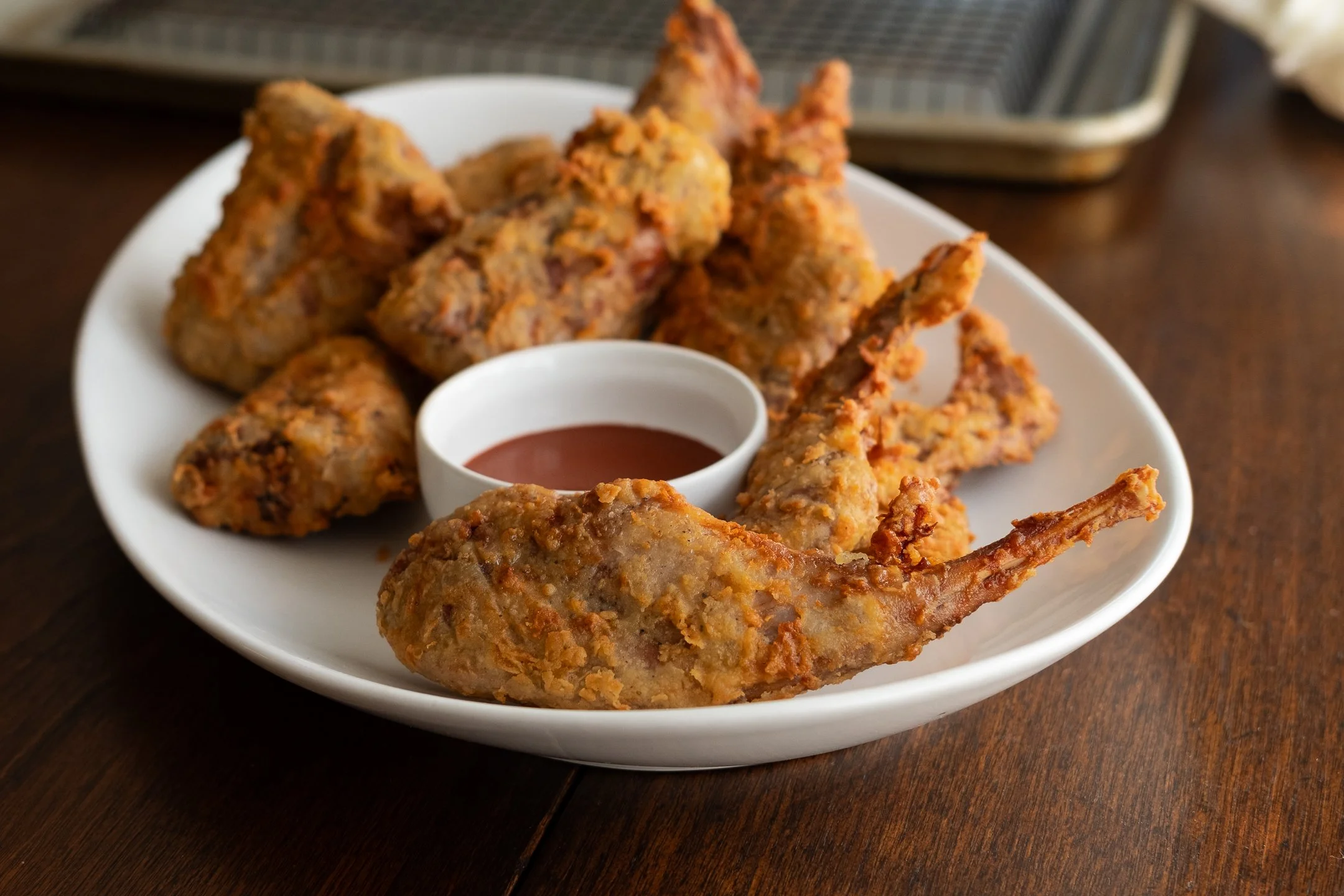
Crispy Fried Rabbit is a classic way to prepare tender, lean rabbit with a golden, seasoned crust. The meat is first soaked in buttermilk, then coated in a flavorful mixture of flour, cornmeal, and spices before being fried until crisp and golden brown.
Rabbit has a naturally mild flavor and is much leaner than many other meats. Because of that, the preparation method matters. The buttermilk marinade helps keep the meat tender, while the cornmeal adds texture to the coating. A controlled frying temperature gives the outside a crisp finish without allowing the crust to brown too quickly.
This fried rabbit recipe makes about four servings and requires only a handful of everyday seasonings. The active cooking time is relatively short, although the rabbit benefits from at least one hour in the buttermilk before frying.
Serve it with biscuits and white gravy for a comforting Southern-style meal, or pair it with a fresh salad and vegetables for a lighter dinner.
Why You’ll Love This Fried Rabbit Recipe
Crispy on the Outside
The combination of flour and cornmeal creates a crunchy coating with plenty of texture. The cornmeal also gives the crust an attractive golden color.
Tender and Flavorful Meat
Rabbit is naturally lean, so soaking it in buttermilk before frying helps create a more tender result. The marinade also gives the meat a subtle tang that works well with the savory seasoning.
Simple Pantry Seasonings
You do not need a complicated spice blend. Salt, black pepper, paprika, garlic powder, onion powder, and optional cayenne provide plenty of flavor.
Perfect for a Rustic Family Dinner
Fried rabbit has a traditional, home-cooked feel. Serve it with biscuits, gravy, mashed potatoes, green beans, or a simple garden salad for a satisfying meal.
Easy to Customize
Once you master the basic coating, you can change the seasonings to suit your taste. Smoked paprika, dried thyme, or other herbs can create a different flavor without changing the cooking process.
Ingredients You’ll Need
For the Rabbit
- 1 whole rabbit, approximately 2.5 to 3 pounds, cut into serving pieces
- 1 cup buttermilk
The recipe works best with a fresh, young rabbit because the meat tends to be more tender.
For the Seasoned Coating
- 1 cup all-purpose flour
- 1/2 cup cornmeal
- 1 teaspoon salt
- 1 teaspoon black pepper
- 1 teaspoon paprika
- 1 teaspoon garlic powder
- 1/2 teaspoon onion powder
- 1/2 teaspoon cayenne pepper, optional
For Frying
- 2 cups vegetable oil
Choose a neutral oil with a high smoke point. Vegetable oil works well for frying because it allows the seasoned crust to brown without adding a strong flavor.
How to Make Fried Rabbit
1. Prepare the Rabbit
If the rabbit has not already been cut into serving pieces, divide it into manageable portions.
Rinse the pieces under cold water and pat them thoroughly dry with paper towels. Take care when handling the pieces because small bone fragments can sometimes remain after butchering.
Drying the rabbit before marinating also helps prevent excess water from diluting the buttermilk.
2. Marinate the Rabbit in Buttermilk
Place the rabbit pieces in a large bowl or shallow dish.
Pour the buttermilk over the meat, making sure each piece is coated.
Cover the bowl and refrigerate for at least 1 hour.
The buttermilk soak is an important part of the recipe. It helps tenderize the lean meat and gives the rabbit a pleasant, slightly tangy flavor.
If you want to prepare the rabbit further ahead, the original method allows for a longer soak, but at least one hour is enough for this recipe.
3. Prepare the Seasoned Flour
While the rabbit marinates, prepare the coating.
Add the flour, cornmeal, salt, black pepper, paprika, garlic powder, onion powder, and cayenne pepper to a shallow dish or large food-safe bag.
Mix thoroughly so the spices are distributed evenly throughout the flour and cornmeal.
If you prefer a milder fried rabbit, leave out the cayenne. For more heat, you can increase it slightly.
4. Heat the Oil
Pour the vegetable oil into a heavy skillet.
Heat the oil over medium-high heat until it reaches approximately 350°F (175°C).
A kitchen thermometer is especially useful for this recipe. Oil temperature affects both the texture of the coating and how evenly the rabbit cooks.
If the oil is too cool, the breading can absorb excess oil. If it is too hot, the coating may become dark before the meat is fully cooked.
5. Coat the Rabbit
Remove each rabbit piece from the buttermilk.
Let the excess buttermilk drip off before transferring the piece to the seasoned flour mixture.
Coat the rabbit thoroughly on all sides. Press the flour mixture gently against the meat so it sticks well.
Shake off any excess coating.
Continue until all the rabbit pieces are coated.
6. Let the Coating Rest
For an even more secure crust, allow the breaded rabbit pieces to rest for about 5 minutes before frying.
This gives the coating a chance to adhere to the surface of the meat.
Do not stack the pieces heavily on top of each other while they rest. Keep them separated as much as possible.
7. Fry the Rabbit
Carefully place the coated rabbit pieces into the hot oil.
Do not overcrowd the skillet. If you add too many pieces at once, the oil temperature can drop significantly, which may lead to a greasy coating.
Fry the rabbit for approximately 8 to 10 minutes, turning the pieces as needed so they brown evenly.
The exact cooking time can vary depending on the size and thickness of the pieces, so use appearance and internal temperature rather than time alone.
The crust should be golden brown and crisp.
8. Check the Internal Temperature
Use a meat thermometer to check the thickest part of the rabbit.
The source recipe recommends an internal temperature of 160°F for the thickest part of the meat.
Avoid touching the bone with the thermometer because this can give an inaccurate reading.
9. Drain the Fried Rabbit
Once the rabbit is fully cooked and golden brown, carefully remove the pieces from the oil.
Place them on a wire rack or a plate lined with paper towels.
A wire rack is especially useful because it allows air to circulate underneath the meat. This helps keep the bottom of the crust crisp instead of letting it sit directly in absorbed oil.
If desired, sprinkle the hot rabbit lightly with a little extra salt.
Serve immediately.
My Best Tips for Crispy Fried Rabbit
Keep the Oil at the Right Temperature
Maintaining a steady oil temperature is one of the most important parts of the recipe.
Start at around 350°F and monitor the temperature throughout cooking. Adding cold rabbit pieces will naturally lower the temperature, so give the oil time to recover between batches if necessary.
Don’t Crowd the Skillet
Give each piece enough room to fry properly.
Overcrowding can lower the oil temperature and prevent the coating from becoming crisp. It can also make it harder to turn the rabbit without disturbing the crust.
Pat the Rabbit Dry Before Marinating
Even though the rabbit will go into buttermilk, starting with dry pieces makes the preparation easier and helps prevent excess liquid from affecting the coating.
Press the Coating Onto the Meat
After dipping the rabbit into the seasoned flour mixture, gently press the coating against the surface.
This helps create a thicker crust and reduces the chance of the breading falling away during frying.
Let Breaded Pieces Rest
A five-minute rest before frying allows the coating to set. This small step can make a noticeable difference when you want a crust that stays attached.
Use a Heavy Skillet
A cast-iron skillet is a good choice because it holds heat well and distributes it evenly. A heavy-bottomed skillet can also work.
Easy Fried Rabbit Variations
Smoky Fried Rabbit
Replace the regular paprika with smoked paprika.
The smoky seasoning adds depth to the crust and gives the finished rabbit a more robust flavor.
Herb-Crusted Rabbit
Add about 1 teaspoon of dried thyme to the flour and cornmeal mixture.
You can also experiment with dried oregano, rosemary, or a small amount of dried sage.
Extra-Crispy Coating
For a thicker crust, increase the amount of cornmeal slightly.
The cornmeal creates a coarser texture than flour alone and gives every bite additional crunch.
Spicy Fried Rabbit
Keep the cayenne pepper in the coating and add a little extra black pepper.
You can also serve the finished rabbit with a spicy dipping sauce for an additional kick.
Common Problems and How to Fix Them
Why Is My Breading Falling Off?
The coating may not have had enough time to adhere to the rabbit.
After dredging the pieces, let them rest for about 5 minutes before frying. Also make sure excess buttermilk has been allowed to drip off before you coat the meat.
Why Is the Crust Soggy?
Soggy breading is often caused by oil that is too cool.
Check the oil temperature before adding the rabbit and avoid putting too many pieces into the skillet at once.
Draining the cooked rabbit on a wire rack can also help preserve the crust.
Why Is the Crust Browning Too Quickly?
The oil may be too hot.
Reduce the heat slightly and monitor the temperature. The goal is to develop a golden-brown crust while allowing the inside of the rabbit enough time to cook.
Why Is My Rabbit Tough?
Rabbit is a lean meat, so overcooking can make it dry or tough.
The buttermilk marinade helps with tenderness, while careful temperature control during frying helps prevent the meat from becoming overly dry.
If the rabbit you are using is particularly tough, the source recommends extending the buttermilk marinade for a longer period.
What to Serve With Fried Rabbit
Fried rabbit pairs well with classic comfort-food sides.
Biscuits and White Gravy
For a traditional Southern-inspired plate, serve the rabbit with warm biscuits and creamy white gravy.
The rich gravy contrasts nicely with the crisp seasoned crust.
Mashed Potatoes
Creamy mashed potatoes make an excellent side for fried rabbit. Add gravy over the potatoes for a hearty dinner.
Green Salad
A fresh garden salad can balance the richness of the fried coating. Use crisp lettuce, tomatoes, cucumber, and a light dressing.
Vegetables
Green beans, corn, roasted vegetables, or steamed vegetables can round out the meal.
Dipping Sauces
You can also serve the rabbit with a simple dipping sauce. Creamy horseradish, honey mustard, ranch dressing, or a spicy sauce can all work well with the seasoned crust.
Can You Make Fried Rabbit Ahead?
The rabbit is best served immediately after frying because the coating is at its crispiest.
However, you can prepare parts of the recipe ahead of time.
The rabbit can be soaked in buttermilk ahead of cooking and kept refrigerated. You can also prepare the seasoned flour mixture in advance and store it covered until you are ready to use it.
For entertaining, this can reduce the amount of work you need to do immediately before serving.
How to Store Leftover Fried Rabbit
Allow leftover rabbit to cool before placing it in an airtight container.
Refrigerate the leftovers and use them for a quick meal the following day.
For the best texture, avoid reheating fried rabbit in the microwave if you want to preserve the crisp crust.
Instead, use a hot oven or air fryer to warm the pieces. Dry heat helps restore some of the crispness that is lost during refrigeration.
Make sure the rabbit is heated thoroughly before serving.
Frequently Asked Questions
What does rabbit taste like?
Rabbit has a mild flavor and is often described as relatively delicate compared with stronger game meats. The seasoned coating and buttermilk marinade add plenty of flavor without overwhelming the meat.
Does rabbit need to be marinated before frying?
For this recipe, yes. The rabbit is soaked in buttermilk for at least one hour. The marinade helps tenderize the lean meat and adds flavor.
Can I use regular milk instead of buttermilk?
Buttermilk is specifically used in this recipe because of its acidity and consistency. If you do not have buttermilk, you can prepare a substitute, but the flavor and texture may differ from the original recipe.
Can I bake the rabbit instead of frying it?
The supplied recipe specifically uses shallow frying in vegetable oil. Baking would require a different cooking method and may produce a different crust and texture.
Can I use corn flour instead of cornmeal?
Cornmeal provides the coarse texture that helps create the characteristic crunchy crust. Substituting a finer corn product will change the texture of the coating.
How do I make the rabbit less spicy?
Simply leave out the cayenne pepper. The remaining spices still provide plenty of flavor without adding noticeable heat.
What oil is best for frying rabbit?
The recipe uses vegetable oil. A neutral cooking oil with a high smoke point is suitable for frying.
How long should rabbit be fried?
The source recipe gives approximately 8 to 10 minutes, turning the pieces during cooking. Because rabbit pieces can vary in size, always check the thickest part with a meat thermometer rather than relying only on the clock.
Recipe Summary
Recipe: Fried Rabbit
Prep Time: About 1 hour, including marinating
Active Cooking Time: About 20 minutes
Total Time: Approximately 1 hour 20 minutes
Servings: 4
Main Protein: Rabbit
Marinade: Buttermilk
Coating: Flour and cornmeal
Frying Temperature: 350°F (175°C)
Recommended Internal Temperature in the Source: 160°F
Final Thoughts
Fried Rabbit is a delicious way to prepare this lean protein with a crisp, well-seasoned coating. The recipe keeps the preparation straightforward: soak the rabbit in buttermilk, coat it with seasoned flour and cornmeal, and fry it until golden brown.
The most important details are controlling the oil temperature, avoiding an overcrowded skillet, and giving the breading time to set before frying. These steps help create a crust that stays crisp and attached to the meat.
For a complete comfort-food dinner, serve the fried rabbit with biscuits and white gravy. If you prefer something lighter, pair it with a fresh garden salad and vegetables.
Once you have mastered the basic recipe, try smoked paprika, dried herbs, or extra cayenne to create your own version. With its crunchy coating and tender, flavorful center, this fried rabbit recipe makes a memorable homemade meal.