
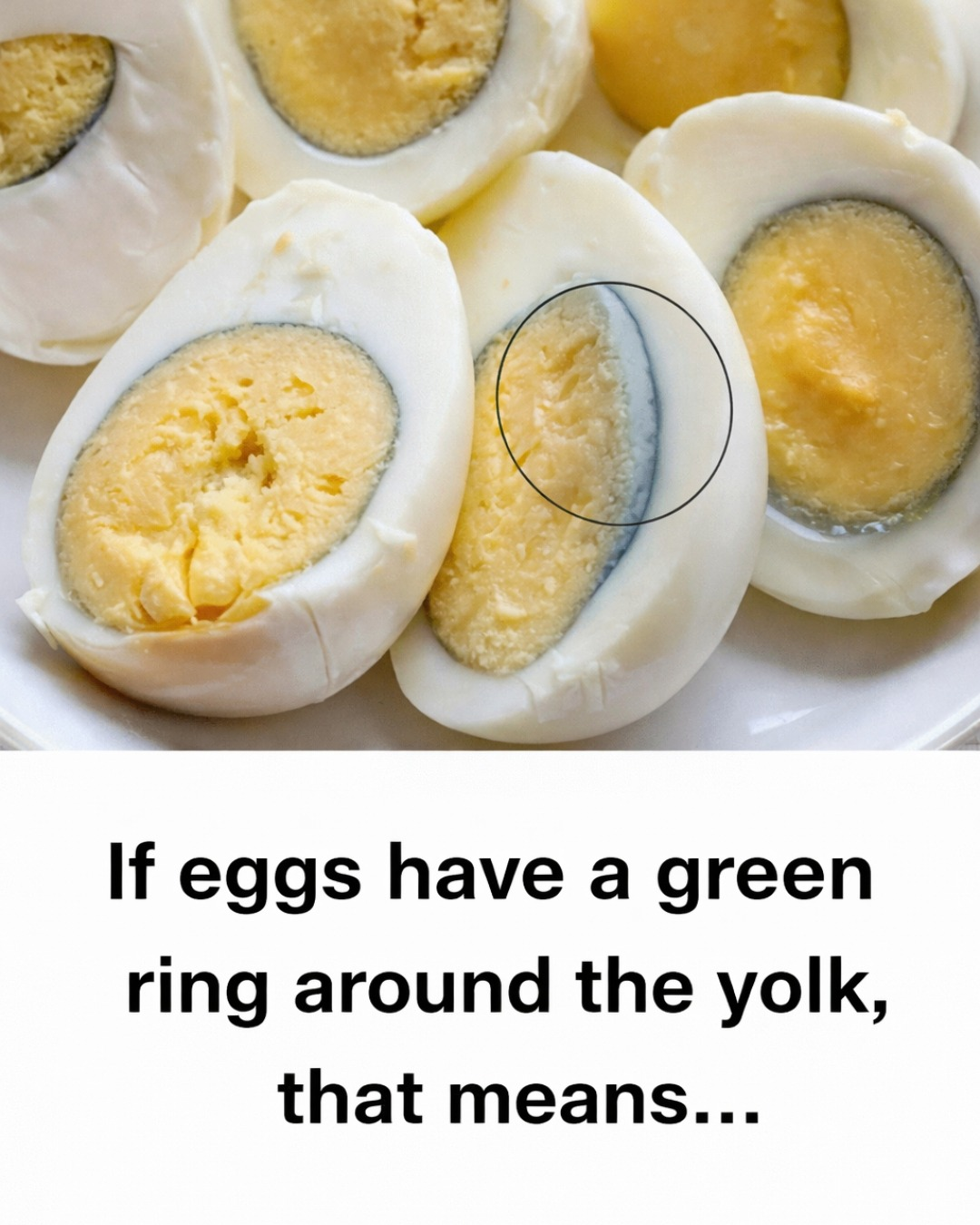
Have you ever sliced into a hard-boiled egg and noticed a green or gray ring forming around the yolk? It might look strange or even a little unappetizing, but don’t worry — this is a completely natural and harmless reaction.
That green ring tells a fascinating story about chemistry, heat, and how proteins behave during cooking. In this complete guide, you’ll learn exactly why it happens, whether it affects safety or nutrition, and how to prevent it for perfectly cooked eggs every time.
What Is the Green Ring Around the Yolk?
The green or gray ring that sometimes appears around the yolk of a hard-boiled egg is the result of a chemical reaction between sulfur and iron naturally found inside the egg.
It is not mold.
It is not spoilage.
It is not a sign the egg is unsafe.
It simply means the egg was exposed to heat for a little too long or at too high a temperature.
This reaction is most common in fully hard-boiled eggs because they spend the longest time under heat.
The Science Behind the Green Ring
To understand what causes the discoloration, it helps to know what’s inside an egg.
What’s Inside an Egg?
Egg whites (also called albumen) contain sulfur-rich proteins.
Egg yolks contain iron.
When you heat an egg, several chemical changes begin to happen.
Step-by-Step Chemical Reaction
When eggs are cooked too long or at high heat:
Heat breaks down the proteins in the egg white.
Sulfur atoms are released from those proteins.
The sulfur moves toward the yolk.
Sulfur reacts with iron in the yolk.
Together, they form iron sulfide (FeS).
Iron sulfide is a greenish-gray compound that forms right where the yolk meets the white — creating that visible ring.
This reaction happens at the boundary between yolk and white, which is why the discoloration forms in a circular layer.
Why Overcooking Makes It Worse
The longer an egg cooks, the more sulfur is released from the egg white. More sulfur means more opportunity to react with iron.
Higher temperatures also speed up this reaction.
That’s why:
Gently simmered eggs are less likely to develop the ring.
Rapidly boiled eggs are more likely to show discoloration.
Time and temperature are the two biggest factors.
Why Hard-Boiled Eggs Are Most Affected
Soft-boiled or medium-boiled eggs rarely develop the green ring because their yolks remain partially soft and are not exposed to prolonged heat.
Hard-boiled eggs, however, are cooked until the yolk is fully firm. This extended heat exposure increases the sulfur-iron reaction.
Factors that increase green ring formation include:
Overcooking
Very high boiling temperatures
Letting eggs sit in hot water too long
Not cooling them quickly
Using older cooking methods with rapid boiling
The more heat and time involved, the stronger the reaction.
Does the Green Ring Mean the Egg Is Bad?
Absolutely not.
The green ring is completely harmless.
Taste
The egg will taste normal. In extreme overcooking, you might notice a slightly drier texture, but the flavor remains the same.
Safety
Iron sulfide is not toxic. The egg is safe to eat.
Nutrition
Protein, vitamins, minerals, and healthy fats remain intact. There is no nutritional loss caused by the discoloration.
In short, the green ring is purely cosmetic.
How to Boil Eggs Without Getting a Green Ring
If you prefer perfectly yellow yolks with no discoloration, follow these simple steps.
Start with Cold Water
Place eggs in a saucepan in a single layer.
Cover them with cold water by about one inch.
Starting with cold water ensures gradual heating, which reduces stress on the proteins.
Use Gentle Heat
Bring the water to a gentle simmer rather than a rapid rolling boil.
A slow simmer keeps temperatures more controlled and reduces excessive sulfur release.
Turn Off Heat at the Right Time
Once the water reaches a gentle boil:
Turn off the heat.
Cover the pot.
Let eggs sit in the hot water.
Timing guide for large eggs:
Soft-boiled: 4 to 6 minutes
Medium: 7 to 9 minutes
Hard-boiled: 10 to 12 minutes
Avoid cooking longer than 12 minutes for fully hard-boiled eggs.
Cool Immediately
Once the eggs are done, transfer them to a bowl of ice water.
Cooling quickly is crucial because:
It stops the cooking process instantly.
It prevents further sulfur-iron reaction.
It makes peeling easier.
Let them sit in ice water for at least 5 to 10 minutes.
This step alone dramatically reduces the chance of green rings.
Does Egg Freshness Matter?
Freshness plays a small role.
Very fresh eggs have firmer whites and less air space inside the shell. Older eggs develop larger air pockets, which can slightly change how heat circulates.
However, overcooking is still the main cause of green rings — not freshness.
Interestingly:
Fresh eggs are harder to peel.
Slightly older eggs peel more easily.
For hard-boiled eggs, eggs that are a week old often give the best balance of easy peeling and good texture.
Common Myths About the Green Ring
Let’s clear up a few misunderstandings.
Myth: The egg is spoiled.
Truth: The discoloration is purely a heat reaction.
Myth: It contains harmful chemicals.
Truth: Iron sulfide forms naturally and is harmless.
Myth: It only happens with old eggs.
Truth: It mostly happens due to overcooking.
Myth: The egg will taste metallic.
Truth: In properly cooked eggs, taste is unaffected.
Understanding the science removes the worry.
Best Uses for Perfectly Cooked Eggs
When you avoid overcooking, you get bright yellow yolks that look beautiful in:
Egg salad
Deviled eggs
Cobb salad
Potato salad
Sliced egg garnishes
Protein snack plates
Presentation matters in many dishes, so mastering egg timing is helpful.
Tips for Perfect Hard-Boiled Eggs Every Time
Use a timer instead of guessing cooking time.
Avoid overcrowding the pot.
Keep eggs in a single layer.
Use a saucepan with a tight-fitting lid.
Cool eggs immediately after cooking.
Peel under running water to help remove shells cleanly.
Store boiled eggs in the refrigerator within two hours.
Do not reheat boiled eggs at high temperatures for long periods.
These small adjustments make a big difference.
Frequently Asked Questions
Is it safe to eat an egg with a green ring?
Yes. It is completely safe. The discoloration is caused by iron sulfide, which is harmless.
Does the green ring affect taste?
No. In most cases, the flavor remains the same. Extremely overcooked eggs may taste slightly drier but not unpleasant.
Can I prevent the green ring completely?
Yes. Avoid overcooking and cool eggs quickly in ice water immediately after boiling.
Why do restaurant eggs sometimes look perfect?
Professional kitchens carefully control cooking time and temperature, and they always cool eggs rapidly to stop the cooking process.
Does steaming eggs help prevent the green ring?
Yes. Steaming can offer more consistent temperature control, which reduces the risk of overcooking.
How long do hard-boiled eggs last?
Hard-boiled eggs stored in their shells can last up to one week in the refrigerator.
Why do my eggs smell strong when overcooked?
Overcooked eggs release more sulfur compounds, which can create a stronger odor. This is related to the same chemical reaction that forms the green ring.
Final Thoughts
The green ring around a hard-boiled egg yolk may look unusual, but it’s simply a harmless chemical reaction between sulfur in the egg white and iron in the yolk.
It doesn’t mean the egg is bad. It doesn’t mean it’s unsafe. It just means it was cooked a little too long.
By using gentle heat, avoiding overcooking, and cooling eggs quickly in ice water, you can achieve perfectly bright yellow yolks every time.