
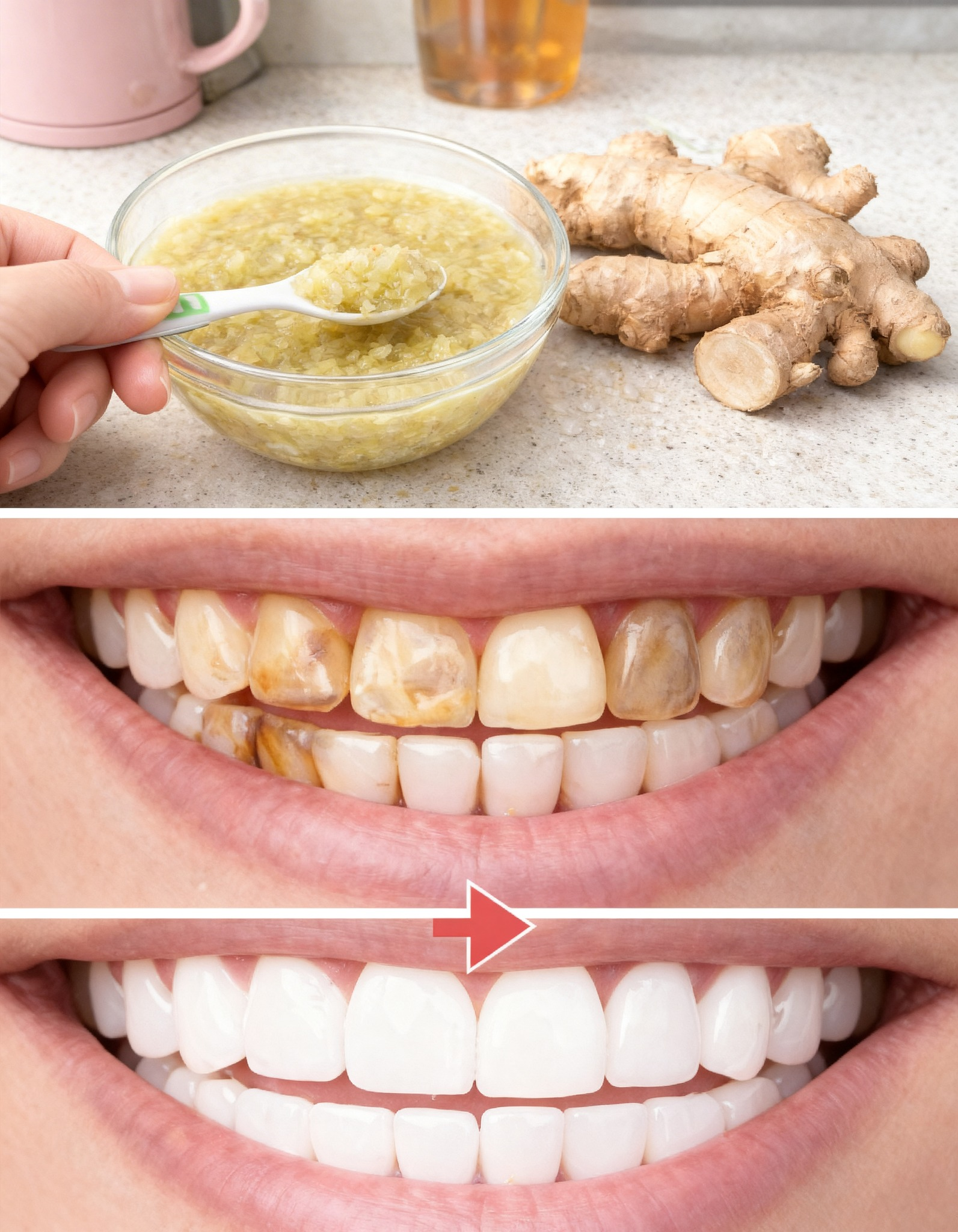
You catch your reflection in the mirror and notice it again—those yellowish stains that seem to dull your smile more each year. Coffee, tea, and daily habits slowly leave their mark, and over time, your teeth may lose that bright, clean look you once had. It’s frustrating, especially when it affects your confidence in photos, conversations, or even simple moments like laughing freely.
That’s why natural remedies keep gaining attention. Among them, ginger has become a trending topic, with viral “before and after” claims suggesting it can whiten teeth quickly and easily. It sounds almost too simple. A common kitchen ingredient promising a brighter smile?
The truth is more nuanced. Ginger can support oral health in helpful ways, but understanding what it actually does—and what it doesn’t—will help you use it wisely and safely.
Why Teeth Yellow Over Time
Teeth discoloration doesn’t happen overnight. It builds gradually due to both external and internal factors.
Surface Stains
These stains affect the outer layer of the teeth and are often caused by:
- Coffee and tea
- Dark-colored foods and drinks
- Smoking or tobacco use
These pigments attach to enamel and slowly create a dull appearance.
Deeper Discoloration
As you age, enamel naturally becomes thinner. This reveals the dentin underneath, which has a yellow tone.
Other Contributing Factors
- Poor oral hygiene
- Plaque buildup
- Reduced saliva production
Many people turn to chemical whitening products at this stage, but these can cause sensitivity or feel too harsh. That’s why natural alternatives like ginger have gained popularity.
What Ginger Actually Brings to Oral Health
Ginger, known scientifically as Zingiber officinale, contains powerful natural compounds that support oral hygiene.
Key Active Compounds
- Gingerol
- Antioxidants
- Anti-inflammatory agents
How Ginger Supports Oral Health
- Helps reduce bacteria linked to plaque
- Supports healthier gums
- May contribute to fresher breath
- Provides mild cleansing action
Research suggests ginger may help limit the growth of bacteria like Streptococcus mutans, which plays a major role in plaque formation and tooth decay.
While this doesn’t directly bleach teeth, it creates a cleaner environment that helps maintain a brighter smile over time.
The Whitening Claim Explained
The biggest misconception about ginger is that it works like chemical whitening agents.
Scrubbing vs. True Whitening
Ginger works mainly through:
- Mild mechanical cleaning
- Reducing plaque buildup
- Supporting gum health
This leads to a cleaner, slightly brighter appearance.
What It Does Not Do
- It does not bleach enamel
- It does not change the natural color of dentin
- It does not produce instant dramatic results
Most “before and after” photos online reflect improved cleanliness rather than deep whitening.
Before and After: Realistic Expectations
Results vary from person to person, which explains why some people see noticeable changes while others see minimal effects.
What You Might Notice
- Smoother tooth surface
- Reduced plaque buildup
- Fresher breath
- Slight brightening of surface stains
Timeline
- Short term (1–3 days): cleaner feel
- 1–2 weeks: subtle improvement in brightness
- Long term: better maintenance of tooth color
Ginger works best as a gradual, supportive method—not a quick fix.
Hidden Benefits Beyond Whitening
Even though whitening results are modest, ginger offers several indirect benefits that improve the overall appearance of your smile.
Oral Health Advantages
- Reduces bacteria buildup
- Supports gum health
- Helps control bad breath
- May reduce mild inflammation
When gums look healthier and teeth are cleaner, your smile naturally appears brighter—even without major color changes.
Ginger vs Other Whitening Methods
Understanding how ginger compares to other options helps set realistic expectations.
Quick Comparison
- Ginger paste: gentle cleaning, low risk, subtle results
- Baking soda: stronger polishing, moderate effectiveness
- Oil pulling: improves cleanliness, mild impact
- Hydrogen peroxide: strong whitening, higher sensitivity risk
- Professional treatments: fastest and most noticeable results
Ginger falls into the gentle, low-risk category—ideal for maintenance rather than transformation.
How to Use Ginger for Teeth Safely
If you want to try this method, it’s important to follow a safe routine.
Simple Ginger Application Method
Ingredients
- Fresh ginger root
- Optional: a pinch of salt or a teaspoon of coconut oil
Steps
- Grate a small piece of fresh ginger finely
- Extract 1–2 teaspoons of juice
- Mix with a pinch of salt (for mild scrubbing) or coconut oil (for smooth texture)
- Apply gently using a soft toothbrush or clean finger
- Massage in circular motions for 1–2 minutes
- Rinse thoroughly
- Brush with regular toothpaste afterward
Recommended Routine
- Use 3–4 times per week
- Avoid daily use to protect enamel
- Track progress with photos under consistent lighting
Consistency matters more than frequency.
Safety and Precautions
While ginger is natural, it still needs to be used carefully.
When to Stop
- If you feel irritation or burning
- If gums become sensitive
- If discomfort increases
What to Avoid
- Mixing with lemon or acidic ingredients
- Scrubbing too hard
- Using excessively
Who Should Be Careful
- People with sensitive teeth
- Those with gum disease
- Individuals with dental work (crowns, braces)
Consult a dentist if you’re unsure.
The Bigger Picture for a Brighter Smile
Ginger works best when combined with proper oral care habits.
Essential Daily Habits
- Brush teeth twice daily
- Floss regularly
- Limit staining foods and drinks
- Stay hydrated
Natural remedies support your routine—they don’t replace it.
Tips for Best Results
Use Fresh Ginger Only
Fresh ginger contains the most active compounds and provides better results than dried forms.
Be Gentle
Avoid aggressive scrubbing to protect enamel.
Stay Consistent
Regular use brings better results than occasional use.
Combine with Good Hygiene
Always follow with brushing and flossing.
Avoid Overuse
More is not better—stick to a balanced routine.
Monitor Progress
Take before-and-after photos to track subtle changes over time.
FAQs
Does ginger really whiten teeth?
Ginger helps remove surface buildup and supports oral health, which can make teeth appear slightly brighter. It does not bleach teeth like chemical treatments.
How long does it take to see results?
Most people notice subtle improvements within 1–2 weeks of consistent use.
Can I use ginger every day?
No. Using it 3–4 times per week is safer to avoid enamel wear.
Is ginger safe for sensitive teeth?
It can be, but use gently and stop if irritation occurs.
Can it replace professional whitening?
No. It is a supportive method, not a replacement for dental treatments.
Does it help with bad breath?
Yes, its antibacterial properties can help reduce odor-causing bacteria.
Can I mix ginger with other ingredients?
Yes, but avoid acidic ingredients like lemon to protect enamel.
Conclusion
Ginger has earned its place as a natural oral care helper—but not as a miracle whitening solution. Its real strength lies in supporting a cleaner, healthier mouth by reducing bacteria, soothing gums, and gently removing surface buildup.
The “before and after” results you see online are often a mix of improved cleanliness and better oral health rather than dramatic whitening. When used correctly and consistently, ginger can help maintain a brighter-looking smile over time.
If you’re looking for a gentle, affordable addition to your routine, ginger is worth trying. Just keep your expectations realistic, stay consistent, and combine it with proper dental care for the best results.