
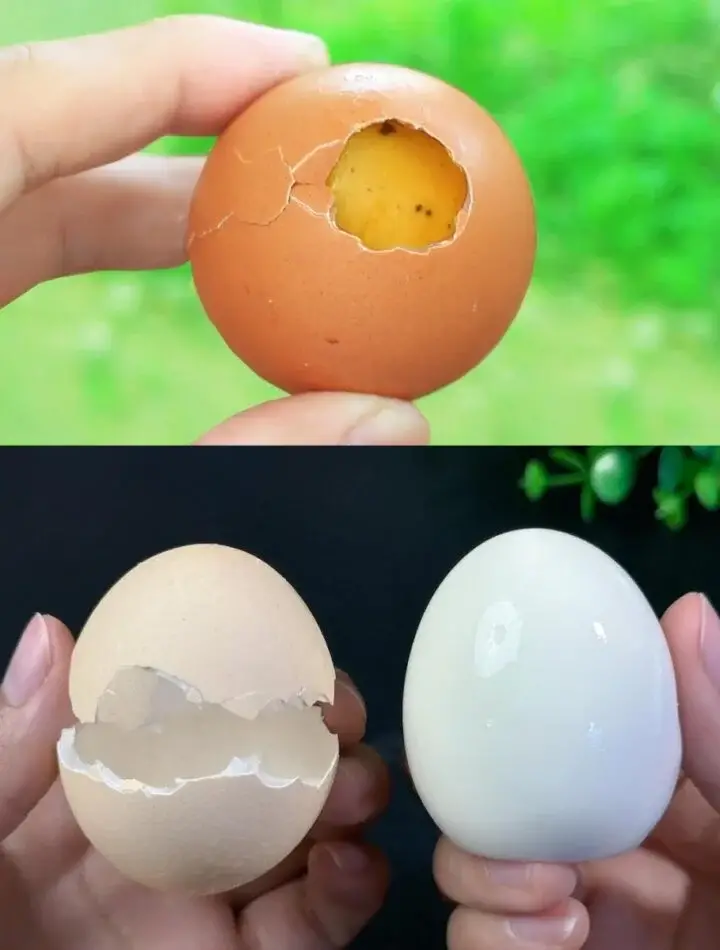
Boiling eggs sounds like one of the simplest kitchen tasks. Drop eggs in water, boil, peel, done. Yet somehow, the results are often disappointing: rubbery whites, dry or chalky yolks, cracked shells, or eggs that stubbornly refuse to peel.
If you’ve ever stood over the sink fighting tiny shell fragments while destroying half the egg, you’re not alone. Most home cooks were taught a method that works sometimes, but fails just as often.
Now here’s the twist: a 5-star hotel chef revealed a professional technique that delivers perfect boiled eggs every single time. No special equipment. No complicated steps. Just a smarter approach that chefs rely on daily.
Let’s break down what most people get wrong, what professionals do differently, and how you can master flawless boiled eggs at home.
Why Boiled Eggs So Often Go Wrong
Eggs are delicate. The shell, membrane, white, and yolk all react differently to heat. Small mistakes in temperature, timing, or handling can ruin the final result.
Common problems include:
- Cracked shells that leak egg white into the water
- Overcooked whites that turn tough and rubbery
- Yolks that become dry or develop a gray-green ring
- Shells that stick stubbornly and tear the egg apart
These issues don’t come from bad eggs. They come from a flawed cooking process.
The Most Common Mistake People Make
The traditional method goes like this: put cold eggs into cold water, place the pot on the stove, and bring everything to a boil together.
This method causes multiple problems:
- The eggs heat up too slowly and unevenly
- Air inside the shell expands unpredictably, causing cracks
- Cooking time becomes inconsistent
- The membrane sticks tightly to the egg white
Professional chefs avoid this approach entirely.
The 5-Star Chef Method for Perfect Boiled Eggs
Chefs focus on control: controlled temperature, controlled timing, and controlled cooling. This method flips the process and produces consistent, reliable results.
Boil the Water First
Instead of starting with cold water, bring a pot of water to a full rolling boil first.
Why this matters:
- Eggs begin cooking immediately and evenly
- Cooking time becomes precise
- The egg white sets faster, reducing leaks if cracks occur
Use enough water so the eggs can move freely without overcrowding.
Add a Splash of White Vinegar
Add one to two teaspoons of white vinegar to the boiling water.
This does not affect the taste, but it helps in two ways:
- Egg whites coagulate faster if a crack forms
- Leaking is minimized, keeping eggs intact
Salt is optional, but vinegar is more effective for structure.
Poke a Tiny Hole in the Egg
Using a clean needle or thumbtack, gently poke a tiny hole in the wide end of each egg.
This end contains an air pocket. Releasing the trapped air:
- Prevents cracking
- Keeps the yolk centered
- Improves overall shape
This step is optional but widely used in professional kitchens.
Lower Eggs Gently Into the Water
Never drop eggs directly into boiling water. Use a slotted spoon to lower them in gently.
Once all eggs are in, reduce the heat slightly to maintain a steady boil, not a violent one.
Use Exact Timing
Timing is everything. Start your timer the moment the eggs enter the boiling water.
- Soft-boiled eggs: 6 minutes (runny yolk, set whites)
- Medium-boiled eggs: 8 minutes (jammy yolk)
- Hard-boiled eggs: 10 minutes (fully set yolk without dryness)
Avoid overcooking. Even one extra minute can change texture.
Transfer Immediately to an Ice Bath
As soon as the timer ends, remove the eggs and place them into a bowl of ice water for at least 5 minutes.
This step is critical.
The ice bath:
- Stops cooking instantly
- Prevents gray-green yolks
- Firms the whites
- Separates the shell membrane from the egg
Skipping this step almost guarantees peeling problems.
Why This Method Works So Well
This chef-approved technique succeeds because it respects how eggs behave under heat.
Key benefits include:
- Even cooking from the outside in
- Reduced internal pressure, preventing cracks
- Controlled protein setting for tender whites
- Clean separation between shell and egg
The result is an egg with a smooth surface, creamy yolk, and a shell that peels off in large pieces.
The Secret Advantage of Using Older Eggs
Fresh eggs are excellent for frying or poaching, but they are harder to peel when boiled.
Slightly older eggs (5 to 7 days old) work better because:
- Their pH level increases over time
- The inner membrane loosens naturally
- Peeling becomes significantly easier
If you know you’ll be boiling eggs, plan ahead and don’t use eggs straight from the farm.
How Professional Chefs Peel Eggs Effortlessly
Once chilled, crack the egg gently all over and start peeling from the wide end, where the air pocket is located.
Peel under running water or in a bowl of water. The water slips between the shell and egg, lifting the membrane away cleanly.
With this method, shells often slide off in just a few large pieces.
Tips for Perfect Boiled Eggs Every Time
- Use a saucepan that allows eggs to sit in a single layer
- Avoid overcrowding, which increases cracking
- Keep water at a gentle boil, not aggressive rolling
- Always use a timer instead of guessing
- Store peeled eggs in an airtight container in the refrigerator
- Consume boiled eggs within 5–7 days for best quality
Common Uses for Perfectly Boiled Eggs
Mastering this method improves countless dishes:
- Breakfast plates and toast toppings
- Salads and grain bowls
- Bento boxes and lunch prep
- Deviled eggs
- Party platters and appetizers
A perfect boiled egg elevates even the simplest meals.
Frequently Asked Questions
Can I use this method for large batches of eggs?
Yes. Just ensure the pot is large enough and the water returns to a boil quickly after adding eggs.
Does vinegar affect the taste of the egg?
No. The vinegar stays in the water and does not penetrate the shell.
Is poking a hole in the egg safe?
Yes, as long as you use a clean tool and make only a tiny puncture.
Can I skip the ice bath?
It’s not recommended. The ice bath is essential for stopping cooking and improving peelability.
Why do my yolks turn green sometimes?
This happens when eggs are overcooked. The iron in the yolk reacts with sulfur in the white. Proper timing and an ice bath prevent this.
Can I store boiled eggs in the fridge?
Unpeeled eggs last up to 7 days. Peeled eggs should be eaten within 3–4 days.
Final Thoughts
Boiling eggs doesn’t have to be frustrating. The difference between average results and perfect eggs comes down to technique, not luck.
By starting with boiling water, timing precisely, and using an ice bath, you can achieve restaurant-quality boiled eggs at home every time. No cracked shells. No rubbery whites. No stubborn peeling.