
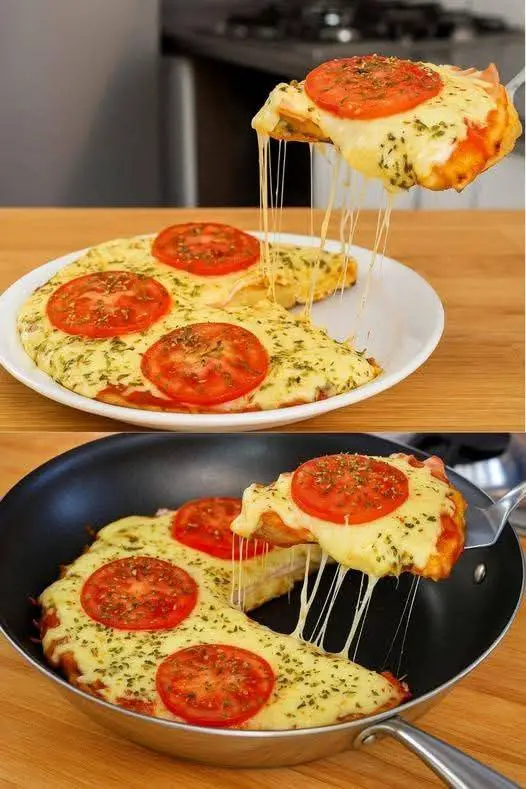
When pizza cravings strike, waiting for dough to rise or preheating the oven can feel like a challenge. Pizza in a Frying Pan offers the perfect solution. This simple stovetop recipe delivers all the comforting flavors of traditional pizza in a fraction of the time, using everyday ingredients and a single skillet. Soft on the inside, lightly crisp on the bottom, and topped with gooey melted cheese, this pizza proves that great results do not always require complicated techniques.
This recipe is ideal for busy weeknights, quick lunches, or those moments when you want homemade pizza without the effort of kneading and baking. The batter-style dough comes together in minutes, cooks gently on low heat, and provides a tender base that supports classic pizza toppings beautifully. In this structured article, you will learn why this method works so well, how each ingredient contributes to the final result, preparation tips for perfect texture, serving ideas.
Why Pizza in a Frying Pan Works So Well
The success of this recipe lies in its simplicity and clever use of heat. Instead of relying on yeast and long fermentation, baking powder provides instant lift. Cooking the pizza slowly in a covered skillet creates an oven-like environment, allowing the dough to cook through while the toppings heat evenly and the cheese melts smoothly.
Another reason this method is so popular is convenience. There is no need for special equipment, no waiting time, and minimal cleanup. The result is a soft, slightly cake-like crust with a lightly golden bottom, topped with classic pizza flavors that satisfy quickly and reliably.
Ingredient Breakdown and Their Roles
Flour
All-purpose flour forms the structure of the dough. It provides enough strength to hold toppings while keeping the crust soft and tender rather than chewy.
Milk
Whole milk adds moisture and richness to the dough. It helps create a soft crumb and enhances flavor without making the crust heavy.
Butter
Butter adds richness and tenderness. It contributes to the soft texture of the crust and enhances overall flavor.
Egg
The egg binds the ingredients together and adds structure. It also helps the dough set evenly during cooking.
Salt and Sugar
Salt balances flavor and enhances all other ingredients. Sugar adds a subtle sweetness and helps the crust brown lightly on the bottom.
Baking Powder
Baking powder is the leavening agent that replaces yeast. It creates lift and softness, allowing the dough to cook evenly without rising time.
Toppings
Mozzarella cheese melts smoothly and provides classic pizza stretch. Tomato sauce adds moisture and acidity. Ham brings savory depth, while tomato slices add freshness. Oregano enhances the traditional pizza aroma.
Step-by-Step Cooking Process Explained
Mixing the Dough
Combining the wet ingredients first ensures even distribution. Adding flour gradually prevents lumps and creates a smooth, pourable batter. Baking powder should be added last to preserve its leavening power.
Cooking the Base
Heating the skillet on low prevents burning and allows the dough to cook through. Covering the pan traps heat and steam, helping the top set while the bottom browns gently.
Flipping the Dough
Flipping carefully ensures even cooking. The first side should be lightly golden before turning, providing a stable base for toppings.
Adding the Toppings
Adding toppings after flipping prevents sogginess. Spreading sauce evenly, followed by cheese and other toppings, ensures balanced flavor and proper melting.
Final Cooking
Covering the skillet again allows the cheese to melt and the toppings to warm through. Low heat prevents scorching while ensuring the crust finishes cooking.
Texture and Flavor Profile
This frying pan pizza offers a soft, tender crust with a lightly crisp bottom. The interior remains fluffy and moist, while the toppings provide classic pizza flavor. Melted mozzarella adds richness, tomato sauce brings brightness, and ham and tomato slices create balance and satisfaction.
Serving Suggestions
Serve this pizza hot, straight from the skillet. Slice into wedges and enjoy as a quick meal or snack. Pair it with a simple salad or a bowl of soup for a more complete meal. It also works well as a customizable dish, allowing each person to add their favorite toppings.
Storage and Reheating Tips
Leftovers can be stored in an airtight container in the refrigerator for up to two days. Reheat gently in a skillet over low heat with a lid to restore softness and melt the cheese without drying out the crust.
Frequently Asked Questions (FAQs)
Can I use water instead of milk?
Yes, but milk adds richness and softness. Using water will result in a slightly less tender crust.
Why cook the pizza on low heat?
Low heat ensures the dough cooks through evenly without burning the bottom. High heat can cause the crust to brown too quickly while remaining raw inside.
Can I add other toppings?
Absolutely. Vegetables, cooked sausage, mushrooms, or olives work well. Avoid overly wet toppings to prevent sogginess.
Do I need to grease the skillet?
If using a non-stick skillet, greasing is usually unnecessary. For extra insurance, a light brush of oil or butter can be used.
Can I make this recipe without egg?
The egg provides structure and softness. Omitting it will change the texture, but a small amount of yogurt or extra milk can help compensate.
Why is my pizza too dense?
Dense texture usually results from overmixing or too much flour. Mix just until smooth and measure ingredients carefully.
Conclusion
Pizza in a Frying Pan is proof that homemade comfort food does not need to be complicated. With simple ingredients, quick preparation, and a single skillet, this recipe delivers satisfying pizza flavor in minutes.
Perfect for busy days, spontaneous cravings, or cooking with limited equipment, this method offers flexibility, speed, and reliability.