
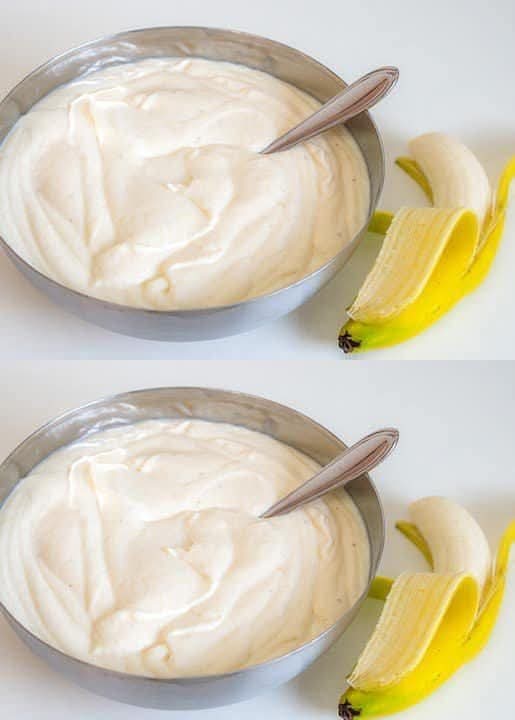
Homemade banana yogurt is a naturally creamy, lightly tangy, and gently sweet fermented food made with just a few wholesome ingredients. Unlike traditional dairy yogurt, this version uses coconut milk and ripe bananas, making it suitable for those avoiding dairy while still enjoying the benefits of fermentation.
This recipe relies on natural fermentation rather than commercial yogurt starters. The sugars in ripe bananas and a small amount of added sugar help encourage beneficial microorganisms to develop over time, resulting in a spoonable, yogurt-like consistency with a mild fermented flavor.
In this detailed guide, you will learn how banana yogurt fermentation works, why each ingredient is important, how to achieve the best texture and flavor, storage tips, safety considerations, variations, and answers to common questions.
What Is Banana Yogurt?
Banana yogurt is a plant-based fermented food made by blending ripe bananas with coconut milk and allowing the mixture to ferment at room temperature. During fermentation, naturally occurring microorganisms feed on sugars in the bananas, producing mild acidity and complex flavor compounds.
While it does not contain the same bacterial strains as traditional yogurt unless a starter is added, it is still considered a fermented banana-coconut preparation with probiotic potential when made and stored correctly.
Ingredients and Their Purpose
Coconut Milk (400 ml / 1⅔ cups)
Coconut milk provides creaminess, healthy fats, and body. Full-fat coconut milk works best, as the fat content helps create a smooth, rich texture and slows separation during fermentation.
Very Ripe Bananas (4 large)
Bananas are the heart of this recipe. Very ripe bananas are essential because:
- They are naturally sweeter
- They blend more smoothly
- They contain more accessible sugars for fermentation
Overripe bananas with brown spots are ideal, but any spoiled or moldy portions must be removed.
Organic Granulated Sugar (1 teaspoon)
This small amount of sugar supports fermentation by feeding microorganisms. It does not make the yogurt overly sweet but helps ensure a consistent ferment, especially in cooler environments.
Step-by-Step Preparation Explained
Step 1: Preparing the Bananas
Peel the bananas and carefully remove any dark, slimy, or spoiled areas. The fruit should smell sweet, not sour or alcoholic. Clean fruit is essential for safe fermentation.
Step 2: Blending the Ingredients
Add the bananas and coconut milk to a blender. If the coconut milk has separated, stir it thoroughly before measuring to ensure even fat distribution.
Add the sugar and blend until completely smooth. The mixture should be thick, creamy, and free of lumps.
Step 3: Transferring to a Container
Pour the blended mixture into a clean glass jar or fermentation-safe container. Leave some space at the top to allow for gas expansion during fermentation.
Use a lid that can be loosely closed or opened periodically to release pressure.
Step 4: Fermentation
Place the container in a warm spot away from direct sunlight and insects. Ideal room temperature is between 22°C and 27°C (72°F–80°F).
Fermentation time can range from 1 to 3 days depending on temperature and desired tanginess.
Stir the mixture twice daily using a clean spoon. This helps distribute microorganisms evenly and prevents separation.
Step 5: Taste and Refrigerate
After 24 hours, begin tasting. When the yogurt reaches a mildly tangy, pleasant flavor, it is ready.
Refrigerate immediately to slow fermentation. Chilling also thickens the yogurt slightly and stabilizes the flavor.
What to Expect: Texture and Flavor
- Texture: Smooth, creamy, and pourable, similar to drinkable yogurt or thick smoothie
- Flavor: Lightly sweet with mild tang, banana-forward with subtle coconut notes
- Aroma: Fresh and slightly fermented, never sharp or unpleasant
Because this is a naturally fermented product without thickeners or stabilizers, some separation may occur. Simply stir before serving.
Fermentation Safety and Best Practices
- Always use clean utensils and containers
- Do not ferment longer than 3 days at room temperature
- Discard if you notice mold, strong alcoholic smell, or sliminess
- Refrigerate as soon as the desired taste is achieved
Fermentation should smell pleasantly fruity and slightly tangy, not sour or rotten.
Storage and Shelf Life
- Store in the refrigerator in a sealed container
- Best consumed within 3–4 days
- Stir before each use
- Flavor will continue to develop slowly even under refrigeration
Ways to Enjoy Banana Yogurt
This banana yogurt is versatile and can be enjoyed in many ways:
- As a breakfast bowl with fruit and nuts
- Blended into smoothies
- Drizzled over granola
- Used as a base for chia pudding
- Served chilled as a light dessert
- Mixed with cinnamon or vanilla for extra flavor
Variations and Enhancements
You can easily customize this recipe to suit your taste:
- Add a teaspoon of lemon juice for extra tang
- Mix in cinnamon or vanilla after fermentation
- Blend with mango or pineapple for tropical flavor
- Stir in chia seeds after refrigeration
- Add a probiotic capsule for a more traditional yogurt culture
Nutritional Highlights
- Naturally dairy-free
- Contains healthy fats from coconut milk
- Rich in potassium from bananas
- No artificial thickeners or preservatives
- Naturally sweetened with fruit
Frequently Asked Questions (FAQs)
Is this the same as traditional yogurt?
No. Traditional yogurt is made with specific bacterial cultures and dairy milk. This is a naturally fermented banana-coconut mixture with a yogurt-like texture and flavor.
Can I use light coconut milk?
Light coconut milk will result in a thinner texture. Full-fat coconut milk is recommended for creaminess.
Why must the bananas be very ripe?
Ripe bananas contain more natural sugars and blend smoothly, making fermentation easier and flavor better.
Can I skip the added sugar?
You can, but fermentation may be slower or less reliable, especially in cooler temperatures.
How do I know if it has gone bad?
Discard if you see mold, smell alcohol or rot, or notice slimy texture unrelated to separation.
Can I sweeten it after fermentation?
Yes. Add honey, maple syrup, or fruit after refrigeration if needed.
Is it safe for children?
Yes, when properly fermented and refrigerated. Always check smell and appearance before serving.
Can I freeze banana yogurt?
Freezing is not recommended as it alters texture and may stop fermentation unevenly.
Final Thoughts
Homemade banana yogurt is a simple, ingredient-conscious way to enjoy a fermented, dairy-free treat using everyday foods. With minimal preparation and no special equipment, this recipe offers a gentle introduction to natural fermentation while delivering comforting flavor and creamy texture.
By using ripe bananas, quality coconut milk, and proper fermentation practices, you can create a wholesome yogurt alternative that fits easily into breakfasts, snacks, and desserts. Once you master the basic method, it becomes easy to customize and make it your own.