
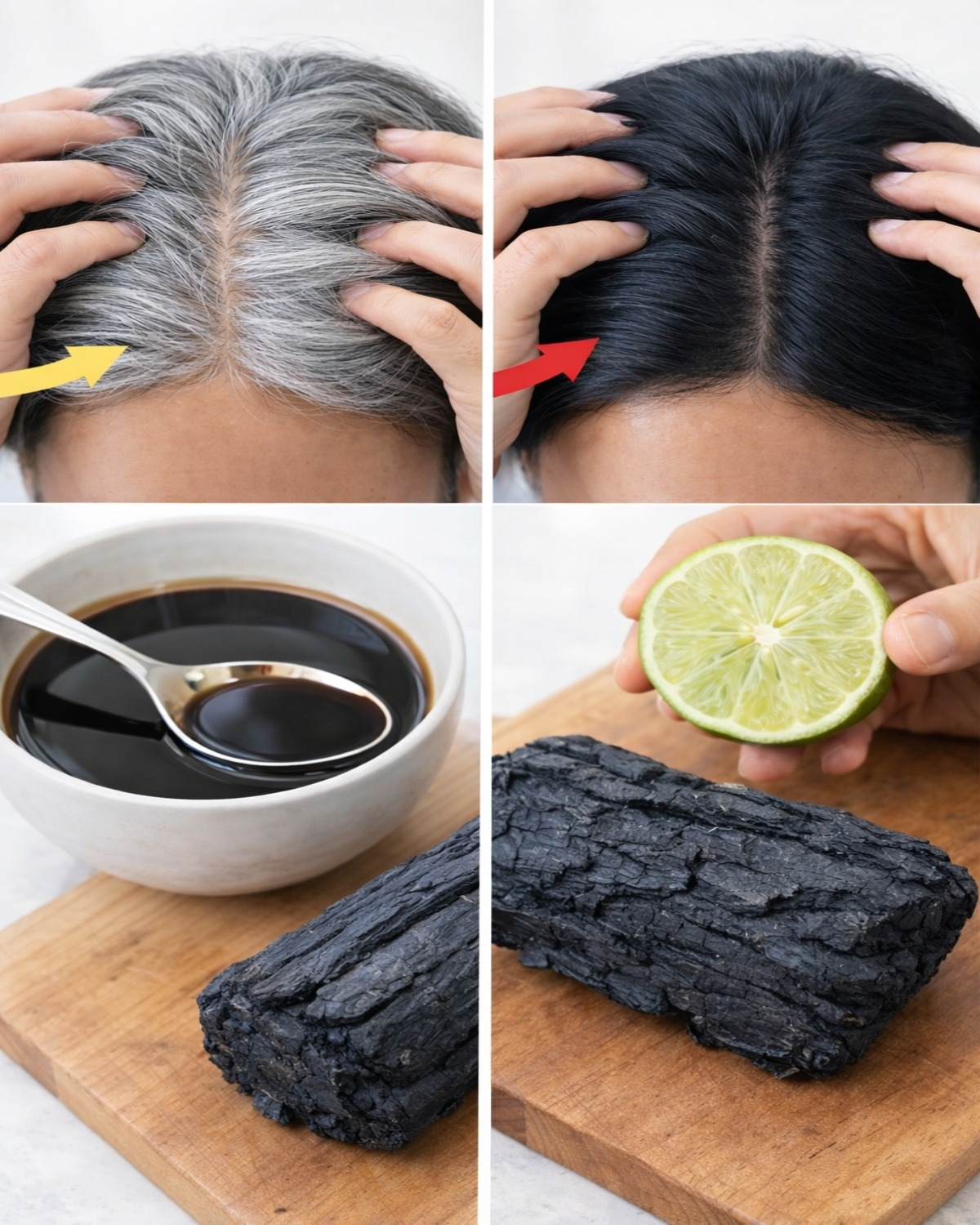
You catch your reflection and notice those silver strands standing out more than before. Maybe your once-rich dark hair now looks faded, or gray hairs seem harder to manage and style. It’s a common experience, especially as the years go by, and it often leads to one big question: is there a simple, natural way to restore darker hair without chemicals?
That’s where the charcoal hair trend comes in. Social media is full of claims that a simple mixture of natural charcoal can transform gray hair into deep black tones. It sounds easy, affordable, and natural—but does it actually work?
In this complete guide, you’ll discover the truth behind this viral hack, how people use it, what results you can realistically expect, and safer alternatives if your goal is long-lasting color.
Understanding Why Gray Hair Is Different
What Causes Hair to Turn Gray
Gray hair develops when your hair follicles gradually produce less melanin—the pigment responsible for your natural hair color. This process is influenced by:
- Aging
- Genetics
- Oxidative stress
- Lifestyle factors
As melanin decreases, hair loses its color and becomes gray, silver, or white.
Why Gray Hair Is Harder to Color
Gray strands behave differently from pigmented hair:
- They are often more coarse and dry
- They can be resistant to absorbing color
- They reflect light more, making them more noticeable
This is why many people look for gentle, natural solutions to blend or darken them.
What Is the Charcoal Hair Hack?
The Basic Idea
The charcoal trend involves using activated charcoal—a fine black powder—mixed with ingredients like:
- Coconut oil
- Conditioner
- Aloe vera gel
- Honey
This mixture is applied to the hair like a mask, left for a period of time, then rinsed out.
Why People Are Trying It
The idea is simple and appealing:
- Charcoal is naturally black
- It’s widely available and inexpensive
- It’s known for detoxifying properties
- It avoids harsh chemicals
At first glance, it seems like the perfect natural alternative to hair dye.
How Charcoal Actually Works on Hair
Surface Coating, Not True Coloring
Charcoal doesn’t work like real hair dye. Instead:
- It coats the outer layer of the hair
- It may leave a temporary dark tint
- It behaves more like a stain than a color treatment
Why It Doesn’t Permanently Darken Hair
Unlike hair dyes, charcoal:
- Does not penetrate the hair shaft deeply
- Does not bind to the hair structure
- Does not restore melanin
This means any color effect is temporary and washes out quickly.
What Results Can You Expect?
Short-Term Effects
Some users notice:
- A slight dark or ashy tint
- Better blending of gray strands
- A temporary shadow effect
These results are usually more visible on:
- Light gray or porous hair
- Dry or damaged strands
How Long Does It Last?
- Typically 1–3 washes
- Sometimes fades after just one rinse
- Rarely provides even coverage
Common Challenges
- Uneven color distribution
- Messy application
- Black residue on hands and surfaces
- Dryness if overused
So while it can create a temporary visual change, it’s far from a permanent solution.
Potential Benefits Beyond Color
Even though charcoal isn’t a reliable dye, it does offer some benefits.
Scalp Cleansing
Charcoal is known for its ability to absorb impurities:
- Removes buildup from products
- Helps reduce excess oil
- Leaves the scalp feeling refreshed
Light Volumizing Effect
By removing residue, charcoal may:
- Make hair feel lighter
- Add slight volume
Subtle Toning
In some cases, it can:
- Reduce yellow or dull tones
- Give a cooler, ash-like finish
Downsides You Should Know
Before trying this method, it’s important to understand the risks.
Possible Issues
- Can dry out hair if used frequently
- May irritate sensitive scalps
- Can stain towels, clothes, and skin
- Results are inconsistent
Not Ideal For
- Very dry or damaged hair
- Chemically treated hair
- Sensitive scalp conditions
Better Natural Alternatives for Darkening Gray Hair
If you’re looking for more reliable results, there are better options.
Henna and Indigo
One of the most effective natural solutions:
- Provides deep brown to black tones
- Long-lasting results
- Conditions the hair
Coffee or Black Tea Rinse
These offer gradual, gentle color:
- Enhance darker tones
- Add shine
- Require repeated use
Sage and Herbal Rinses
Traditional methods include:
- Sage
- Rosemary
- Walnut hulls
These may help darken hair slowly over time.
Root Touch-Up Solutions
For quick fixes:
- Powder or spray touch-ups
- Blend gray instantly
- Easy and mess-free
How to Try the Charcoal Method Safely
Simple DIY Method
If you’re curious and want to experiment:
Ingredients
- 1–2 tablespoons activated charcoal
- 2–3 tablespoons conditioner or coconut oil
Instructions
- Mix into a smooth paste
- Apply to damp hair, focusing on gray areas
- Leave for 20–30 minutes
- Rinse thoroughly
- Condition afterward
What to Expect
- Mild, temporary darkening
- Cleaner scalp
- No long-term color change
Realistic Expectations: What This Hack Can and Cannot Do
What It Can Do
- Provide a short-term tint
- Help blend grays slightly
- Cleanse the scalp
What It Cannot Do
- Turn gray hair permanently black
- Replace real hair dye
- Deliver even, salon-quality results
Understanding this helps avoid disappointment.
Tips for Better Results
Improve Application
- Apply evenly to avoid patchiness
- Focus on small sections
- Use gloves to prevent staining
Protect Your Hair
- Always follow with conditioner
- Avoid using more than once a week
- Moisturize hair regularly
Keep It Realistic
- Treat it as a temporary experiment
- Don’t expect dramatic transformation
- Use it occasionally, not as a main solution
Final Thoughts
The charcoal hair trend is a great example of how viral beauty hacks can sound more powerful than they really are. While it may offer a temporary tint and a cleaner scalp, it doesn’t truly transform gray hair into black.
If you’re curious, it’s safe enough to try once or twice for fun. But for long-lasting, noticeable results, more proven natural methods—or professional options—are far more effective.
At the end of the day, healthy, well-maintained hair will always look better than chasing quick fixes. Whether you choose to embrace your gray or enhance it, the best approach is the one that makes you feel confident.
Tips for Best Results
Start Small
Test on a small section before applying to all your hair.
Keep Hair Hydrated
Use oils or conditioners to prevent dryness after charcoal use.
Protect Surfaces
Charcoal stains easily—use old towels and wear gloves.
Use Occasionally
Limit use to avoid buildup and dryness.
FAQs
Can charcoal permanently turn gray hair black?
No. It only provides a temporary surface tint that washes out quickly.
How long does the effect last?
Usually 1–3 washes, sometimes less.
Is activated charcoal safe for hair?
In small amounts, yes—but overuse can dry the hair and scalp.
Does it work better on certain hair types?
It may show more on porous or lighter gray hair, but results are still temporary.
Can I mix charcoal with shampoo?
You can, but it reduces effectiveness and may create more mess than benefit.
What is the best natural alternative?
Henna combined with indigo is one of the most effective natural options for darker hair.
Will it damage my hair?
Not directly, but improper use or overuse can lead to dryness.
Is it worth trying?
It can be a fun experiment, but it’s not a reliable long-term solution.