
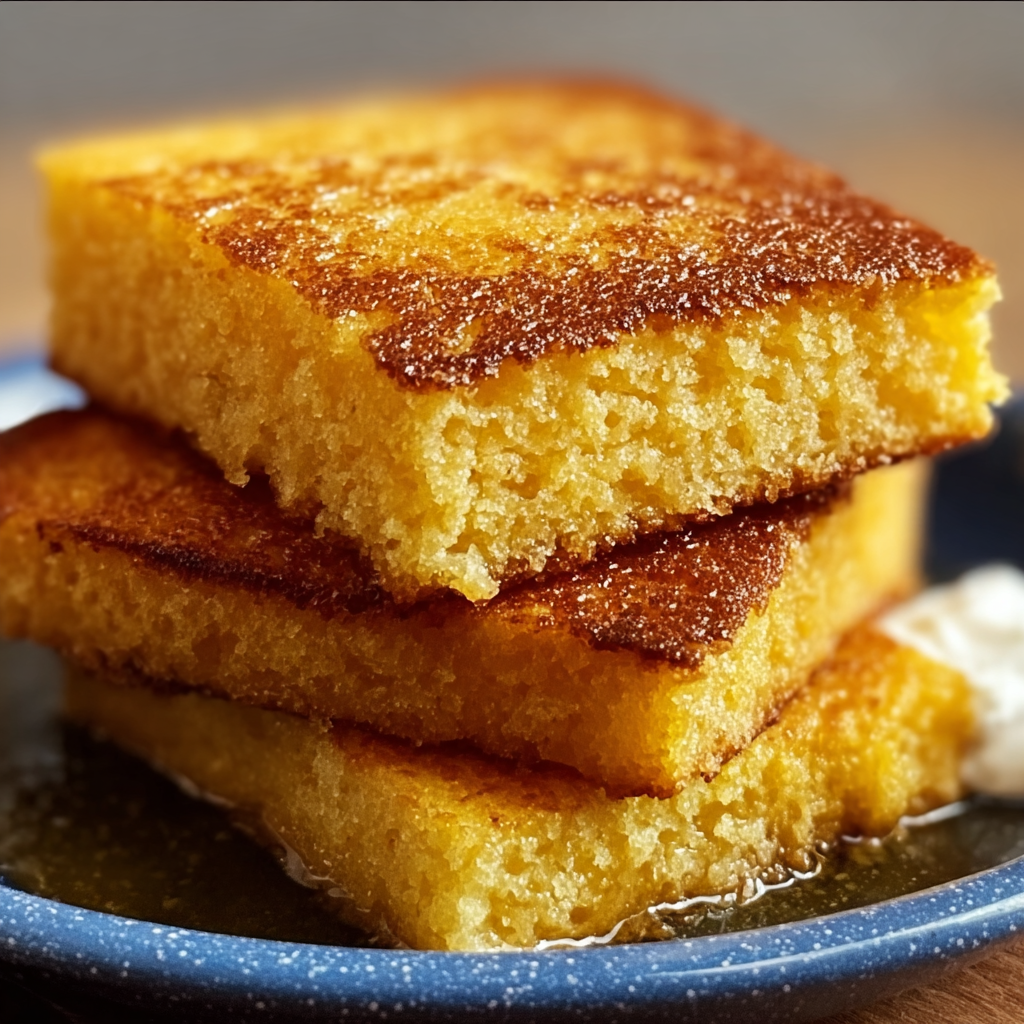
Fried cornbread, often called hoecakes, is one of the most beloved and time-honored dishes in Southern cooking. Simple, humble, and deeply comforting, this skillet-fried bread has been nourishing families for generations. Made with basic pantry staples and cooked in hot oil until golden brown, fried cornbread delivers a crisp exterior with a soft, tender center that is impossible to resist.
Unlike baked cornbread, which is fluffy and cake-like, fried cornbread is thinner and more rustic. The hot skillet creates a beautifully crunchy crust while allowing the cornmeal flavor to shine. This method of cooking dates back centuries, long before ovens were common in rural homes. Cornmeal was affordable, filling, and easy to prepare, making hoecakes a practical and reliable food for hardworking families.
Today, fried cornbread remains a cherished comfort food. It pairs perfectly with beans, greens, fried fish, soups, stews, and smothered meats. It can be savory or sweet, plain or dressed up, and enjoyed any time of day. Whether you grew up eating hoecakes or are discovering them for the first time, this classic recipe brings warmth, nostalgia, and true Southern flavor to the table.
What Makes Fried Cornbread Different from Regular Cornbread
Fried cornbread stands apart from oven-baked versions in both texture and flavor. Instead of rising tall in a pan, hoecakes are cooked as individual patties in hot oil. This creates a crispy, golden crust that contrasts beautifully with the soft interior.
Another key difference is control. Because hoecakes cook quickly on the stovetop, you can easily adjust browning, thickness, and texture. Each batch comes out fresh and hot, making them perfect for serving immediately with a hearty meal.
Traditional fried cornbread also tends to be less sweet than modern baked cornbread, allowing it to complement savory dishes without overpowering them.
Ingredients You’ll Need
To make classic fried cornbread, you only need a handful of simple ingredients that are likely already in your kitchen.
- 1 cup cornmeal (yellow or white)
- ½ cup all-purpose flour
- 1 teaspoon baking powder
- ½ teaspoon salt
- 1 tablespoon granulated sugar (optional)
- ¾ cup buttermilk (or regular milk)
- 1 large egg
- Vegetable oil or bacon grease, for frying
Each ingredient plays an important role. Cornmeal provides the signature texture and flavor, flour adds tenderness, and baking powder gives just enough lift so the patties aren’t dense. Buttermilk adds richness and a slight tang, while the egg binds everything together.
Preparing the Batter
Start by combining the dry ingredients in a medium mixing bowl. Add the cornmeal, flour, baking powder, salt, and sugar if you’re using it. Stir well to ensure everything is evenly distributed.
Next, add the buttermilk and egg to the bowl. Gently stir until a thick, spoonable batter forms. The batter should be thicker than pancake batter but soft enough to scoop easily. Avoid overmixing, as this can make the cornbread tough instead of tender.
Letting the batter rest for a few minutes allows the cornmeal to hydrate fully, resulting in better texture and flavor.
Heating the Skillet
A cast-iron skillet is the traditional and preferred choice for frying cornbread. It distributes heat evenly and creates the best crust. Place the skillet over medium heat and add enough oil or bacon grease to coat the bottom with about ¼ inch of fat.
Allow the oil to heat until shimmering but not smoking. Proper oil temperature is crucial—if it’s too cool, the cornbread will absorb excess oil and become greasy. If it’s too hot, the outside will burn before the inside cooks through.
Frying the Cornbread
Once the oil is hot, scoop the batter by heaping tablespoons into the skillet. Gently flatten each scoop with the back of the spoon to form small patties.
Fry the cornbread for about 2 to 3 minutes per side, or until golden brown and crispy. Flip carefully using a spatula, and cook the second side until equally crisp.
Avoid overcrowding the skillet. Fry in batches if necessary to maintain even heat and consistent results.
Draining and Serving
When the cornbread is done, remove it from the skillet and place it on a paper towel-lined plate to drain excess oil. Serve immediately while hot and crispy.
Fresh fried cornbread is at its best straight from the skillet, when the contrast between crunchy exterior and soft interior is most pronounced.
Popular Variations to Try
Fried cornbread is wonderfully adaptable. With a few simple adjustments, you can create many delicious variations.
Old-fashioned hoecakes skip the flour entirely, using only cornmeal for a denser, more rustic texture. Sweet fried cornbread includes extra sugar or a drizzle of honey in the batter. Savory versions may include finely diced onion, scallions, or herbs.
For a spicy kick, add chopped jalapeños, cayenne pepper, or crushed red pepper flakes. Cheesy cornbread patties are made by stirring shredded cheddar or pepper jack cheese into the batter.
Each variation brings a new personality to this classic dish while keeping its comforting roots intact.
Serving Suggestions
Fried cornbread is incredibly versatile. It pairs beautifully with traditional Southern dishes like pinto beans, black-eyed peas, collard greens, turnip greens, fried catfish, or chicken.
It also works well alongside chili, soups, and stews, soaking up flavorful broths. For a simple treat, serve hoecakes warm with butter and honey or drizzle them with syrup.
Some people enjoy crumbling fried cornbread into a glass of milk or buttermilk—a nostalgic tradition passed down through generations.
Tips for Perfect Fried Cornbread
- Use a cast-iron skillet for the best browning and texture
- Keep the oil hot but not smoking to prevent greasiness
- Let the batter rest briefly before frying
- Do not overcrowd the skillet
- Use bacon grease for authentic Southern flavor
- Serve immediately for maximum crispiness
- Keep cooked batches warm in a low oven if needed
Frequently Asked Questions
What is the difference between hoecakes and fried cornbread?
Hoecakes are a traditional form of fried cornbread, often made with only cornmeal, water or milk, and salt. Modern fried cornbread usually includes flour, eggs, and leavening for a softer texture.
Can I make fried cornbread without flour?
Yes. Omitting the flour creates a denser, more traditional hoecake with a stronger corn flavor.
Why did my fried cornbread turn out greasy?
The oil was likely not hot enough. Proper heat allows the exterior to crisp quickly and prevents excess oil absorption.
Can fried cornbread be reheated?
Yes. Reheat in a skillet or air fryer to restore crispness. Avoid the microwave, as it can make the cornbread soggy.
Can I store leftover fried cornbread?
Leftovers can be stored in an airtight container in the refrigerator for up to two days, though they are best enjoyed fresh.
Conclusion
Fried cornbread is a timeless Southern classic that proves great food doesn’t need to be complicated. With its golden crust, hearty corn flavor, and comforting simplicity, hoecakes bring warmth and tradition to any meal.
Whether served alongside beans and greens, topped with honey, or enjoyed straight from the skillet, this dish delivers satisfaction in every bite. Easy to make, endlessly versatile, and deeply nostalgic, fried cornbread remains a treasured recipe that continues to bring people together—one crispy patty at a time.