
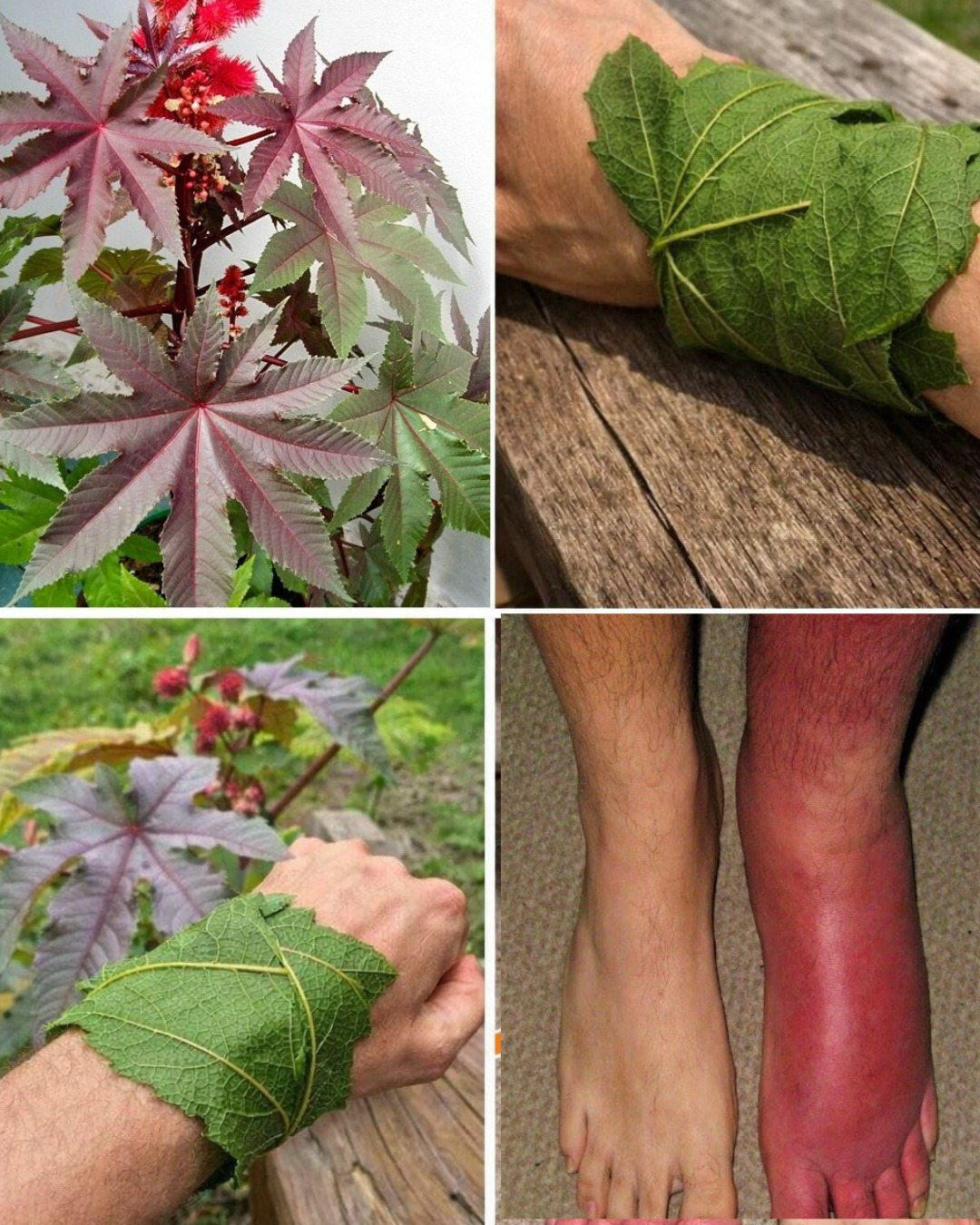
Minor aches, recurring skin irritation, or daily discomfort may not feel serious enough to rush to a doctor, yet they can quietly affect quality of life. Over time, these small issues drain energy, disrupt routines, and create frustration—especially when solutions feel either too harsh, too complicated, or too expensive.
Many people today are looking for gentle, accessible, and tradition-based approaches that support comfort without overpromising results. This growing interest has brought renewed attention to castor leaves—not as a miracle cure, but as a simple, external self-care practice that has been part of household routines for generations.
What makes castor leaves especially interesting is not just how they’re used, but how modest their role traditionally has been. They were never meant to “fix” everything—only to support comfort, routine, and rest.
Why Castor Leaves Appear So Often in Traditional Wellness Practices
Castor leaves come from the castor plant (Ricinus communis), a fast-growing plant found in many warm regions of the world. While the seeds of this plant are known for castor oil (and also for toxicity if misused), the leaves themselves were traditionally used only externally.
Across parts of Africa, South Asia, the Caribbean, and Central America, castor leaves were commonly used because they were:
- Easy to identify
- Widely available
- Large and flexible
- Suitable for warming or wrapping
Traditional wellness systems did not frame castor leaves as medicine. Instead, they were viewed as supportive tools—much like warm water, cloth wraps, or herbal steam.
Modern research notes that castor leaves contain natural plant compounds such as flavonoids and oils that may help soothe irritated tissue when applied externally. However, their historical value lies more in comfort and routine than in chemical action.
Traditional Reasons People Use Castor Leaves
Before packaged products and pharmacies were common, families relied on familiar plants for everyday comfort. Castor leaves naturally became part of that lifestyle.
Common traditional uses include:
- Supporting joint and muscle comfort after physical work
- Soothing mild, temporary skin irritation
- Encouraging relaxation during menstrual discomfort
- Supporting scalp cleanliness and hair care routines
- Creating warming wraps during cooler seasons
- Promoting relaxation at the end of the day
A key detail across cultures is that castor leaves were almost always used externally, aligning with modern safety guidance.
How Castor Leaves Are Commonly Prepared at Home
Traditional preparation methods are simple and do not require special equipment. The goal is gentle contact—not strong concentration.
Common preparation methods include:
- Warm leaf compresses
- Crushed leaf poultices
- Herbal steam using boiled leaves
- Leaf water used as a rinse
All methods emphasize:
- External use only
- Short application times
- Careful skin observation
Understanding what castor leaves may support—and what they are not meant to do—is essential for safe use.
Practical, Traditional Ways Castor Leaves Are Used
The following practices are shared for educational purposes and reflect cultural traditions. They are not medical treatments.
Joint and Muscle Comfort After Activity
Warm castor leaves are sometimes placed on tired joints or muscles after physical work.
How it’s done:
Clean leaves are warmed in hot (not boiling) water, then applied for 20–30 minutes to encourage relaxation.
Gentle Abdominal Comfort Ritual
In some traditions, warm leaves are placed on the abdomen during times of tension or bloating.
This practice focuses on calming the body, often combined with slow breathing or rest.
Cooling Poultice for Mild Skin Irritation
Lightly crushed leaves mixed with warm water may be applied briefly to unbroken skin.
Important:
This is for short-term comfort only and should always be rinsed off afterward.
Menstrual Comfort Routine
Warm leaf compresses are traditionally used during menstrual discomfort to promote relaxation.
The comfort mainly comes from warmth and routine rather than medicinal effects.
Traditional Hair and Scalp Rinse
In some regions, boiled castor leaves are used as a final rinse after washing hair.
Simple approach:
Boil leaves, cool completely, strain, and pour gently over the scalp after shampooing.
Relaxation Wrap After Long Hours
Agricultural and labor-based communities often used warm leaf wraps after long days of standing or walking.
This practice supports relaxation and rest as part of daily recovery.
Short-Term Comfort for Insect Bites
Brief application of lightly crushed leaves may provide a cooling sensation.
Always wash the area after use and discontinue if irritation occurs.
Herbal Steam for Seasonal Comfort
Steam from boiled leaves is sometimes inhaled briefly to encourage relaxation during seasonal discomfort.
This should be done cautiously and avoided by children or heat-sensitive individuals.
Supporting Skin Balance
Diluted leaf paste is sometimes applied to oily skin areas to help maintain balance.
Gentle, occasional use is preferred.
The Overlooked Evening Ritual
One of the most valued traditional uses is evening relaxation.
Warm castor leaves placed on tense areas before bedtime are used not to treat symptoms, but to help the body slow down through habit and warmth—supporting better rest through routine rather than chemistry.
How to Make a Simple Castor Leaf Compress
This is one of the safest and most common traditional methods.
What You’ll Need
- 2–3 fresh castor leaves
- Warm water
- Clean cotton cloth
Step-by-Step
- Wash leaves thoroughly
- Warm them in hot water for 2–3 minutes
- Pat dry
- Place on the desired area
- Cover with a cloth
- Rest for 20–30 minutes
Stop immediately if irritation occurs.
Essential Safety Guidelines
Safety is critical when using traditional plant practices.
- External use only
- Never consume castor leaves
- Always perform a patch test
- Avoid broken or infected skin
- Use occasionally, not continuously
- Consult a professional if pregnant, breastfeeding, or managing medical conditions
More is not better—gentleness is key.
Why Interest in Castor Leaves Is Returning
The renewed interest reflects a broader shift toward:
- Simpler routines
- Sustainable habits
- Cultural knowledge
- Low-cost self-care
Castor leaves are:
- Affordable
- Widely available
- Environmentally friendly
- Rooted in tradition
Their appeal lies in realistic expectations, not dramatic promises.
Helpful Tips for Using Castor Leaves Mindfully
- Always clean leaves thoroughly
- Keep application times short
- Use warmth, not heat
- Combine with rest and hydration
- Discontinue at the first sign of irritation
- Treat them as a comfort ritual, not a treatment
Frequently Asked Questions
Can castor leaves be used every day?
Occasional use is recommended. Daily use may irritate sensitive skin.
Are castor leaves safe for children?
External use is generally avoided unless guided by a qualified professional.
Can castor leaves replace medical treatment?
No. They are supportive self-care practices, not medical replacements.
Can dried castor leaves be used?
Fresh leaves are traditionally preferred, but dried leaves are sometimes used for steaming only.
Do castor leaves cure pain or skin conditions?
They do not cure conditions. Their role is comfort and relaxation support.
Final Thoughts
Castor leaves are best understood as gentle companions in daily self-care, not cures or medical solutions. Their value lies in simplicity, routine, and mindful use.
When combined with rest, hydration, and balanced living, traditional practices like these can support comfort in a realistic and grounded way—without exaggerated claims or unnecessary complexity.