
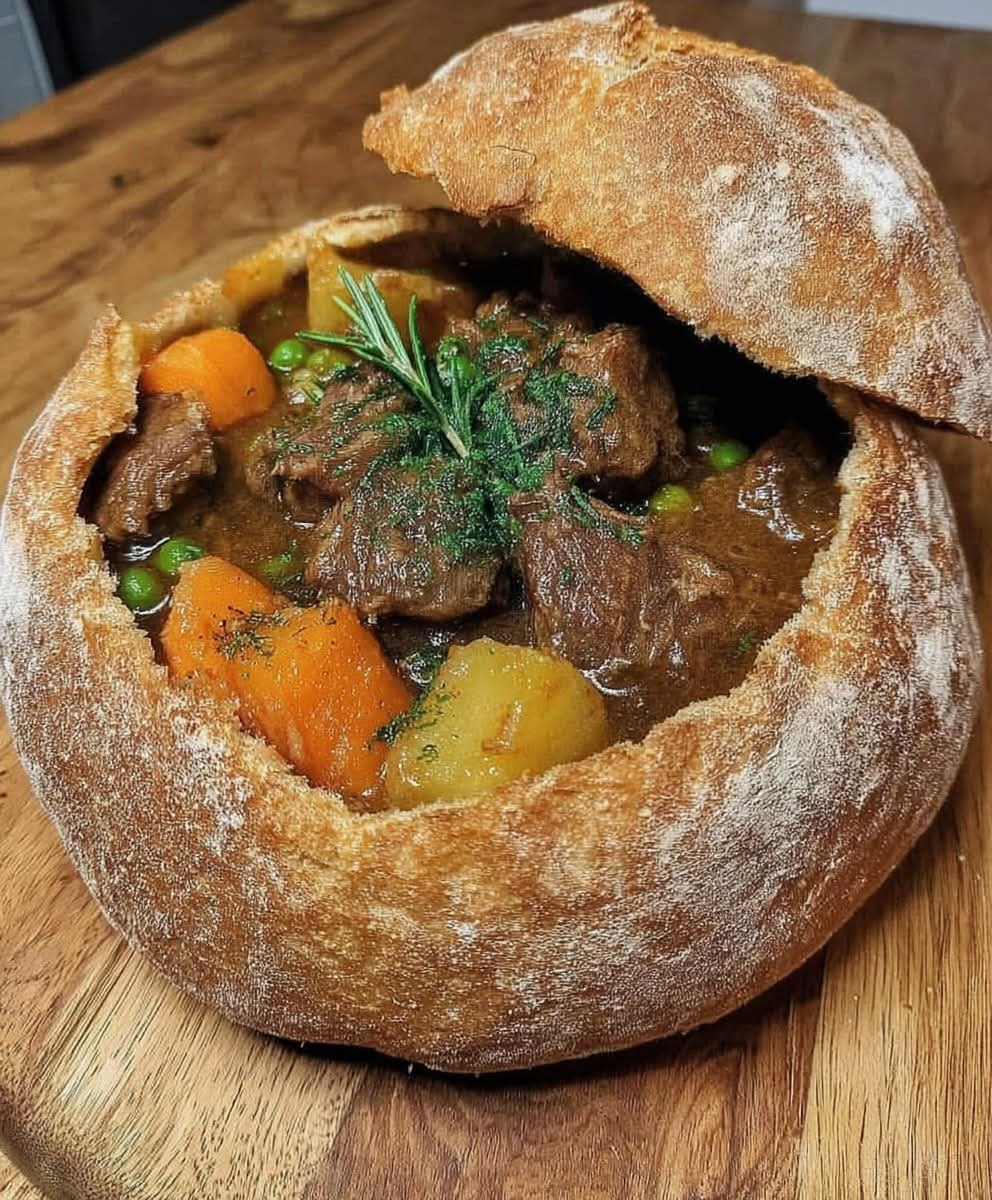
Few meals feel as comforting and satisfying as a slow-simmered beef stew, and when it is served in a warm, crusty bread bowl, it becomes something truly special. Beef Stew in a Bread Bowl is more than just a dish; it is an experience. The rich, savory stew warms you from the inside out, while the bread bowl soaks up every drop of flavorful broth, turning the bowl itself into part of the meal.
This recipe is perfect for cold evenings, family dinners, or when you want to serve something rustic yet impressive. It combines tender beef, hearty vegetables, and aromatic herbs in a deeply flavorful broth, all presented in an edible bread bowl that elevates the dish from simple to memorable. In this structured article, you will learn why this recipe works so well, how each ingredient contributes to the final result, tips for perfect preparation, serving ideas, storage advice, and a detailed FAQ section to answer common questions.
Why Beef Stew in a Bread Bowl Is So Popular
Beef stew has long been a staple of comfort cooking, loved for its richness, warmth, and ability to feed a crowd. Serving it in a bread bowl adds a visual and textural element that makes the dish even more appealing. The crisp outer crust of the bread contrasts beautifully with the soft, stew-soaked interior, creating layers of flavor and texture in every bite.
Another reason this dish remains popular is its practicality. It uses affordable ingredients, improves with time, and can be made ahead. The bread bowl eliminates the need for extra sides while turning a classic stew into a complete, satisfying meal.
Ingredient Breakdown and Their Roles
Stewing Beef
Stewing beef is ideal for long, slow cooking. It becomes tender as it simmers, absorbing the flavors of the broth and herbs. Coating it lightly in flour helps with browning and naturally thickens the stew.
Flour, Salt, and Pepper
Flour creates a light crust on the beef during browning, which adds flavor and helps thicken the stew. Salt and pepper season the meat from the very beginning, building flavor in layers.
Vegetables
Onion and garlic form the aromatic base, adding depth and warmth. Carrots and celery bring sweetness and balance, while potatoes add heartiness and help thicken the stew naturally. Frozen peas, added at the end, provide color, freshness, and a touch of sweetness.
Tomatoes and Broth
Diced tomatoes add acidity and richness, balancing the savory beef. Beef broth forms the backbone of the stew, carrying all the flavors together into a cohesive, comforting base.
Herbs and Seasonings
Worcestershire sauce enhances umami and complexity. Thyme, rosemary, and bay leaf add an earthy, aromatic quality that defines classic beef stew flavor.
Bread Loaves
Round bread loaves with a sturdy crust work best. They hold their shape while absorbing the stew, creating a perfect edible bowl that enhances both flavor and presentation.
Step-by-Step Cooking Overview
Browning the Beef
Coating the beef in flour, salt, and pepper before browning builds flavor early. Browning in batches ensures a deep, golden crust rather than steaming the meat. This step is essential for a rich, well-developed stew.
Building the Base
Sautéing onions and garlic in the same pot captures the browned bits left behind by the beef. These bits dissolve into the stew, adding depth and richness.
Simmering the Stew
Returning the beef to the pot and adding vegetables, tomatoes, broth, and seasonings allows the flavors to meld slowly. A gentle simmer over one and a half to two hours breaks down connective tissue in the beef, resulting in tender, flavorful meat.
Finishing Touches
Adding peas during the last ten minutes preserves their color and texture. Removing the bay leaf before serving ensures a smooth eating experience.
Preparing the Bread Bowls
Cutting the tops off the bread loaves and hollowing them carefully creates space for the stew while maintaining structure. Leaving about half an inch of bread ensures durability. Lightly toasting the bowls in the oven helps them resist sogginess and adds a pleasant crunch.
Flavor and Texture Experience
This dish delivers deep, savory flavors with layers of texture. The stew is rich and hearty, with tender beef and soft vegetables in a thick, aromatic broth. The bread bowl adds chewiness and absorbs the stew, turning every bite into a combination of soup and bread that feels indulgent and comforting.
Serving Suggestions
Serve the stew piping hot, ladled generously into the prepared bread bowls. Garnish with fresh parsley for color and freshness. For a complete meal, pair with a simple side salad or roasted vegetables. The bread tops can be served alongside for dipping.
Storage and Make-Ahead Tips
Beef stew stores well and often tastes even better the next day. Store the stew separately from the bread bowls in airtight containers in the refrigerator for up to four days. Reheat gently on the stovetop. Prepare bread bowls fresh for best texture.
Frequently Asked Questions (FAQs)
What type of bread works best for bread bowls?
Sturdy round loaves with a thick crust work best. They should be dense enough to hold hot stew without collapsing.
Can I make the stew ahead of time?
Yes, this stew is ideal for make-ahead cooking. Preparing it a day in advance allows the flavors to deepen. Reheat gently before serving.
Why is my beef still tough after cooking?
Tough beef usually needs more time. Continue simmering gently until the beef becomes tender. Avoid boiling, as high heat can make meat tough.
Can I freeze the beef stew?
Yes, the stew freezes well. Cool completely, then freeze in airtight containers for up to three months. Thaw overnight in the refrigerator before reheating.
How do I prevent the bread bowl from getting soggy?
Lightly toasting the bread bowls before filling helps create a barrier against moisture. Serving immediately also helps maintain structure.
Can I add other vegetables to the stew?
Yes, vegetables like parsnips, turnips, or mushrooms work well. Add firm vegetables early and softer ones closer to the end of cooking.
Conclusion
Beef Stew in a Bread Bowl is the ultimate comfort meal, combining hearty ingredients, slow-cooked flavor, and a presentation that feels both rustic and special. It brings warmth to the table and turns a classic stew into an unforgettable dining experience.