
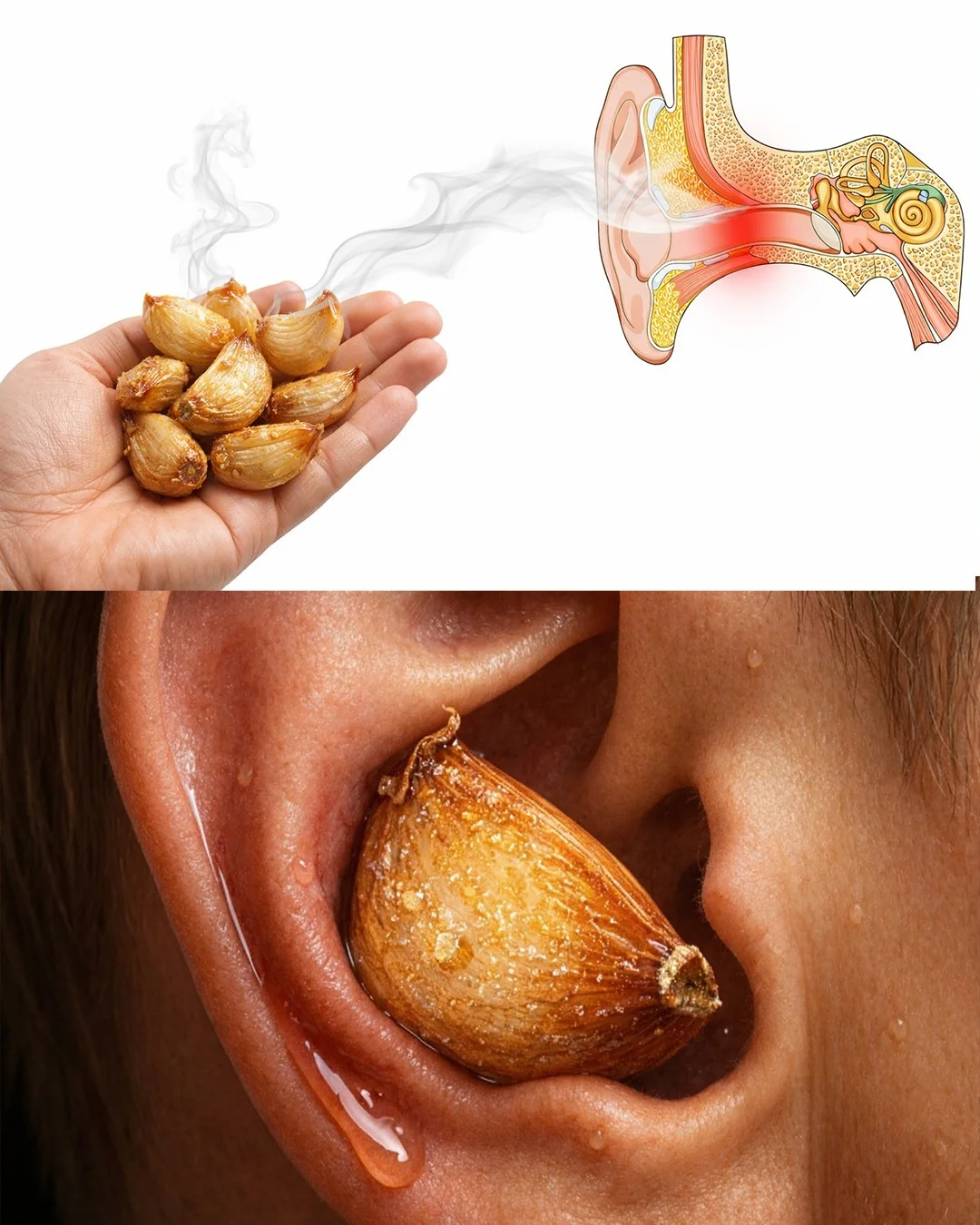
Ear pain can be surprisingly disruptive. Even mild discomfort can interfere with sleep, focus, and daily life. Long before pharmacies and modern ear drops existed, people relied on simple household remedies to ease temporary ear discomfort. One of the most enduring of these traditions is baked garlic.
This remedy has been passed down through generations in many cultures and is still quietly used today, especially when symptoms are mild and immediate medical care is not available. While it is not a cure or a replacement for professional treatment, baked garlic has long been associated with warmth, comfort, and gentle relief.
This article explores where the remedy comes from, why it was traditionally used, how it was prepared, and the important safety considerations that must always come first.
Why Garlic Was Traditionally Used for Ear Discomfort
Garlic has been valued across civilizations for thousands of years. Ancient cultures in Asia, the Middle East, and Europe viewed garlic as a protective plant with warming and soothing qualities. In folk medicine, it was often associated with comfort, balance, and natural defense.
Traditional healers believed garlic supported the body during times of mild irritation and imbalance. When gently baked, garlic becomes much softer and less harsh than raw garlic, making it more suitable for use near sensitive areas like the ear.
Baking garlic was thought to release its natural oils while reducing its sharpness. This created a gentler form that could be used externally without the intense sting associated with raw garlic.
Historically, baked garlic was used to provide comfort in cases of:
- Mild ear discomfort
- Pressure-related ear sensations
- Early irritation associated with cold exposure
- Temporary discomfort linked to congestion
It was never intended to treat serious infections or replace medical care. Instead, it was seen as a short-term comfort measure.
The Role of Warmth in Traditional Remedies
Warmth played a central role in many folk remedies. Long before scientific explanations were available, people observed that gentle heat often eased discomfort and helped the body relax.
In traditional belief systems, warmth was thought to:
- Relax surrounding muscles
- Ease pressure sensations
- Encourage circulation
- Support natural drainage
Baked garlic offered both warmth and a plant-based element, which is why it became such a popular choice. The focus was not on aggressive treatment but on comfort and relaxation.
How Baked Garlic Is Traditionally Prepared
This remedy is simple and relies on minimal tools and ingredients. Traditional preparation emphasized gentleness and care.
What You Need
- 1 fresh clove of garlic
- An oven, toaster oven, or pan
Traditional Preparation Method
- Leave the garlic clove unpeeled.
- Bake it at a low temperature until it becomes soft and warm, not browned or burnt.
- Remove it from heat and allow it to cool until comfortably warm to the touch.
- Peel away the skin before use.
Properly prepared garlic should feel soft when pressed and release a mild, warm aroma rather than a sharp or burning smell.
Traditional Ways Baked Garlic Was Used
Different families and regions developed their own variations, but most methods shared one important rule: garlic was never placed deep inside the ear canal.
Warm Garlic Near the Outer Ear
The softened garlic clove was wrapped in clean cloth or gauze and gently held against the outer ear. This method focused on warmth rather than direct contact.
Garlic-Infused Oil (Indirect Use)
In some traditions, baked garlic was lightly crushed and infused into warm oil. The oil was then strained carefully. Only a small amount of the oil was used near the ear opening, never inserted deep inside.
Garlic as a Warming Compress
Wrapped garlic was placed near the ear while resting, often before sleep, allowing warmth to provide comfort over time.
All traditional methods emphasized indirect use and caution.
What This Remedy Was Traditionally Used For
In folk practice, baked garlic was commonly used for:
- Temporary ear discomfort
- Mild pressure-related sensations
- Cold-related ear irritation
- Early, mild symptoms
It was not traditionally used for severe pain, high fever, hearing loss, pus, bleeding, or intense infection symptoms. In such cases, even historical healers recognized the need for more advanced care.
Why This Remedy Is Still Remembered Today
Baked garlic continues to appear in family traditions and natural wellness discussions for several reasons:
- Garlic is affordable and widely available
- Preparation is simple and accessible
- It reflects a gentle, non-invasive approach
- It emphasizes comfort rather than force
For many people, it also carries emotional significance, reminding them of childhood care, grandparents, and a time when home remedies were part of everyday life.
Important Safety Considerations
While baked garlic is widely known, it must be used responsibly. Improper use can cause irritation or harm.
- Never insert garlic directly into the ear canal
- Never use garlic while it is hot
- Never use if there is discharge, bleeding, or severe pain
- Do not use for infants or young children
- Stop immediately if irritation or discomfort increases
Garlic is a strong plant and can irritate sensitive skin if misused. Traditional knowledge always emphasized moderation and caution.
When Medical Care Is Necessary
Ear pain can sometimes signal serious conditions that require professional care. Medical evaluation is essential if:
- Pain is severe or worsening
- Fever, dizziness, or nausea occurs
- Fluid, pus, or blood is present
- Hearing changes or loss occurs
- Symptoms persist beyond a short time
Traditional remedies developed during times when access to medical care was limited. Today, professional evaluation is always the safest option when symptoms are concerning.
Tips for Responsible Use
- Always allow baked garlic to cool to a warm, comfortable temperature
- Use only externally and indirectly
- Limit use to short periods for mild discomfort
- Keep the area clean and dry afterward
- Discontinue use if symptoms worsen
These tips reflect traditional caution and modern common sense.
Frequently Asked Questions
Does baked garlic cure ear infections?
No. Baked garlic is not a cure for ear infections. It was traditionally used only for comfort during mild discomfort.
Can garlic be placed inside the ear?
No. Garlic should never be inserted into the ear canal. Traditional use emphasized external application only.
Is this remedy safe for children?
It is not recommended for infants or young children. Always consult a healthcare professional for pediatric ear pain.
How often was this traditionally used?
Typically once or twice for temporary comfort. Persistent symptoms were a signal to seek further care.
Why was baking preferred over raw garlic?
Baking softens garlic and reduces its harshness, making it gentler and more suitable for external use.
Final Thoughts
Baked garlic for ear pain is a traditional comfort remedy rooted in history, simplicity, and gentle care. It reflects a time when people relied on accessible plants and warmth to ease everyday discomfort. While it is not a medical treatment, its continued presence in homes today highlights the enduring appeal of natural, mindful approaches to comfort.
Used cautiously and responsibly, baked garlic may serve as a short-term comfort measure for mild ear irritation. However, modern medical care remains essential whenever symptoms are severe, persistent, or concerning.